Saturday, January 18, 2020

"FOLLOW ME"

Reflection for Saturday of the First Week in Ordinary Time Year A
(1Sam 9:1-4, 17-19; Mk 2:13-17)
For the first time, a king is anointed for Israel. This was in attempt to separate religion from secular society. The king would take charge of the ordinary life of the people. Because Israel is God's chosen people, they could not completely separate government from religion. Unlike other nations, their king must be approved by God through the High Priest. And Saul son of Kish from the tribe of Benjamin was chosen. 

His qualities were excellent. Physically he was tall and handsome. So he could be empowered to overlook the people and protect them. He was humble , obedient and committed to duty as he travelled round the towns and villages looking for his father's donkey. These virtues already inclined him for the task ahead. Unknown to Saul, he had been destined to be the first king of Israel. Samuel took a vial of oil and poured it on his head and anointed him king. 

From the experience of Saul, it appears God calls busy people. He has a way of ‘exhuming’ us from our ordinary life commitment to a glorious task. So while Levi the son of Alphaeus was busy tabulating taxes, Jesus called him, “Follow me.” He responded immediately and took the bold step. His gain at the tax office became his loss for the Kingdom of God. He exchanged the status of affluence with that of a penitent! He walked out of the security of a financial house into the vulnerability of a disciple. Still he was happier, and the celebration began...

We are all endowed with physical and morale capabilities. These can be channelled to the pursuit of good worldly gain, just as Saul was moving around looking for donkey. It can be committed to sinful use, like the corrupt tax collector. In any case, a touch of divine grace transforms our ‘busy-ness’ into a righteousness of God’s kingdom. Thus our energy is purified, and exhumed from worldly attachment, and set free to bear fruit for the Kingdom. Sin adds burden to our labour, making us slaves to the things we ought to enjoy. Thanks be to Jesus who calls us out of sin. Now in Christ Jesus our joy out shines our labour! Jesus calls us to repentance. As we follow Him, the old ways and its pursuit must give way to a new life in Christ Jesus, bearing fruits of righteousness. 

Fr Jude Chinwenwa Nwachukwu,  C.Ss.R
Saints Peter and Paul Catholic Church, 
Tedi-Muwo, Lagos.
Saturday 18th January, 2020. 

Thursday, January 16, 2020

WE NEED A KING!

                    Reflection for Friday  of the First Week in Ordinary Time Year A
                                       (1Sam 8:4-7, 10-22; Mk 2:1-12)
Now our beloved Samuel is old. Unfortunately, his children did like the sons of Eli, unfit to succeed him. Inspired by fear of the unknown future, the elders of Israel asked Samuel for a king, “Now appoint for us a king to govern us like all the nations.” Israel was surrounded by pagan kings, who made themselves gods over their people. Secular life has always been alluring with its show of glamour and promise of self-emancipation. And the elders of Israel fell to the trap. Samuel was heartbroken. Fear has always been the silent hand that draws a religious man to secular living. The people persisted on their request...

Samuel knew the danger of Israel not being directly under God's kingship. The Lord said to him, “Listen to the voice of the people in all that they say to you; for they have not rejected you, but they have rejected me from being king over them.” Samuel warned them about the consequences of their choice. The king would emancipate himself at their expense. In place of freedom, he would enslave their sons and daughters, and place tax burdens on them. The earthly king would be a cause of tears for them...

In contrast to the description of secular authority given above, Jesus comes to emancipate the people, to liberate the captives and heal the sick. He said to the paralytic, “Child, your sins are forgiven.” The beauty of Jesus' Kingship is that it takes care of our spiritual needs. He defends our case just as He argued in favour of the paralysed man against the hypocritical Scribes. No King like Jesus! He released the man and set him free. “I say to you, rise, take up your pallet and go home.” He rules both in our body and soul. “The son of man came not to be served but to serve,  and to give His life as a ransom for many” (Mt 20:28).
They asked Samuel for a king as we are in need of direction today! We may want to choose who influences us or who wins our allegiance. Secularism promises a lot without God, but abandons her subjects half way, and turns them into objects for the secular king! But Jesus is our Mediator;  He gathers us as one and defends our course. Therefore, Jesus is the ultimate response of God to our desire for a King. If we remain under the authority of Jesus Christ, fear cannot push us into empty promises. 

Fr Jude Chinwenwa Nwachukwu, C.Ss.R 
Saints Peter and Paul Catholic Church
Tedi-Muwo, Ooh, Lagos.
Friday 17th January, 2020.
Memorial of St Anthony the Great.  

SURRENDER TO VICTORY

                               Reflection for Thursday   of the First Week in Ordinary Time Year A
                                                             (1Sam 4: 1-11; Mk 1:40-45)
Surprisingly, Samuel’s name was not mentioned in the first reading of today. That quickly reminds us that he had no part in what happened afterwards. Israel had lost favour with God, and as a result, could no more win their battles. Instead of retracing their steps, they blamed God for their calamity, “Why has the Lord put us to rout today before the Philistines?” They tried to force the hand of God to their victory. “Righteousness exalted a nation, but sin is a disgrace to it” (Proverbs 14:34). The two corrupt sons of Eli, Hophni and Phinehas, brought the Ark of the Covenant to the Battleground. This was their last hope. At this time even their hope in God could not stand, for they tried to put God at their service instead returning to the true service of God. “And the Ark of God was captured; and two sons of Eli, Hophni and Phinehas, were slain.”
How can we win the battles of life in the name of God without total surrender to His will? So the leper expressed total surrender to the will of Jesus by ‘begging', ‘kneeling', and saying, ‘If you will, you can make me clean.” In the will of God is abundance of grace! If we submit to God's ordinances, we shall fight battles of life but always win God's friendship. Hence Jesus was moved with compassion towards the man. It was as if He mingled Himself with the man's battle with leprosy! “And immediately the leprosy left him, and he was made clean.”

We have victory within our reach. The calamity the befell Israel at Ebenezer in the hands of the Philistines resurfaces when a Christian seeks God’s intervention without making effort to give his life to Christ. Total surrender to Jesus is where we ‘encamped' for the battles ahead. “You are my hiding place; you will save me from trouble” (Ps 32:7). We must wear the will of God like an amour over the forces that wage war against us. Within it, our battles become Jesus’ own; then, we have surrendered to victory.  

Fr Jude Chinwenwa Nwachukwu,C.Ss.R
Saints Peter and Paul Catholic Church, 
Tedi-Muwo,  Lagos. Thursday 16th January, 2020. 

Wednesday, January 15, 2020

SPEAK LORD, YOUR SERVANT HEARS

                         Reflection for Wednesday  of the First Week in Ordinary Time Year A
                                                       (1Sam 3: 1-10.19-20; Mk 1:29-39)
Today in our daily reflection,  the boy Samuel is introduced. He served Eli the priest. Samuel was young and inexperienced, while Eli was old with lots of insight. The boy servant was lying down within the temple, where the Ark of God was, but Eli slept in his room. Samuel was stepping into the shoes of Eli. Then came the vision!

“Samuel, Samuel!” and he said, “Here I am!” and ran to Eli. This shows that the boy was prompt and diligent at duty; He was humble, open minded and respectful to the priest. Above all, he had fear of God, and enjoyed God's presence. With all these virtues, Samuel lived out his purpose in life—a life dedicated to God. Still, he had no experience of discerning God's call. The old priest intervened and directed him aright. So when the Lord called again Samuel answered, “Speak, for your servant hears.”

This answer became, not just a momentary response, but a way of life for him. From now onwards, the ministry of Samuel would be marked by this habit of attentiveness to the word of God. His prompt response to divine illumination was excellent. It takes a man of interior silence to cultivate such attentiveness to God. People from all parts of Israel consulted Samuel, and he listened to them.

Yes, that was how the crowds sought for Jesus. He was attentive to the needs of the sick and the possessed. We see His promptness in responding to Simon's mother-in-law and all who came to Him.  Later, Jesus went out to a lonely place, and there He prayed. Therefore, ‘the place of silence’ is readily a place of prayer and divine encounter. This is where we listen to divine illumination. For Samuel, it was before the Ark of the Covenant. But Jesus is divine presence Himself, so He sanctifies every place of silence where He is welcome into a serene place of hearing God’s voice. 

Therefore, if we create silence within, and welcome Jesus thus, then we can hear God from the depths of our hearts. This gives us bodily rest, and disposes our hearts for prompt response to divine call. Then, ‘Speak Lord, your servant hears’ becomes the living experience of one who, Like Samuel, lives out His purpose on earth by disposing his heart to silence and to divine illumination.

Fr Jude Chinwenwa Nwachukwu, C.Ss.R 
Saints Peter and Paul Catholic Church, 
Tedi-Muwo, Ooh, Lagos. 
Wednesday 15th January, 2020.


Tuesday, January 14, 2020

From the Depths of the Heart

                             Reflection for Tuesday of the First Week in Ordinary Time Year A
                                                            (1Sam 9-20; Mk 1:21-28)
From the depth of her sorrows, Hannah prayed to the Lord. Though in agony, she was positively minded. Hannah did not blame anyone for her situation, neither was she seeking revenge for the one that taunted her. She was specific in her request: ‘give to your maidservant a son.’ Surprisingly, she vowed to give back to God what He would give her. Here she made total commitment to God, and self-detachment from her request, such that at the end, only the glory of God would remain. 
This kind of prayer of self-surrender is uncommon. “Hannah was speaking in her heart; only her lips moved, and her voice was not heard.” She was lost in deep contemplation. The sound of her silence caught the attention Eli, the priest, who thought she was drunk. “From the depths I call to you, O God: Lord hear my cry” (Ps 130:1-2). We must extol the silence of the heart in our prayers. Eli blessed her, “Go in peace, and the God of Israel grant your petition which you made to Him.” She believed and left the temple happy. “Hannah conceived and bore a son, and she called him Samuel, for she said, ‘I have asked him of the Lord.’”

What a liberation, and the transforming of her sorrows to joy! It was marvellous. Such awe was felt around Jesus among those who listened to Him at Capernaum. Such fire of glory and power is often felt by those who, in silence listen and speak to the Lord from the depth of their hearts. It creates inner freedom and peace, and neutralizes negative energies and influences. This is seen in the Gospel of today as Jesus silences the demonic, and casts out the unclean spirit.

Jesus is the new High Priest, our Mediator, who hears even the silent petitions of our hearts (cf. Heb 4:14-16). He is the new Temple (In 2:21), where we enter to have divine encounter. Sorrows and failures of life can accumulate into negative energies within, breeding hate, revenge and depression. These, like the Demoniac that interrupted Jesus, can destroy our inner serenity and contemplation,  leaving behind chaos. But we match like Hannah, bearing our sorrows and brokenness, to pour out our hearts to Jesus. He blesses us through the action of the priests. With Him every pain and sorry becomes an opportunity for new grace and favour to the glory God. 

Fr Jude Chinwenwa Nwachukwu, C.Ss.R 
Saints Peter and Paul Catholic Church, 
Tedi-Muwo,  Lagos. 
Tuesday 14th January, 2020.

Monday, January 13, 2020

TRANSFORMING HURT TO POSITIVE ACTION

                 Reflection for Monday of the First Week in Ordinary Time Year A
                                                      (1Sam 1-8; Mk 1:14-20)

We begin this first Week with the First Book of Samuel. It began by introducing the family of Elkanah, which is rooted in the tribe of Ephraim. “Ephraim” means “Fruitfulness.” This was the name Joseph gave his second son in Egypt to indicate that God had prospered him in the land of his sojourn (Gen 41:52). But this man from the ‘tribe of fruitfulness’ had a wife, Hannah, who was barren! Then he got a second wife, Peninnah, who had children. Again, Elkanah was faithful to God in offering annual sacrifices at Shilo yet Hannah remained childless. 

There was a problem. Peninnah stood upon her gracious position as the fruitful wife and taunted Hannah. She had enough and more, but saw herself in competition with the woman who had little and less. Probably she was jealous of the one thing that Hannah had: the love of her husband. Since Peninnah was not satisfied with the extra allocation given to her, she sought to tap secret joy from the sorrows of Hannah!  Unfortunately,  her name would not go beyond the sorrows she had caused, and so are all who lock themselves in jealousy and hate. Elkanah continue to love and support Hannah as her streams of tears flowed. 

In Gospel, the arrest of John the Baptist broke the heart of Jesus so he decided to move into Galilee. He felt the pain of John who was hit by the wickedness and jealousy of Herod and Herodias. As He mournfully stepped into Galilee, He began to preach repentance and proclaim that the Kingdom of God is at hand. And while at the shores of the sea of Galilee, He called His first apostles. Jesus utilized the unfavourable circumstance created by human wickedness to do the will of God.

In Christ Jesus we have a gracious capacity to transform our tears of sorrow to tears to joy! Like Hannah, we may have many things to complain about to God and to man. But if at the end nothing positive comes out of our stream of tears, it implies we are merely celebrating and exalting the hurt instead of accepting the situation as our sharing in the Cross of Christ. Something good can come from every odd situation. “By His wounds we are healed” (1Pet 2:24).

Fr. Jude Chinwenwa Nwachukwu, C.Ss.R h
Saints Peter and Paul Catholic Church 
Tedi-Muwo, Lagos.
Monday, January 13th, 2020.

Saturday, January 11, 2020

THE HEAVENS ARE OPEN


REFLECTION FOR THE FEAST OF BAPTISM OF THE LORD YEAR A
(Is 42:1-4.6-7; Acts 10:34-38; Mt 3:13-17)
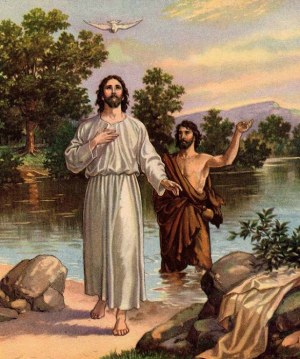
Image result for baptism of jesus
Last week we celebrated the manifestation of Jesus to the whole world with the visit of the Magi. It was through a natural sign—the sign of a star—that they were able to locate Jesus. Today, we celebrate the Baptism of Jesus, which marks the beginning of His public ministry. Once again, Jesus is introduced to us but this time through the voice of the Father and the descent of the Holy Spirit in the form of a dove. The greatest testimony for Christ Jesus is unveiled as He stepped out of the water; “This is my beloved Son, with whom I am well pleased.”

In the beginning of creation, the Spirit of God hovered over the waters (Gen 1:2). Jesus steps into the waters of Baptism to inaugurate the new creation—the new order of grace. “So there are three witnesses: the Spirit, water and blood; and the three of them coincide” (1Jn 5:7-8). Jesus is the source; from His wounded side flows the grace of sanctification and incorporation into the new order of grace. He needed no baptism since He is the son of God and has no sin in him. He enters the waters ‘to fulfill all righteousness’, i.e. to submit himself entirely to the Father’s will (CCC 536), to show us the way, and sanctify the waters of baptism. Already He was anticipating the “Baptism” of the Cross (Lk 12:50).

“At his baptism ‘the heavens were opened’—the heavens that Adam’s sin had closed…” (CCC 536). Thus Jesus’ public ministry, which the Church continues today, announces that the Kingdom of God is near (Mt 4:17). Participation in the life of the Kingdom of God and its righteousness will require incorporation into Jesus Christ. It is by Baptism that we are born again in Jesus as children of God. We become God’s adopted children in Jesus Christ. This makes us co-heirs with Him of the Kingdom of God (Rm 8:17). “So by our baptism into His death we were buried with Him, so that as Christ was raised from the dead by the Father’s glorious power, we too should begin living a new life” (Rm 6:4).

Image result for baptism of jesusSince we are assimilated to Jesus through our Baptism, we must see ourselves as being dead to sin but alive for God in Christ Jesus (Rm 6:11). The heavens are open; we are living under grace. Sin must not rule our lives so that we would not shut ourselves off the new order of grace. The Voice of the Father and the descent of the Holy Spirit indicate that in Jesus dwells the fullness of divinity, and we who are assimilated to Him receive divine favor and fulfillment through Him (cf. Col 2:9).

How beautiful are the waters of the Jordan that stood for all waters of Baptism! The flowing waters, gentle and steady, received from Jesus the grace to wash away the original sin and keep us clean as new creatures for the Kingdom of God. The heavens are open! So the divine unction of the Holy Spirit descends anew in the oil of chrism. Like Jesus, we step out of waters of Baptism, full of grace and newness, with the Holy Spirit and power, preaching the good news of peace of Jesus Christ, doing good and freeing the captives (Acts 10:34-38). This is the responsibility to which baptismal grace summons us to. We cannot receive the grace of God in vein (2Cor 6:1). If we want to live with Him, we must also die with Him (2Tim 2:11; Rm 6:8). By our Baptism, the Mission of Christ Jesus becomes ours too. The heavens are open; God is with us.

Fr Jude Chinwenwa Nwachukwu, C.Ss.R
Saints Peter & Paul Catholic Church,
Tedi-Muwo, Lagos
Sunday, 12th January, 2020.
Feast of the Baptism of the Lord.