Sunday, September 18, 2011

THE REASON TO FORGIVE

24th Sunday in Ordinary Time Year A

(Sirach 27:30—28:7, Rm 14:7—9, Mt 18:21—35)

1. The readings of today urge us to forgive one another. We must remember that Jesus was inserting His teaching on forgiveness within a culture that believes in “eye for eye” (Ex 21:21, Lev 24:20, Dt 19:21). If we follow this law, all of us here would have been blind by now. Revenge or retaliation displaces God’s forgiveness in human relations, and makes it difficult for the merits of Christ’s death and resurrection to be made manifest in our interactions with one another. So Jesus condemns this law in Mt 5:38ff "You have heard that it was said, 'Eye for eye, and tooth for tooth.' But I tell you, Do not resist an evil person. If someone strikes you on the right cheek, turn to him the other also...”                                                

2. Having listened to Jesus, Peter tried to upgrade this standard of an eye for an eye promoted by the Pharisees by asking, “How often must I forgive my brother if he wrongs me? As often as 7 times? Why did he choose 7? It was because the Jews understood seven as a number that represented completeness or perfection: God completed His creation and rested on the 7th day; Noah took the animals into the ark by sevens (Gen 7:2) and 7 days after Noah went into the ark, the flood came; the Israelites marched round the city of Jericho 7 times. On the 7th day, the completed their marching by going round the city 7 times; Elisha asked Naaman to bath 7 times at the river Jordan to complete his cure; Jesus spoke 7 words from the Cross; the apostles ordained 7 deacons, etc.

So Peter was speaking from his own cultural understanding since seven represented completeness in Jewish tradition. Since he was speaking from his cultural background, he was speaking from the depth of his humanness—from his situation as man who feels the pinch of forgiveness. Hence, Peter’s question is saying that there should be a time when forgiveness is enough—complete—when one can no longer bear it.

3. But Jesus has a different understanding of forgiveness; He offers a new standard. He said to Peter, “Not seven, but seventy-seven times.” In a sense he was saying to Peter, you don’t stop forgiving until you yourself have reached completeness or perfection. And our perfection is in Christ Jesus. So Christ becomes the measure and reason for forgiveness.

We see how this played out in that story. God the Father is that mighty King, whom we, his servants, are indebted to through our sins and, we have no means of paying back. What can we offer to the Lord to appease Him? Our sins condemn us; we deserve damnation (If you Oh Lord should mark our guilt, who would survive Ps 130:3). But God, in His mercy and compassion, declared us free by allowing Christ bear the burden of our sins on the Cross.

4. Having received such mercy from God, we are bound to show forgiveness to one another. We learn from the story that forgiveness is sacred because it comes from and made possible by God’s grace—it is what we learn from our interaction with God, by being His servants. It is not based on human life or culture or power; not even on the pain we felt when offended. The Cross is our reason to forgive (2Cor 5:18—20).

Therefore, forgiveness is a way of appreciating what we first received from God through Jesus Christ. This entails that we must first absorb within us, through prayer and meditation, the forgiveness we receive, the merits of Christ’s death and resurrection. Another way of appreciating it is by frequent reception of the Sacrament of Reconciliation and Holy Eucharist.

Then we will come to discover that to forgive is a vocation; a call to imitate the King and to spread the good news of what the King has done for us. It is a way of spreading the Good News of the Cross. It brings us peace and joy, and enables us to enjoy the freedom of the Children of God. Forgiveness makes our heart like the heart of Jesus. So when we forgive, we are not so much doing favour to the other person as much as accumulating and solidifying within us God’s mercy and love.

Jesus is our reason to forgive; it is His forgiveness that we dish out to others. By not forgiving, we are at once rejecting God’s forgiveness. May God give us the grace to receive His forgiveness with generosity of heart and show the same mercy and pardon to our brothers and sisters.

Fr. Jude Nwachukwu, C.Ss.R

St. Anthony’s Parish,

Jabi, Abuja,

Nigeria.

September 11, 2011.

Saturday, March 26, 2011

REFLECTION FOR THE THIRD SUNDAY OF LENT

                                      “Give me something to Drink”

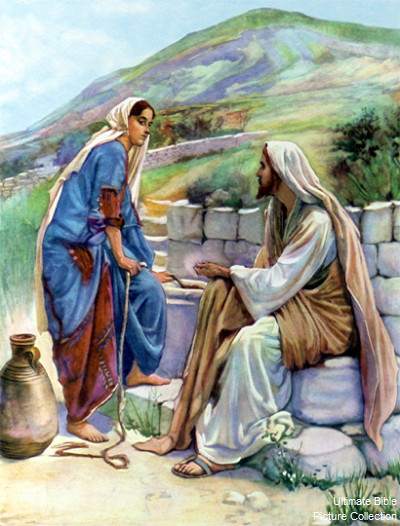
In today’s readings, the holy Church presents to us our Lord Jesus as the one who thirsts and hungers for our salvation. Christ is the Living Water who alone can quench our thirst. In the story of the Samaritan woman we see how much Christ thirsts that we should thirst for Him so that He can satisfy us (cf Mt 5:6). The process of embracing Christ’s thirst for us is the process of conversion.

Give me something to drink, Jesus said to the woman. Jesus demanded ordinary charity from her. But this demand immediately exposes the Samaritan woman’s level of living. Her life was guided by human reason and propelled by selfishness and pleasure. She refused to “offer up” her water, arguing it out and blaming others (the Jews) for her lack of compassion and love. But Jesus’ thirst is more than ordinary water; He was thirsting for her salvation.


Our readiness to perform charitable works, to offer up something for Christ always indicates how much the Gospel message has taken root in our hearts. Charity puts faith into action and keeps it alive. Unlike the woman who was stingy with her water, our Lord Jesus is always willing to “offer up” His Living Water and desires that we thirst for it: “If only you knew...you would have been the one to ask, and he would have given you living water.”


Yes! She did not know: her earthly way of life has blindfolded her. Interestingly, it is at this level of her earthly way of life—a life of sin and human rationality—that Jesus offers her the “Living Water”! This gift of salvation is offered to us even while we were still sinners (Rm 5:6). Christ speaks to us in our various ways of life, not to leave us as we are, but to move us a higher level.


This Samaritan woman began to be fascinated by the offer of living water. She started thirsting for the water that Christ offers. However, her thirst at this stage could not embrace Christ’s thirst for her. Just like the seed of the sower that fell into thorns, her thirst for the living water was choked by life of pleasure (cf. Lk 8:14). So she began to ask for the living water with an unrepentant heart, and thus for the wrong reason: “that I may never come here again to draw water”. You cannot serve two masters (Mt 6:24). God is spirit, and those who worship must worship in spirit and truth (Jn 4:24). Jesus took her through the process of admitting and confessing her sins, which is the process of purification of the heart—of conversion.


Now she has seen the Light (Jn 9:5). She can now give Christ something to drink: her heart and those of her neighbours! Since Christ thirsts for our salvation, the drink we offer to quench His thirst is a contrite and purified heart. Lenten observance helps us to discover the real hunger of our souls, and embrace Christ’s thirst for us. Jesus is saying to each and every one of us this season, “Give me something to drink.”


The Moment of God's Will, the Moment of the Cross


REFLECTION FOR 9TH SUNDAY IN ORDINARY TIME YEAR A

                           1st Reading Deut 11:18.26-28.32 2nd Reading Rm 3.21-25.28 Gospel Mt 7:21-27

The first reading reminds us how much we should bear God’s law in mind and heart just as the people of Israel were instructed by Moses to fasten the Law in their hands and forehead. Obedience to the commandments brings blessings. All the law, not some of it, must be observed. The law is here given as a sign of union with God.


The second reading tells that God’s justice that was revealed through the law has now been made known through Jesus Christ. How? Jesus became the sacrifice offered for our sins—our transgressions of the law. So where we failed through observance of the law, Christ came to remedy; to absorb our blame, and restore us to the dignity of the Children of God. So Christ is our reconciliation with God: He is both the restoration of our union with God and fulfilment of the law. The law is fulfilled when its purpose is achieved. And this purpose is made manifest in Jesus Christ.


Therefore, in Christ the law is no longer mere ten tablets, but a living person! Hence, our justification is no longer in following the law but in believing in the person of Christ. Since our faith is not in written words or ideas, but in a living person, then our faith also becomes the place of encounter where our human person encounters the person of Christ.


This moment of encounter, where the human person, his will and desires encounter the will of God in Christ is always a moment of the Cross. It is a moment of the Cross because its possibility is first and foremost made possible by the Cross of Christ—a moment of grace, of being open to the blessings first promised through the law but this time through the merits of the death and resurrection of Christ. Secondly, this moment of encounter is a moment of the Cross because it always involves self-emptying, where we allow our will to be assumed and consumed by the Will of God. It is a moment of self-sacrifice just as Christ cried out to the Father, let your will be done, not mine (cf. Lk 22:42).


Therefore, the person who does the will of God in his life as Jesus commanded in the Gospel of today is the one who carries around in his heart the imprint of the Cross of Christ so that the life of Christ Jesus may also be revealed in him (cf. 2Cor 4:10) just as Moses instructed the Israelites to carry around their body a piece of the law.

If the believer in Jesus is not a man of sacrifice, carrying around his body the Cross of Christ, he will only be shouting “Lord, Lord”, but cannot put his faith into action. Such a one is building on the sand of his selfishness and earthly foundations that cannot last, not on Christ the Rock (cf. 1 Cor 10:4). We should build our lives, behaviour, aspirations, etc on Christ the Rock.

Equally and definitely, the one who builds on Christ the Rock—who allows God’s will to triumph in his life—is a man of the Eucharist. The sacrifice of Christ, in its redeeming power, is made present and offered to us in the Eucharist. In this Eucharistic celebration, we receive anew the pledge of immortality. Just as Moses told the Israelites who were gathered at the foot of the Mountain that God will bless them if they keep the law, we have gathered around this altar to receive, not just blessings, but the giver of the blessings! In the Eucharist, we encounter Jesus Christ anew, allowing Him to influence all that influence us; be our consolation and protection, and the guide of our every relationship, etc. In this way, every expression of God’s will in our lives becomes a refreshing moment—a moment of grace—a triumph of the Cross.

Our help is in the name of Lord: Who made Heaven and earth!


Homily by Nwachukwu Jude Chinwenwa, C.Ss.R
Redeemer House Chapel, Ibadan.
Sunday March 6th, 2011.

Sunday, November 21, 2010

MY CULTURE, MY FAITH

Jude Chinwenwa Nwachukwu, C.Ss.R

In our search for authenticity, it is pertinent to reflect how the Christian faith interacts with culture; bearing in mind that culture itself is a mark of identity and a means of expressing authenticity of life. Faith, though divine

in origin, must be practiced through and within a culture. This marriage between culture and faith finds its locus in the human person, called to communion with God and with one another through Jesus Christ, and under the guidance of the Holy Spirit.

My Culture, My Life

Social Sciences tell us that culture is the way of life of a people. It consists of acquired and transmitted patterns of self-expression My Culture3characteristic of a society. These related patterns that make up culture include language, dressing, belief, morals, laws, custom, art, music, thought-system, etc. Obviously, culture is a mark of identity.

Culture originates from man’s rational and social nature. It flows from man’s efforts to subdue the earth by his knowledge and labour. These repeated efforts give rise to customs and institutions. Culture can be seen as a form of patterned adaptive behaviour of man to his environment. Therefore, such behaviours can be interpreted differently as environments and societies vary. This gives rise to plurality of cultures. Hence, culture as a way of life becomes a sort of patterned response to environmental and sociological demands. Because it is a response and at the service of life, culture is dynamic.

Life itself is at the centre; the human person is the subject of culture. In other words, life is prior to culture. There is no culture without the human person. Man is created in the image and likeness of God and is destined for eternal life through Jesus Christ. Therefore, human life is sacred and is endowed with dignity. Thus, life is objective from the perspective of its beginning and end. However, culture gives practical and specific expression to life. It adds glamour and beauty, wholeness and originality to human life. As a result, every aspect of culture must respect human dignity and be at the service of man’s eternal vocation. For instance, my dress pattern, thought-system, mode of language, etc must respect my dignity. Unfortunately, this is not always the case.


Wrong models of culture abound. Cultural relativism is the attempt to see each culture as absolute and to judge it based on its own standards. Relativism denies the intercommunicability of cultures. Cultural eclecticism sees cultures as substantially equivalent and interchangeable. This means one can culture can replace another. The fact that cultures intercommunicate and borrow from one another does not imply one culture should replace another. Cultural levelling neglects the profound uniqueness of varying cultures of different nations by which the individual defines himself in relation to life’s fundamental options. It indiscriminately accepts all sorts of conducts and life-styles. This is the problem of the New Age Culture in which “everything goes”, and the culture of death, which promotes abortion, euthanasia, sexual abuse, etc.

According to Pope Benedict XVI, these wrong notions separate culture from human nature. Thus, cultures can no longer define themselves within a nature that transcends them, and man ends up being reduced to a mere cultural statistic. This, in turn, exposes humanity to enslavement and manipulation (Caritas in Veritate No. 26). Cultures need one another, above all, they need Redemption.

My Culture, My Faith

What then is the nature of this marriage between culture and the Christian faith? Both culture and faith stand in relation to man, his dignity and his eternal vocation. However, faith transcends culture. Though it is expressed though cultural elements, faith cannot be reduced to a mere form of culture. It is more! Faith has its origin in God as its object, and is enshrined in the human person as its subject. Therefore, it is in the light of faith-values that all cultures must be certified. Since culture originates from man’s adaptive capacity, and is applied by man, who is weakened by original sin, culture can easily be misinterpreted and abused. Hence the need for faith to intervene. Faith comes in, not for people to despise their My culture1culture, but to align it to higher values—the Gospel values. It does this by introducing a divine character into culture. Thus, faith transforms culture into a means of salvation and leads it to an eternal end. For instance, cultural elements such as language, music, dress, artefact, etc can be employed by faith in divine worship.

The marriage between faith and culture is necessary for the Christian to make the Good News of Christ his own. Faith must be communicated in familiar concepts and imageries, rendered more intelligible and appear more relevant to one’s situation in life. Still, we must never forget that faith challenges and enhances cultural identity.

However, the holy Catholic Church is often accused of imposing foreign cultures, especially Jewish and Roman cultures, on others. Christianity is a historical religion. It demands that the Church and her members in every age and place be connected to Jesus in interpersonal relationship. The expounding and handing-on of the faith since apostolic times, in certain concepts and imageries, has developed into the patrimony of the Church. This patrimony has a “life” of its own over and above the cultures from which it developed. This living patrimony has become a necessary means of expounding and transmiting the faith. It has become a living and dynamic means of getting connected to Jesus and apostolic faith, thereby rooting the interpersonal relationship with Christ in a historic deposit of faith. The Christian faith cannot be isolated from the cultures in which it was first inserted because the Tradition contains certain irreducible elements conditioned by biblical and subsequent cultures. Instances of this living patrimony is found in the Church’s liturgy, organization, moral patterns, Sacraments, etc. However, the apostolic patrimony must dialogue with other cultures. The power of the Gospel everywhere transforms and regenerates. If the faith had to change as it enters a new culture would amount to “emptying the Cross of Christ of its power” (I cor 1:17). Just as the Word took flesh and came to dwell among us (Jn 1: 14), the Christian faith takes flesh in various cultures.

Christ my Life: A Realized Authenticity

“Life to me, of course, is Christ...” (Phil 1:22). These words of St. Paul sums up our reflection. By His incarnation, Christ assumed our human nature to Himself so that we can be one with Him. In Him all cultures holdSuffering together (cf. Eph 1: 10, Col 1:17). In Christ we realize the fullness of our lives (cf. Col 2: 10). Thus, it is only in Christ that our identity as Image of God shines out and we realize authentic living. Culture must be at the service of this realized authenticity. Christ is our life! Our life is now hidden with Christ in God (cf. Col 3: 3), who, through His Cross draws all peoples to Himself (Jn 12: 32). Life in Christ makes all cultures a new creation (2 Cor 5:17).

REFRENCES:

McBrien,Richard. Catholicism. London: Geoffrey Chapman, 1994.

Shorter, Aylward. Toward a Theology of Inculturation. New York: Orbis Books, 1988.

Otite Onigu & Ogionwo W. An Introduction to Sociological Studies. Ibadan: Heinemann Books, 1979.

Iheriohanma, E.B.J. Sociology: A Practical Understanding of Social Reality. Owerri: Tropical

Publications, 2002.

Second Vatican Council. Gaudium et Spes nos. 53—62.

Benedict XVI, Encyclical Letter “Caritas in Veritate” No. 26

JohnPaul II, Apostolic Exhortation “Catechesi Tradentae” No. 53.

The article was originally written for Plentiful Redemption Magazine (3rd Edition), Ibadan. 2010. It appeared on page 43.

Tuesday, March 30, 2010

ANGER AND FORGIVENESS

image."Don't let the sun go down with you still angry—get over it quickly"(Eph 4:26).

One of the biggest barriers to forgiving those who have hurt us is our unresolved hurt and anger. More often than not, where there is hurt, there is anger. Both need to be resolved.

Unresolved or buried anger is extremely destructive. This is why the Bible teaches us to resolve it as quickly as possible. Unless we do, it can turn into resentment, bitterness, hostility, and even rage if enough of it is bottled up for long enough. It is destructive to our physical, emotional and spiritual health. It is also very damaging to relationships and can lead to deep depression. Being angry is not sinful. It is how we handle it—or fail to handle it—that is either right or wrong, creative or destructive. No matter what the other person does to me, my anger is always my issue and my responsibility. Nobody makes me angry without my permission.

Anger needs to be directed to its source and felt and expressed (not just talked about) in creative ways. Wherever possible it pays to express these feelings to the one who hurt us remembering always to "speak the truth in love"(Eph 4:15). Where this isn't appropriate or possible, we can write out our feelings as David often did in the Psalms, read out loud what we have written, and then burn or throw away the copy. Or we can express these imagepainful feelings to a trusted friend or counselor. Whatever we do we need to express them creatively and get them off our chest once and for all. This then clears the way for forgiveness; for as long as we nurse grudges and "sit" on our anger, we can never genuinely forgive anyone.

As Paul said, "Don't let the sun go down on your anger!" Don't sit on it. Don't deny it. Don't bury and don't repress it. Express it in healthy ways. And remember, what we fail to talk out creatively we will inevitably act out destructively in one way or another.

This is my prayer: Dear God, when I feel angry, please help me to express it creatively without blaming others for my reaction. And help me always to speak the truth in love. Thank you for hearing and answering my prayer.

From,

Opara Ethelbert O.

Ikeja, Lagos,

Nigeria.

Sunday, December 6, 2009

WHY AM I AFRAID OF SILENCE?


PART 1: SILENCE CONFRONTS


Silence draws one into an encounter. In it we hear all the noises, especially the noise from within. We gradually begin to hear the numerous voices speaking from within. Through these voices, we become conscious of our inner being. In silence, therefore, we encounter our inner self. This self-encounter can be confrontational. Could this be the reason why I am afraid of silence?


Whatever may be the answer, confrontation is not usually a pleasant experience. When confronted, we are challenged, exposed or made insecure. However, through it we learn to readjust, improve or fortify our defence. But if not properly handled it can be destructive. Who likes to be confronted? Such is the one who is not afraid of silence.


 No one is completely good and none is totally bad. The struggle lies in weakening our weaknesses and growing in virtue. But do I really want to see myself as I am? There is a certain sensation we derive from momentary escape from this naked experience of self. This sensation carries the aroma of: I am a good guy and even better than this other guy, my weaknesses are mere mistakes, I’ll improve but there is no urgency for change, I understand myself and (most probably) God understands too, what do you know about me! So there is always the tendency to shut-up the real self—to attempt an escape. The escape may seem to be succeeding but it is momentary. Sooner or later life events (including supernatural events) will intervene to expose the hidden self, to confront us. At this time, the sensation turns sour.


In silence, this deceptive sensation is easily exposed. But I enjoy something of it and it is, at least at the moment, pleasant. Why should I allow silence to stir the still water? I am afraid not only because I might be confronted with the truth I already know, but because of the demands of such realization—demands which I’m not sure I am prepared to meet at the moment. So if I can dodge this confrontational silence, I may at least continue to swim in momentary peace and self-glorification. Is this why I am afraid of silence?


The weapons I need to shoot down silence  are not far-fetched: phone, TV, computer, Newspapers, music player, radio, chartering, excessive and constant eating and drinking, procrastination and sloth, instinctive and addictive behaviour, over reactive behaviour, etc. Once silence encroaches with its confrontational attitude, only one of these weapons will suffice for me, but to ensure drastic result, at times a couple of these weapons might be employed. However, once silence is shot dead in my life, what is left within? The death of silence implies the birth of noise, which does not confront one from within but rather takes him away from himself. Therefore, a vacuum is created.


But what kind of silence am I afraid of? 


 Jude C. Nwachukwu, C.Ss.R
(My personal reflections)
Redeemer House, Ibadan,
Started writing on 4th August, 2009


Sunday, September 6, 2009

DO WHATEVER HE TELLS YOU

PREFACE
They have no wine (Jn 2: 3), the gentle voice of our Mother Mary echoed into the ear of her son. Her voice carried an air of urgency and total reliance on Jesus for solution. Woman…my hour has not come yet (Jn 2:4), Jesus responded, almost to the disappointment of any onlooker. But Mary is not an onlooker! She is the mother. The rhythm of her heart resonates with that of her son. She had soaked herself into the mystery of Christ. Who else could at that time know what Jesus could do? Who could so daringly approach Him at the “not yet” hour? It is only the immaculate Mary so closely united with the Sacred Heart of Jesus. And so receiving such a response, Mary was not perturbed, not discouraged and she said to the servants, “do whatever He tells you” (Jn 2: 5).
MARY OUR MOTHER
How close is the union between a mother and her child! Their level of understanding is so deep that their communication goes deeper than words; deep calling unto deep! (Ps 42: 7). Mary the mother of Christ, the Theotokos, is equally our mother; the Mother of all believers. God has made us his adopted sons and daughters in Christ (cf. Eph 1: 4—5). And inasmuch as we do God’s will, we are brothers and sisters of the Lord (cf. Mk 3: 35). As adopted children, Christ handed Mary to us as Mother in the person of John (Jn 19: 27). See how much Jesus loves us: He emptied His whole self for us (Phil 2:7), giving us all that belongs to Him, including His mother! Thus, our interaction with the Blessed Virgin Mary must bear every characteristics of the relationship between mother and child.
The effectiveness of Mary’s motherhood to us flows directly from her union with Christ. “This union of mother with her Son in the work of salvation is made manifest from the time of Christ’s virginal conception up to his death; it is made manifest above all at the hour of His passion” (CCC 964). She submitted herself wholeheartedly to God’s will and to every prompting of the Holy Spirit. Mary cooperated by her obedience, faith, hope and burning charity to Christ’s work of redemption. She is the model of all believers; our mother in the order of grace. All generations that will proclaim God’s salvation will have Mary as their model and Mother, and call her blessed (cf. Lk 1: 48). Mary is our mother. She continues uninterruptedly to cover us under her mantle with her manifold intercessions (CCC 967—970). Her gentle motherly voice re-echoes once more in our day, almost from the depth of her silence: do whatever He tells you!
AT THE SCHOOL OF MARY
Therefore, we come to the school of Mary. As a member of the body of Christ who achieved the perfection we strive for, in Mary the Church is already all-holy (CCC 829). Full of grace (Lk 1:28), she is ever ready to train us to obtain and cooperate with God’s grace so that we too can achieve that same perfection and holiness in Christ. But do we realize how urgently we need this training?
In the feast of life, we easily run out of wine: the wine of moral courage, faith, hope and burning charity. Our relationships easily loose all their freshness and get sour. Sometimes the sweet wine of good health disappears. In some cases, the jar of the fresh wine of married life or religious commitment dries up, if not shattered! What is the result? Like the host of the wedding in Cana, we are confused, tensed and in search of hope with an eye of hopelessness. All we see at this time is emptiness and dryness. But Mary, the Mother of Perpetual Help is attending our feast! She is not a mere by-stander. She is mother wherever Christ is Savior (cf. CCC 973). So she trains us that our will may be strengthened, our faith enkindled, our hope enlivened, such that our charity becomes an oblation unto the Lord.
Hence, at the school of Mary, we are pre-disposed and guided for an overwhelming encounter with Christ. When Mary said to the servants, do whatever He tells you, she at once introduced her Son to them, calmed the heat of their hopelessness and directed their heart to the source of hope—Jesus Christ. Thus, the servants were prepared for that encounter, which would lead to the manifestation of the power of Christ and effective discipleship (cf. Jn 2: 11). What would have happened had it been the servants disregarded the Mother of Jesus? It is erroneous to claim Jesus as Savior while at the same time heaping all sorts of contempt and disrespect on His Mother. Again, we need a training at the school of the Blessed Virgin Mary at our moments of happiness and success, so that we would never get over excited and forget that it was the Almighty who has done these great things for us (cf. Lk 1: 49). Devotion to Mary in no way obscures or diminishes the unique mediation of Christ for us, but rather shows its power (cf. CCC 970).
DO WHATEVER HE TELLS YOU
The Virgin Mary’s voice re-echoes in our day. Her admonition reminds us that she keeps nothing to herself but as the humble handmaid of the Lord solely desires that the will of God may be done (cf. Lk 1: 38). More than ever, there is urgent need amongst us today to renew in hearts the biddings of Jesus: “Come to me” (Mt 11: 28, Jn 7: 37), “Follow me” (Lk 18: 22), “Love one another” (Jn 13: 34), “forgive those who offend you” (Mt 6: 14), etc. Authentic Christian living lies in doing the will of God as Mary did. Do whatever He tells you, Mary’s admonishes us. This implies first of all that we must listen to Him and then abandon ourselves to His influence. We must begin to dispose ourselves to the authority of the word of God, and allow it to subsume our own authority (cf. Gal 5: 16—17). Encounter with Christ does not automatically annihilate our human authority. But by continuous listening to Him and doing whatever He tells us to do, the authority of the Word refines and directs our natural inclinations.

Do whatever He tells you leads us to experience Christ even in concrete signs as in the water turned wine. Christ manifests Himself today in create signs in the Sacraments. I am the bread of life…for my flesh is real food and my blood real drink. Whoever eats my flesh and drinks my blood lives in me and I live in that person” (Jn 6: 35, 55—56). Christ has given us Himself in concrete forms in the sacraments, especially in the Holy Eucharist to aid us put his words in concrete actions—to do whatever He tells us. We need the sacraments to carry out this injunction, and in responding to Him accordingly, we become much more disposed to receive the sacraments.
Trained at the School of the Immaculate Mary, Our Mother of Perpetual Help, we are comforted, encourage and directed to encounter Our Lord Jesus, especially in the Breaking of Bread (Lk 24: 35). Deepened in the Sacraments, we become one heart and mind with Christ, such that what he says or commands or the authority of His word would no longer be an external force infringing us. Instead, it becomes a fire of love burning within us; impelling us from within (cf. Jer 20:9).
Written by
Jude Chinwenwa Nwachukwu, C.Ss.R
(This reflection was originally published in Plentiful Redemption, a magazine produced by Redemptorist Students, Ibadan, Nigeria. April, 2009).