Thursday, September 28, 2023

“CONSIDER HOW YOU HAVE FARED”

Meditation for Thursday of the Twenty-Fifth Week in Ordinary Time
(Haggai 1:1-8; Lk 9:7-9)

“Haggai” is a beautiful Hebrew name meaning, “Festive.” Haggai’s prophecy came at the end of the Babylonian exile, during the rebuilding of the temple as ordered by Cyrus, king of Persia. He was among the twelve minor prophets, who delivered messages to Zerubbabel, the governor of Judah, who supervised the reconstruction of the temple. The Israelites encountered a lot of opposition and challenges in the rebuilding (Cf Ezra 4:1-5), which made them discouraged and they stopped the work. Then, the prophet Haggai stepped in to encourage the people to resume the work.


Haggai asked, “Is it a time for you yourselves to dwell in your paneled houses, while this house lies in ruins? Consider how you have fared. You have sown much, and harvested little; you eat, but you never have enough; you drink, but you never have your fill…” The prophet urged them to go back to work on the temple that the Lord God may be pleased with them and blessed them and grant them satisfaction.


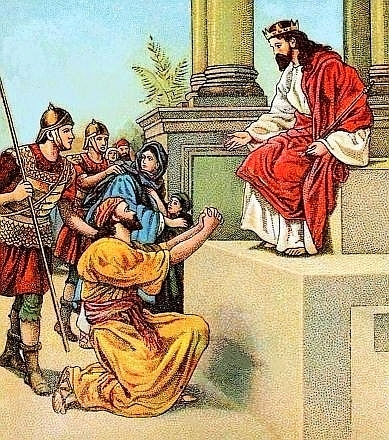
Pause and meditate on what it means for a Christian of today to live comfortably in his or her ‘paneled house’ and neglect the ‘Temple of God.’ Such can be compared to the situation of Herod the tetrarch, who broke God’s law, beheaded John the Baptist from the comfort of his palace, to protect his pride, and satisfy his wife and daughter. At the end, he lived in perplexity, uncertainty and sadness. Hearing the name of Jesus became a ‘riot’ in the heart of Herod! In the words of prophet Haggai, consider how Herod fared! But if we build up the temple of God by living spiritual lives, and aligning our bodies to the divine law, then, the Lord God will be pleased with us, the Holy Spirit will make His home in us, and the sweet name of Jesus will uplift our hearts. Think about the freedom of heart and the power we shall possess, and the Lord will bless us and satisfy us. Amen.


Fr Jude Chinwenwa Nwachukwu, C.Ss.R

Saints Peter and Paul Catholic Church,

Tedi-Muwo, Ojo, Lagos, Nigeria.

Thursday September 28, 2023.

www.nwachinwe.blogspot.com

Sunday, September 24, 2023

The Enduring Light of Truth

Meditation for Monday of the Twenty-Fifth Week in Ordinary Time
(Ezra 1:1-6; Lk 8:16-18)
Welcome to the Book of Ezra. The name ‘Ezra’ is derived from the Hebrew word, “Azaryahu”, which means ‘God helps.’ Ezra was a priest and scribe during the return from Babylonian exile, while Zerubbabel led the people in the rebuilding of the temple. This was done with the support of the Persian King Darius. The Book of Ezra is divided into ten chapters, and gives an account of events spanning about 25 years, beginning with the edict of Cyrus in 538 B.C. to the dedication of the temple in 515 B.C. As a priest and scribe, Ezra helped the people in their spiritual and religious reforms by educating them on the laws of Moses, encouraged them to follow God’s commandments and to abandon the foreign lifestyles. 

In the passage we read today, the Lord inspired Cyrus, king of Persia, to make a proclamation urging the people to make contributions for the rebuilding of the temple in Jerusalem. He encouraged anyone who is willing to go down to Jerusalem and participate in the reconstruction. It is a marvel that a pagan king, who was once against Jerusalem, would suddenly support its rebuilding. God’s purpose can be achieved in any means possible, even that which was targeted to pull obstruct the will of God can turn out to promote it. The divine illumination cannot be covered!


The plan of God shines like light that cannot be hidden. The darkness of the world, the lies and deceit that roars around will be silenced when the light of truth appears. Jesus says in the gospel, “For nothing is hidden that shall not be made manifest, nor anything secret that shall not be known and come to light.” Thus, we must ensure we are on the side of truth, and allow the light of truth to shine out through us. If we allow unrighteousness to cover the lamp of divine truth God has lit in us, He can still use any means possible to reveal His light and dispel the darkness, just has He use Cyrus to rebuild the Temple.


Fr Jude Chinwenwa Nwachukwu, C.Ss.R

Saints Peter and Paul Catholic Church,

Tedi-Muwo, Ojo, Lagos, Nigeria.

Monday September 25, 2023.

www.nwachinwe.blogspot.com


“DO YOU BEGRUDGE MY GENEROSITY?”

Meditation for Twenty-Fifth Sunday in Ordinary Time, Year A
(Is 55:6-9; Phil 1:20-24,27; Mt 20:1-16)

The first reading opens with a striking advice: “Seek the Lord while He may be found, call upon Him while He is near; let the wicked forsake his ways.” In our meditation today, we see how God’s mercy and generosity are the only opportunities we have to encounter the Lord. That is why the prophet Isaiah says, “Let him return to the Lord, that He may have mercy on him, and to our God, for He will abundantly pardon.” So, the mercy of God sustains the righteous man, and gives room for the unrighteous man to seek the Lord and to find Him.


The parable of the hired laborers for the vineyard demonstrates the depth of God’s generosity in showing mercy. The story shows how God, the Householder, takes the initiative to give us the opportunity to participate and contribute to His Kingdom. What would have happened to those talented and willing laborers if the Master did not find them out? It would be like laborers who came out to put their skills to use and earn a living, but they stayed idle all by themselves and went back without making any impact and gained nothing in the end! Think about what would have happened to their hunger for life and wellbeing. But the Lord has visited His people; His mercy has given us opportunity, even at the ‘eleventh hour’, to contribute and participate in the heavenly rewards.


The prophecy of Isiah is here fulfilled, for God can now be found since we are at the hour of His mercy. Though the ways of God are far removed from the ways of man, just as the heavens are higher than the earth, His love and mercy have bridged the gap, and justified us to receive His generosity. We do not ‘begrudge his generosity’ as the first laborers did when they complained about being paid the same amount as those who came at the eleventh hour. Instead, we rely on His generosity, and abide by it as a rule, and follow it as an example. This is how we become laborers of His Kingdom, using our gifts and talents to contribute to the Kingdom of God, and earn a living by participating in the heavenly riches and at the end, eternal life.


As we meditate on the parable, we marvel at such generosity that is beyond human comprehension. Those redeemed by the Master’s love and generosity ought to live in thanksgiving to Him. This is the new life we have in Christ Jesus. That is why St Paul says in the second reading, “Christ will be honored in my body, whether by life or by death. For to me to live is Christ, and to die is gain.” We begrudge His generosity by not looking up to His example and following unrighteous ways.  On the other hand, we acknowledge Jesus’ saving generosity by ensuring that our manner of life is worthy of the gospel. Amen.


Fr Jude Chinwenwa Nwachukwu, C.Ss.R

Saints Peter and Paul Catholic Church,

Tedi-Muwo, Ojo, Lagos.

Sunday September 24, 2023

www.nwachinwe.blogspot.com 

Monday, September 18, 2023

“DO NOT WEEP”

 “DO NOT WEEP”
Meditation for Tuesday of the 24th Week in Ordinary Time
(1 Tim 3:1-13; Lk 7:11-17)

On entering the city of Nain, Jesus and His companions met a crowd of mourners moving off the city to bury a young man, the only son of a widow. Being a widow, the woman was in a painful hopeless situation. All the mourners around her could not wipe away her tears. Obviously, she had no reason to live, for that which she lived for had been taken away from her. “And when the Lord saw her, He had compassion on her and said to her, “DO NOT WEEP.”


The consoling words of Jesus flowed from the depths of His heart, the compassionate heart of Jesus that bleeds at the pain and agony which sin had brought upon humanity. When Jesus said to her, ‘do not weep’, it was as if He was telling her to allow Him weep on her behalf, for that was what He did on the Cross. Thus, the compassion of Jesus is a participation of His life in the situation of the believer. He does not comfort us from a safe disinterested distance; He is GOD WITH US, who dwells among us and shares life with us. As we meditate on the encounter of Jesus and the widow of Nain, we come to understand deeper what He meant when He said, “Blessed are those who mourn; they shall be comforted” (Mt 5:5).


Then, Jesus said, “Young man, I say to you, arise.” The dead man got up and began to speak. Their mourning turned to joy and jubilation. They began to testify, saying, “God has visited his people!” That is why we shall bring all our tears to Jesus, the Comforter, that He may say to us this day, “Do not weep.” Amen.


Fr Jude Chinwenwa Nwachukwu, C.Ss.R

Saints Peter and Paul Catholic Church,

Tedi-Muwo, Ojo, Lagos.

Tuesday September 19, 2023.

www.nwachinwe.blogspot.com


Sunday, September 17, 2023

THE FERTILE SOIL OF FAITH

Meditation for Monday of the Twenty-Fourth Week in Ordinary Time
(1 Tim 2:1-8; Lk 7:1-10)
Humility is a natural quality that can be nurtured both by believers and unbelievers. However, faith in Jesus Christ supplies the extraordinary grace that can efficiently sustain and deepen humility in the believer. In today’s Mass reading, we meditate on the role humility plays in strengthening the faith of the believer.

Though faith is a supernatural gift, it grows freely and develops faster when planted in the soil of humility. Thus, humility is the humid soil in which faith grows stronger and yields a rich harvest. Think about the words of St Paul in the first reading: “I desire then that in every place the men should pray, lifting holy hands without anger or quarrelling.” Such freedom of expression and gestures towards God can only come from a humble heart, who is not weighed down by pride and arrogance. Humility empties the heart for divine grace to refill. The man of faith, who prays constantly with such freedom, must be humble at heart.


In the gospel, Jesus praised the faith of the Centurion. This Roman army commander sent Jewish elders to implore Jesus to come and heal his servant who was at the point of death. The Jewish elders talked about the man’s kindness to them. As Jesus was getting closer to the house, this Centurion sent message to Him, saying, “Lord, do not trouble yourself, for I am not worthy to have you come under my roof; therefore, I did not presume to come to you. But say the word, and let my servant be healed.” Think about the humility of this Gentile; while the Jewish elders found him worthy, the man did not acclaim himself worthy. Also, it is great humility for such a highly placed man to take the pains to care for his servant. Here was a man with natural human heart, who did not see his position as an elevation above others. He did not use his Roman power to oppress the Jews. In addition, this Centurion believed in Jesus and in His power to heal.


Jesus praised the faith of this army commander, saying, “I tell you, not even in Israel have I found such faith.” While humility is the fertile soil from which genuine faith germinates, faith in Jesus nourishes humility and gives it an eternal value. We may not often have the strong faith we desire. Even the little faith we have can easily be choked by doubt and trials of life. But we can always nurture humility! Then, the mustard seed of faith within will continue to grow and flourish to the glory of God. Amen.


Fr Jude Chinwenwa Nwachukwu, C.Ss.R

Saints Peter and Paul Catholic Church,

Tedi-Muwo, Ojo, Lagos.

Monday September 18, 2023.

www.nwachinwe.blogspot.com

UN-NUMBERED FORGIVENESS

 Meditation for the Twenty-Fourth Sunday in Ordinary Time, Year A
(Sirach 27:30-28:7; Rm 14:7-9; Mt 18:21-35)

In our meditation today we reflect on the root and consequences of forgiveness. The readings testify that forgiveness is a divine mandate, which will affect our relationship with God. To understand and embrace the divine root of forgiveness is an important step in forgiving others. Forgiveness is one of the most challenging spiritual exercises. The human person will always want to base forgiveness within himself or around his hurt and feelings. This is one of the reasons it is difficult to forgive, and the reason Peter asked Jesus, “Lord, how often shall my brother sin against me, and I forgive him? As many as seven times?”


Sooner or later, the human person realizes that his good will and capacity to forgive are not sustainable enough without divine grace. Then, anger, bitterness, grudge, enmity will begin to manifest. The first reading says, “Anger and wrath, these are abominations, and the sinful man will possess them.” These negative energies can make one seek vengeance on his neighbor. But he that takes vengeance will suffer vengeance from the Lord. In other words, forgiveness is a sign indicating the kind of relationship we have with God. That is why the unforgiving servant in the gospel parable was sent to the jailers till he should pay all his debt because that was how he treated his fellow servant. And the first reading asked, “Does a man harbor anger against another, and yet seek for healing from the Lord? Does he have no mercy toward a man like himself, and yet pray for his own sins”


Hence, in answering Peter’s question Jesus made us to understand that forgiveness is not centered on the human person, nor does it flow from the hurt one received. Forgiveness is not numbered; it is an example we learn from God, and a gift we receive from Him. As we meditate on the parable of the unforgiving servant, it becomes obvious that those who are indebted to us by their misdeeds or offences remind us that we are all debtors before God, who blesses us with unmerited forgiveness. That means to forgive others is to share with them in joyful celebration and gratitude the mercy of God; it becomes an acknowledgment and witnessing to the divine love that wipes away our debts.


In the words of the second reading, to forgive others becomes our concrete demonstration that we do not live for ourselves, and none of us dies to himself. We belong to Jesus, we live and die for Jesus, and not to anyone or to any hurt others must have cause us. That is why forgiveness cannot be numbered nor based on trespasses. But forgiveness is a demonstration of how much we have allowed Jesus to be Lord over us, and thus, count every other thing as loss. In this way, forgiveness becomes our constant witnessing, and great proclamation of God’s mercy and compassion. Amen.


Fr Jude Chinwenwa Nwachukwu, C.Ss.R

Saints Peter and Paul Catholic Church,

Tedi-Muwo, Ojo, Lagos.

Sunday September 17th, 2023.

www.nwachinwe.blogspot.com


Saturday, September 16, 2023

MARY AROSE AND WENT IN HASTE (LK 1:39)


1.0.            Introduction

Mary arose and went in haste to visit Elizabeth after the angel Gabriel’s annunciation of the Lord to her. The angel had told Mary that her cousin Elizabeth was with child in her old age, she who was called barren. This was to prove to Mary that with God all things are possible. Then, Mary surrendered to the will of God, saying, “Behold, I am the handmaid of the Lord, be it to me according to your word.” Immediately the angel left, Mary arose and went in haste to visit Elizabeth.

2.0.        Mary Full of Grace

The angelic salutation, ‘Hail, Mary, full of grace’, was more than just a greeting. It captures the whole personality and life of Mary. Chosen from the foundation of the world, she was prepared from the first moment of her existence for the singular purpose of being the Mother of God. Being pure and Immaculate, Mary was full of grace. There was not obstruction or hindrance of communication between Mary and God. As a woman of grace, she could perceive and respond promptly to the will of God. Such unhindered response to the divine will is equally possible because she surrendered totally to the will of God. That means her actions can cooperate with the will of God in a smooth haste.

3.0.        Mary arose and went in haste

So, ‘Mary arose and went in haste.’ This ‘speed’ is not uniquely restricted to her visit to Elizabeth, but describes her overall disposition in doing the will of God; she responds promptly to God. She does not delay in accepting what God wants, and she speedily throws herself into doing that which brings God’s glory. That means God can fulfill His plans through Mary since she makes herself available to God. Thus, the graces of salvation can ‘speedily’ reach us through Mary, for she is always in a haste to fulfill God’s will. We see this in the wedding ceremony at Cana in Galilee, where Mary speedily brought the divine intervention that removed shame from the couple (Jn 2:1-11). That is why devotion Mary helps us to be draw closer to Jesus. With her maternal help, we can get rid of all obstacles that impede our free and quick response to divine grace.

4.0.        Youths go in Haste

Youths are often in haste, especially at this generation. Our adaptation to smart technology seems to have inclined us to expect everything about us to happen in haste. It is as if our blood is boiling as our necks are stretched out for what is coming next! So, we easily forget the past, get bored at the present, but warmed up for the unforeseen future. We are in a hurry; no dull moment! We hardly settle for the present activity before we start hearing the entertaining drums of the next activity. That is why the next level of our lives is often more promising and we are in a hurry to get there. Think about the haste with which youths enter relationships. Worse still is the haste to get rich. Have you noticed that it is becoming difficult for people to pay attention and listen for a few minutes? Our minds are wandering too fast.

The kind of haste we apply these days can bring problems. “Where knowledge is wanting, zeal is not good; whoever goes too quickly stumbles” (Provb 19:2). Haste can lead to poverty (Provb 21:5). To avoid these problems, we learn from Mary, who arose and went in haste to visit Elizabeth. Mary’s example shows that we must be rightly motivated, prompted by grace, and we are out to do God’s will. That means our lives must rooted in God as the solid foundation from which we move. If we do not have the right base, which faith supplies, we can easily hasten trouble and destruction.

Therefore, we do not necessary expect that the youths of these days should be dull or slow, but they should learn from Mary to first remove those obstacles that hinger free communication with God. If we cannot respond promptly to divine grace and in doing the will of God, we can easily be hurried away the pursuit of pleasure and material things.

Fr Jude Chinwenwa Nwachukwu, C.Ss.R

CYON Youth Week, 2023

Saints Peter and Paul Catholic Church,

Tedi-Muwo, Ojo, Lagos.

Monday September 11th, 2023.

www.nwachinwe.blogspot.com