Thursday, December 8, 2022

THE MANTLE OF GRACE

    Meditation for the Solemnity of Immaculate Conception
(Gen 3:9-15.20; Eph 1:3-6.11-12; Lk 1:26-38)

Let us meditate and celebrate the solemnity of the Immaculate Conception of the Blessed Virgin Mary. At a time like this, when many people care less about sound doctrine, it is important to reflect on this mystery. When people are overly distracted with selfish pursuit, and adhere to spontaneous doctrines that are not consistent with genuine faith, there will be gradual but consistent decline in faith and true worship. Though the dogma of Immaculate Conception has attracted several debates over the years, Catholics continue to celebrate it annually with deep joy that extols the power and glory of God.

The dogma we celebrate asserts that, “From the first moment of her conception, the Blessed Virgin Mary was, by the singular grace and privilege of Almighty God, and in view of the merits of Jesus Christ, savior of Mankind, kept free from all stain of original sin.” This age-long dogma was later defined by Pope Pius IX on December 8, 1854. He explained that this unique privilege of grace was given to the Blessed Virgin Mary in view of the role she was to play as the mother of Jesus.


The first reading narrates God’s reaction to the fall of man. While Adam and Eve were busy enjoying their new found adventure in the forbidden fruit, they did not immediately realize the implications their human actions until God appeared. God’s presence exposed them, and made them realize how deep they erred. The unfortunate presence of sin is thus unmasked, and we see at once how much God hates sin. Then, He set up the plan to save mankind from Satan, the craft master of sin. God said, “I will put enmity between you and the woman, and between your seed and her seed; He shall bruise your head, and you shall bruise his heel.” Thus, a ‘new breed’ of humanity, a ‘new generation’ of man, who shall be ‘regenerated’ in the Son of the Woman, shall always enjoy this victory over Satan. That means a new way of life that cannot be brought down by sin shall spring forth in the Son of the Woman.


Hence, St. Paul announced with apostolic joy that God has blessed us with every spiritual blessing in the heavenly places, and chose us in Christ Jesus before the foundation of the world, “That we should be holy and blameless before Him.” It is the will of God that we should be sinless, and be adopted as His sons and daughters in Christ. And He has bestowed on us this grace to conquer sin, so that we can live for the praise of His glory through Jesus Christ.


We see then that it was necessary for our salvation that the Mother of Jesus would be conceived without sin. From St. Paul’s message, it is obvious that the Immaculate Conception is in line with the will of God that we should be holy and sinless. Since through the Blessed Virgin Mary, God opened for us the ‘new generation’ of humanity in Jesus Christ, destined to escape the corruption of sin, it was necessary that she would be without sin. The angel Gabriel’s salutation to Mary shows that the grace of salvation had found its home in Mary, “For with God nothing is impossible.” Therefore, in the Immaculate Conception, we celebrate the victory of grace and the saving power of God. The joy of our celebration today is that we are covered under the mantle of grace of the Blessed Virgin Mary, the Immaculate Conception. Amen.


Fr Jude Chinwenwa Nwachukwu, C.Ss.R

Saints Peter and Paul Catholic Church,

Tedi-Muwo, Ojo, Lagos.

Thursday December 8, 2022.

Solemnity of Immaculate Conception

www.nwachinwe.blogspot.com  

Wednesday, December 7, 2022

FINDING REST IN WEARINESS

Meditation for Wednesday of the Second Week of Advent
(Is 40:25-31; Mt 11:28-30)

In our meditation today, we feel encouraged and strengthen hearing Jesus say, “Come to me, all who labour and are heavy laden, and I will give you rest.” Think about the meaning of these words in relation to Advent season. The first reading prepares our minds to understand the words of Jesus. Isaiah announces that the Lord is the everlasting God, the Creator of all things. “He does not faint or grow weary; His understanding is unsearchable. He gives power to the faint, and to him who has no might he increases strength.”


Thus, Jesus invites us to come to Him with our burdens and find rest. In Him is strength greater than our burden, and rest sweeter than our weariness. In this encounter, our burden becomes His yoke, and His yoke is not too heavy to bear. This implies that the burdens we bear, the challenges of life we face, have now become means of coming to Jesus, the gentle and lowly in Heart. Our Advent step is quickened as we run to welcome Jesus, in whom our strength is renewed, our burden is made possible to bear, and in weariness we find rest.


Pause and meditate on how the crown of thorns we wear each day has now taken the form of our Advent wreath! See through the discomforts of each day important steps in your response to the invitation of Jesus: “Come to me…” For the prophet assures us that they who wait for the Lord shall renew their strength, they shall run not be weary, they shall walk and not faint. Amen


Fr Jude Chinwenwa Nwachukwu, C.Ss.R

Saints Peter & Paul Catholic Church,

Tedi-Muwo, Lagos.

Wednesday December 7, 2022.

www.nwachinwe.blogspot.com

Tuesday, December 6, 2022

THE UNCOMMON LOGIC

 Meditation for Tuesday of the Second Week of Advent
(Is 40:1-11; Mt 18:12-14)

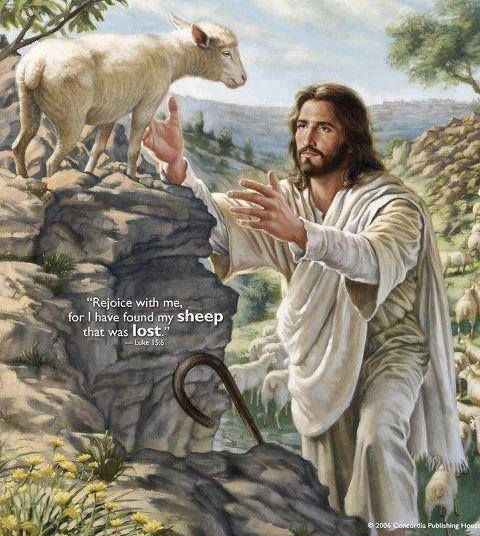
Let us meditate on the mystery of the Good Shepherd, who goes out to find the lost sheep. Human beings are naturally adventurous. We easily get bored by routines, and often stretch our necks high in search of something new. The image of a sheep that wandered from the sheepfold captures the wrong steps we fall into while searching for greater value and meaning outside the fold of revealed divine truth. Out of a hundred, when one sheep strays, common logic and laziness will settle for the ninety-nine. In the parable, the shepherd left the ninety-nine on the hills and went in search of the one that was lost. By leaving the greater number behind, he put them at risk, thus, he made a great sacrifice in search of the prodigal sheep.


In addition, by staying behind on the hill, in obedience and love, the ninety-nine participated in the sacrifice of their master for the one lost sheep. This is where the prayers and merits of the saints contribute to salvation of sinners. The Shepherd goes ahead in search of the one lost sheep, armed with the obedience and love of the ninety-nine. When the one sheep is found, the joy of the Shepherd is also shared by the ninety-nine. And this is a resounding joy, which is more than the joy he had over the ninety-nine.

Meditate on this great joy of salvation, and see how we who dwell in the desert of sin, look forward through this Advent for our approaching Savior. The mood of this joyful anticipation is what the prophet announced in the first reading of today. “A voice cries: ‘In the wilderness prepare the way of the Lord, make straight in the desert a highway for our God.” Yes, comfort is coming; violence will be no more, and iniquity shall be pardoned. Hear the good tidings: “Behold, the Lord God comes with might, and His arm rules for Him; behold, His reward is with Him. Filled with these expectations, the lost sheep will be ready to welcome the Good Shepherd when He comes. Jesus said at the end, “So it is not the will of my Father who is in heaven that one of these little ones should perish.” Amen.


Fr Jude Chinwenwa Nwachukwu, C.Ss.R

Saints Peter & Paul Catholic Church,

Tedi-Muwo, Lagos.

Tuesday December 6, 2022.

www.nwachinwe.blogspot.com

Monday, December 5, 2022

STREAMS IN THE DESERT

 Meditation for Monday of the Second Week of Advent
(Is 35:1-10; Lk 5:17-26)

 In our meditation today, we hear the prophet Isaiah addressing the dry land and the desert. Often the word of God is portrayed as coming like rain drops to overcome the dryness of the desert (Deut 32:2; Is 55:10). Dry land is discomforting, and does not support vegetation. Thirst and hunger are associated with it since there is no water there. In addition, it is not habitable, and as such, there are no roadways there. The dry land is symbolic of a life of sin or a life without divine grace. Such life is usually “dry”, “Empty” and full of discomforting obstacles. But the prophet addresses the word of God to the dry land, and announces the good news.

“The desert shall rejoice and blossom.” The dry land shall be fruitful again; the weak shall be strengthened, the fearful shall be courageous. There shall healing for the infirm, “For waters shall break forth in the wilderness, and streams in the desert.” And there shall be a highway there, which shall be called the ‘Holy Way’, the unclean shall not pass over it. The beautiful words of Isaiah dispel the dryness of the desert, and the new and enriching look of the wilderness manifest the transforming power of God.

In our meditation, we see how this transforming power of God takes a living presence among us in Christ Jesus. The Gospel says as Jesus was teaching, “The power of the Lord was with Him to heal.” This is the power that can transform dryness to fruitfulness, sin to righteousness, and sickness to health. The friends of the paralyzed man were attracted in faith by the healing power of Jesus. First, Jesus spoke to him saying, “Man, your sins are forgiven you.” After the Pharisees complained, He addressed the paralytic saying, “I say to you, rise, take up your bed and go home.”

Just as Isaiah addressed the word of God to dry lands that streams may break forth in them, so did Jesus speak to the paralyzed man and his sickness transformed to health. Pause and meditate on this transforming power of Jesus. See how He makes such opportunities available to us in faith like a highway of holiness in the desert of sin. So, we move forward in faith, and lay before Him our ‘dryness’ that He may speak to them gracious springs life gush forth upon us. Amen.

Fr Jude Chinwenwa Nwachukwu, C.Ss.R

Saints Peter & Paul Catholic Church,

Tedi-Muwo, Lagos.

Monday December 5, 2022.

www.nwachinwe.blogspot.com


Saturday, December 3, 2022

THE VOICE OF PENITENCE

Meditation for the Second Sunday of Advent, Year A
(Is 11:1-10; Rm 15:4-9; Mt 3:1-12)

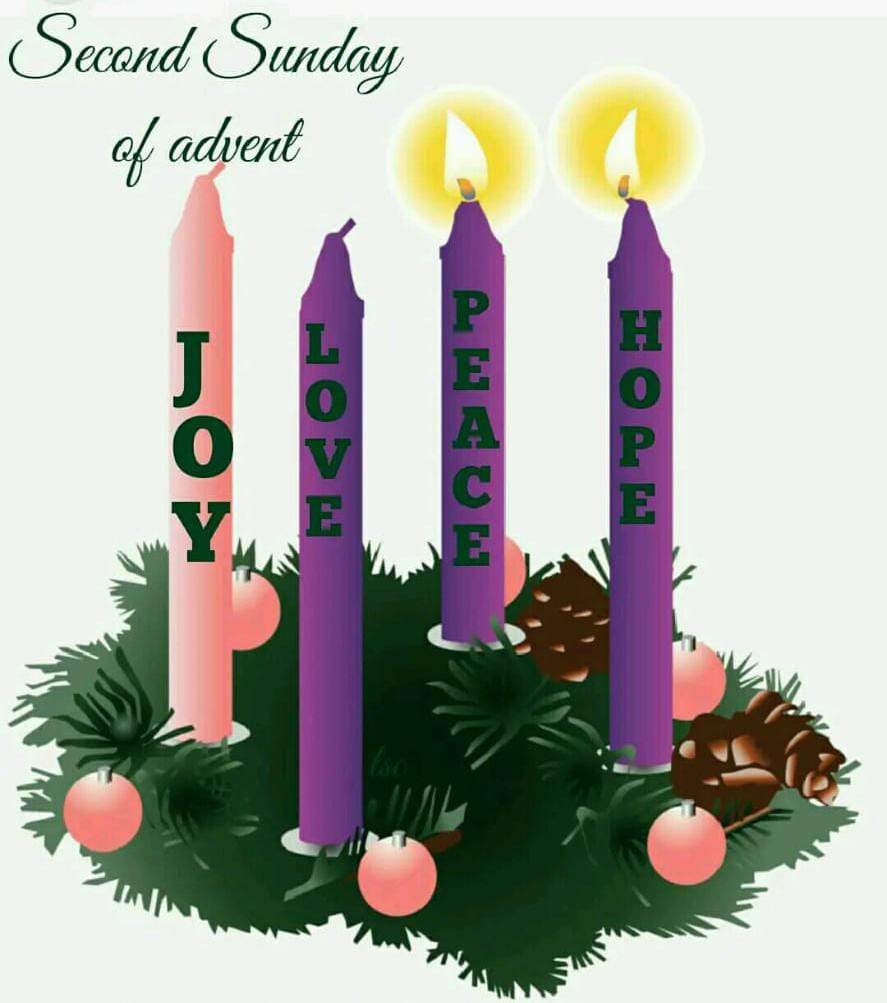
Our preparation and waiting for the coming of Jesus summon us to personal responsibility. Advent spirituality guides us to model our life after Jesus, so that when He comes, He will find us ready to welcome Him. The prophet Isaiah opens up our minds to understand the identity of the expected Messiah. He began by announcing the humble appearance of the Savior. “There shall come forth a shoot from the stump of Jesse, and a branch shall grow out of His roots.” The Spirit of the Lord shall rest upon this humble Branch, the spirit of wisdom and understanding, the spirit of counsel and might, the spirit of knowledge and fear of the Lord.

The prophet explained that the Messiah, who would come like a shoot from the stump of Jesse, shall judge with righteousness and equity, delivering the meek from the wicked. “Righteousness shall be the belt of his waist, and faithfulness the belt of his loins.” He shall bring peace and reconciliation. He shall bring to the earth the knowledge of the Lord, and all nations shall seek him. “And his dwellings shall be glorious.”


To wait for the Lord in this Season of Advent implies that we make efforts to adjust our lives to meet the Lord and welcome Him. That means we must begin to adjust our ways of life to align with the person of Jesus as announced by the prophet Isaiah. This is what the second reading and the Gospel emphasized. St. Paul explains that divine instructions, given in former days, like the ones we read from prophet Isaiah, breed steadfastness and encouragement, so that we will not lack hope. As we abide to these words of hope, God will give us the grace to live in harmony with one another, “In accord with Jesus Christ, that together you may with one voice glorify the God and Father of our Lord Jesus Christ.” The peace and reconciliation that dwells in Christ, is expected to be manifested among those ready to welcome Him. In other words, a sign that we are waiting and ready to welcome the expected Messiah is our readiness to welcome and reconcile with one another.


John the Baptist steps in, his voice roars in the desert: “Repent, for the kingdom of heaven is at hand.” He not only preached with his voice, but he himself became the message. John too arose with great humility; his dressing and food was so lowly! Both his voice and appearance spoke of penitence. Yet, he rose like a shoot from the stump, a lonely voice in the dry land, but the truth and power in his message attracted the people to him. “And they were baptized by him in the river Jordan, confessing their sins.” John the Baptist warns of the impending danger if we do not make way for the Lord by repenting of our sins.


That is why his baptism of repentance prepared the people for the baptism of the Holy Spirit that was to come in Christ Jesus. The coming of Jesus ushers in the indwelling of the Holy Spirit, which will animate in those ready to receive Him the righteousness of Jesus as announced by Isaiah. This will bring renewal to the face of the earth, and separate the wheat from the chaff. We can see already the self-inflicted destruction among individuals, families and societies that choose the chaff life, which is not guided by the Holy Spirit and is empty of the righteousness of Jesus. That is why we must listen to the voice from the desert, the voice of penitence, which summons us this Advent to humble ourselves under the Shoot from the stump of Jesse, and put on His righteousness and faithfulness.


Fr Jude Chinwenwa Nwachukwu, C.Ss.R

Saints Peter & Paul Catholic Church.

Tedi-Muwo, Ojo, Lagos.

Sunday December 4, 2022.

www.nwachinwe.blogspot.com


Saturday, November 19, 2022

“KING OF KINGS AND LORD OF LORDS”

Meditation for the Solemnity of Christ the King, Year C
(2 Sam 5:1-3; Col 1:12-20; Lk 23:35-43)

Let us meditate on the mystery of Jesus Christ the Universal King. This celebration marks the end of the Liturgical Year. The royal priesthood of Christ is prefigured in the kingship of David as we read in the first reading. The people pledged their loyalty to David at Hebron. He made a covenant with them and they anointed him king over Israel. The anointing of David became a pointer to Jesus, who was anointed with the Holy Spirit (Cf. Lk 4:18; Acts 10:38). Jesus the Messiah, the Anointed One, became the Lord of David, the greatest King of Israel (cf. Mt 22:41-46). So, Jesus is the King of kings, the Lord of lords (cf. Deut 10:17; Ps 136:3; 1 Tim 6:15; Rev 17:14). “And on His robe and on His thigh, He has a name written, ‘KING OF KINGS, AND LORD OF LORDS’” (Rev 19:16).


His rulership and sovereignty are eternal. He says, “All authority in heaven and on earth has been given to me” (Mt 28:18). Jesus resisted the temptation to be recognized as king according to human needs (cf. Jn 6:15). He said to Pilate, “Mine is not a kingdom of this world” (Jn 18:36). So, the Kingship of Jesus is unique and different from the rulership of the world; His model of rulership is a challenge to human authorities. The kingship of Jesus was mostly revealed during His passion and Cross, instead of the moments of his manifestation of power and authority during his preaching and performing of miracles.


The Gospel of today narrates how the rulers scoffed at Jesus, and the soldiers mocked Him, saying, “If you are the King of the Jews, save yourself!” It is typical of earthly kings and rulers to take care of themselves, ensuring their own security and comfort before taking care of their subjects. But here is Jesus hanging on the Cross, with an inscription over Him, saying, “This is the King of the Jews.” He is the king, whose crown was made of thorns, His thrown was the Cross. His ‘royal garment’ was taken away from Him, and He was stripped of all that he had. Jesus is the king, who was rejected by His kinsmen (Jn 1:11), and betrayed by His followers. He is the King, who lays His life for His followers. While earthly rulers pass judgement and condemnation on their people, Jesus says, “I have come not to judge the world, but to save the world” (Jn 12:47). He desires that we all reign with Him in His Kingdom, for He said to one of the criminals crucified beside him, “Truly, I say to you, today you will be with me in Paradise.”


In our celebration today, we echo the words of St. Paul in the second reading, thanking God for qualifying us to share ‘in the inheritance of the saints in light.’ Through the passion of Jesus, God delivered us from the dominion of darkness and transferred us to the Kingdom of His beloved Son, “In whom we have redemption, the forgiveness of sins.” The doors of the kingdom of Jesus are open to us all so that we can enter in through the ‘way of the Cross.’ Christ’s faithful are transferred from the kingdom of darkness and earthly kingdom to the Kingdom of Jesus. In this kingdom, Jesus reigns that we might reign with Him. “He is the image of the invisible God, the first-born of all creation, for in Him all things were created…” In His kingdom, we are all enrolled as ‘Firstborn sons and citizens of heaven’ (Heb 12:23), we become ‘co-heirs’ with Christ’ (Rm 8:17), which makes us ‘a chosen race, a royal priesthood’ (1 Pet 2:9).


It becomes obvious that those who wish to reign with Him must hold Him as pre-eminent in everything. That means Jesus must have the greatest influence in their lives. They will not surrender to any other power or authority, whether visible or invisible. In Christ Jesus we live as children of the Kingdom, “For in Him all the fullness of God was pleased to dwell, and through Him to reconcile to Himself all things, whether on earth or in heaven.” Thus, Jesus the universal King becomes the center of our lives. All our thoughts, words and actions ought to be inspired by the righteousness of Jesus and for His glory, “Since it is in Him that we live, and move, and have our being” (Acts 17:28).


Therefore, we gather before Jesus, as the Israelites gathered before David at Hebron, to acknowledge Him as our King. As Kingdom-children, who are called to reign with Him, our ways of rulership and exercise of authority must be modeled after Jesus. We must put away greed, pride and arrogance that is common among earthly leaders. ‘The way of the Cross’ is the way we reign and exercise authority. This is how we confront and overcome the worldly ways of rulership, and make way for the peace and love of Jesus to reign in our hearts and in our society. Amen.


Fr Jude Chinwenwa Nwachukwu, C.Ss.R

Saints Peter and Paul Catholic Church,

Tedi-Muwo, Lagos.

Sunday November 20th, 2022.

Solemnity of Christ the King

www.nwachinwe.blogspot.com

Saturday, November 12, 2022

The End in View

Meditation for the Thirty-Third Sunday in Ordinary Time, Year C
(Malachi 4:1-2; 2Thes 3:7-12; Lk 21:5-19)

Let us meditate on the mystery of the end of all things. In gospel, Jesus responded to those who spoke of the beauty of the temple, how it was adorned with noble stones and offerings. The beauty we contemplate, and the values we cherish, can determine the direction and movement of our hearts. We always act with a purpose in view. The end to which we strive for, and commit our lives to, can only enrich us with lasting fulfilment if it is greater than our lives. That is why the contemplation of eternity remains the ultimate source of value and fulfilment that can move us forward. Hence, Jesus quickly urged the people not to exhaust their hearts admiring the beauty that will not last: “As for these things which you see, the days will come when there shall not be left here one stone upon another that will not be thrown down.”

What do you think will happen if the end we look up to is crowned with death and destruction? It will definitely affect our way of life at the moment. The fact that the end is opened for us to aspire to and contemplate on, implies that our present life must be patterned in that direction. Thus, there is a gradual unfolding of the children of God (Rm 8:19). According to prophet Malachi, at that very moment when the children of God are revealed, the evildoers are brought down. There will always be a struggle to distract the children of God, so that they settle for the contemplation of things that cannot last. In other words, the temptation is to replace eternal beauty with temporary beauty, thereby leading man to that state of life where nothing has value, and to experience that ‘nothingness’ within that leads to chaos.

Therefore, Jesus warns, “Take heed that you are not led astray; for many will come in my name, saying, ‘I am he!’ and, ‘That time is at hand!’ Do not go after them.” He made it clear that difficult times are bound to come; wars, political turmoil, natural disasters, hunger, sickness, persecutions, and other terrifying manifestations. All these we must encounter and confront as they come, still, the end is not near. Our journey to the end that God has willed for us is not coerced or conditioned by any external influence. According to St. Paul’s message in the second reading, we move towards the eternal beauty we contemplate by fulfilling our present responsibilities “in quietness”.

A Christian lives in hope of the second coming our Lord Jesus Christ. The mystery of this hope is that it energizes him to make the best of the present moment for his wellbeing and to the glory of God. That is why we must be mindful of the things we treasure in our hearts, and the things that consume the energies of our love. The end is being realized today as we work diligently and humbly for a good life. Therefore, in contemplating eternal beauty through faith and prayer, “The Sun of righteousness shall rise, with healing in its wings”, and shine upon you, so that “Not a hair of your head will perish. By your endurance you will gain your lives.” Amen.


Fr Jude Chinwenwa Nwachukwu, C.Ss.R
Saints Peter & Paul Catholic Church,
Tedi-Muwo, Ojo, Lagos.
Sunday November 13th, 2022.
www.nwachinwe.blogspot.com