Monday, July 4, 2022

The Channel of Faithfulness

The Channel of Faithfulness
Meditation for Tuesday of the Fourteenth Week in Ordinary Time
(Hosea 8:4-7, 11-13; Mt 9:32-38)
The powerful illustration of Hosea’s marriage to Gomer was to expose Israel’s infidelity to God and call them back to repentance, since God mercy awaited them. In today’s reading, the prophet highlighted some of their atrocities against their covenant with God. “They set up princes, but without my knowledge; with their silver and gold they made idols for their own destruction.” Hosea explained to them that unfaithfulness yields futility; disobedience leads to destruction! He said, “Now God will remember their iniquity, and punish their sins; they shall return to Egypt.”

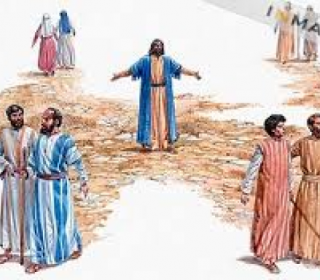
Such punishment as announced upon unfaithful Israel can be seen to manifest in the life of the possessed man in the gospel of today. The man lost the ability to speak his mind and to praise God. Jesus, the Faithful Servant per excellence, steps in to set the man free from the bondage of evil. And He went about all the cities and villages, teaching in their synagogues and preaching the gospel, and healing every disease and infirmity.


Think about how Jesus gave out knowledge of God through His teaching, true worship by his preaching of the gospel, and liberation by healing of body and soul. All these are easily gotten by the man who is on the path of faithfulness to God. That is why Hosea exposed the atrocities of the people and how they lead to destruction. But thanks be to Jesus, we have the living channel of faithfulness; never shall we ‘return back to Egypt’, the land of slavery. And a man who has been set free by Christ Jesus learns of His love and compassion. Faithfulness without love is empty and hypocrisy.


Therefore, as Hosea went out in search of his wife, and as the healed made the people to praise God, so does Christ’s faithful follow His steps of compassion and go forth bringing healing and liberation to others, becoming other channels of faithfulness. At the end of today’s gospel Jesus said to His disciples, “The harvest is plentiful, but the laborers are few; pray therefore the Lord of the harvest to send out laborers into His harvest.” Amen.


Fr Jude Chinwenwa Nwachukwu, C.Ss.R

Saints Peter & Paul Catholic Church,

Tedi-Muwo, Ojo, Lagos.

Tuesday July 5, 2022.

www.nwachinwe.blogspot.com

www.soundofsilence.ng


Steadfast Love

Meditation for Monday of the Fourteenth Week in Ordinary Time
(Hosea 2:14-16, 19-20; Mt 9:18-26)

The name ‘Hosea’ means ‘Salvation.’ Hosea prophesized during the reign of Jeroboam II, before the fall of the Northern Kingdom of Israel to Assyria. The prophet is popularly known for his marriage to Gomer the prostitute. This unfaithful woman became a symbol of Israel’s unfaithfulness to God in following other gods and committing evil. It was strange and scandalous that a holy man like Hosea would stoop low to marry such an unbefitting woman. Thus, the prophet became a symbol of God’s covenant with His people, and God’s faithfulness despite Israel’s infidelity. Hosea’s marriage with Gomer became an illustration of God’s intense desire for His people, and His excessive mercy and forgiveness. “And I will espouse you forever; I will espouse you in righteousness and in justice, in steadfast love, and in mercy. I will espouse you in faithfulness; and you shall know the Lord.”

God’s salvation is manifested through His love and mercy. What Hosea stood for and depicted in symbols, is now given in reality and in its fullness in Jesus Christ. Therefore, we gaze upon Jesus in the Gospel of today as He heals the woman with hemorrhage through her faith, and as He raised the official’s daughter back to life. Jesus’ love and compassion for the sick woman was so overwhelming that a little touch at the fringe of his garment healed her.  The abundance of life in Him was so excessive that He held the girl by the hand and restored her to life.


Sin is like a sickness to the soul; death is the consequences thereof. But as in the illustration of Hosea and Gomer, Jesus heals us and restores our life. We come to Him for that divine that divine touch, no matter has little it might be. And we marvel and testify at His steadfast love and mercy, which heals and restores us. Amen.


Fr Jude Chinwenwa Nwachukwu, C.Ss.R

Saints Peter & Paul Catholic Church,

Tedi-Muwo, Ojo, Lagos.

Monday July 4, 2022.

www.nwachinwe.blogspot.com          

Saturday, July 2, 2022

"Peace be to this House"

 “Peace be to this House”
Meditation for the Fourteenth Sunday in Ordinary Time, Year C
(Is 66:10-14; Gal 6:14-18; Lk 10:1-12, 17-20)


Let us meditate on the mission of the seventy disciples, whom Jesus sent ahead of him, two by two. The first charge He gave them was to pray, and to pray for laborers into the harvest. Prayer is missionary! It is from there that we release the energy that makes the mission of Christ to succeed. The second charge was for them to be conscious of the seriousness of the task ahead, and the possible danger that awaits the preacher of the gospel. He said, “Behold, I send you out like lambs in the midst of wolves.” That means the bearer of the good news of salvation cannot be ‘causal’, but like a man in a war front, he must be alert and avoid distractions. Hence, Jesus said to them, “Carry no purse, no bag, no sandals; and salute no one on the road.”


The instructions of Jesus are necessary for the disciples to become agents of peace to those they meet. Jesus said to them, “Whatever house you enter, first say, ‘Peace be to this house!’ In order to be bring peace into the hearts of men, the bearer of the gospel message must pattern himself according to the instructions of Jesus. That means he must be a man of peace first, before he can convert others to be men of peace. The pattern of life fit for the gospel, and on which the gospel germinates and grows is unique. It is completely different from our ordinary day to day ways of life. Every aspect of the life of the bearer of the gospel must be coordinated and patterned towards successful transmission of the good news of peace.


The instructions and patterns of life that form fertile ground for the gospel to germinate and grow are summed up in the cross of our Lord Jesus Christ. On the cross is the ultimate pattern that saves, and makes salvation possible in the hearts of all believers. This is what St Paul emphasized in the Second reading, saying, “Far be it from me to glory except in the cross of our Lord Jesus Christ, by which the world has been crucified to me, and I to the world.” The cross becomes our ‘rule’ of life; the pattern that shapes our lives. From the cross of Christ, we draw strength like weak lambs to confront the wolves of this world. So, we are not afraid of embarking on difficult tasks or facing challenges. Jesus said, “Whoever wants to be my disciple must deny himself and take up his cross and follow me” (Mt 16:24). And St Paul says,  “Henceforth let no man trouble me; for I bear on my body the marks of Jesus.”


If through the pattern of the cross we make our daily choices, and spread out the good news of peace to others, then the blessings foreseen by Prophet Isaiah shall be fulfilled in and through us. From the cross of Jesus flows that fountain that consoles and satisfies, that we may drink deeply with delight from the abundance of His glory. From this fountain, the prophet announced that prosperity will flow like a river, and wealth shall be like overflowing stream; “Your heart shall rejoice…and it shall be known that the hand of the Lord is with His servants.”


The seventy disciples returned with joy. They testified to their victory over evil. Jesus welcomed them, and assured them that they had been given authority over every evil. Most importantly, the bearers of the good news of peace have their names written in heaven. At the end, the weak man sent out like sheep among wolves, who drank from the fountain of grace flowing from the cross of our Lord Jesus Christ, is given authority to overcome evil, and be filled with joy and heavenly blessings. Amen.


Fr Jude Chinwenwa Nwachukwu, C.Ss.R

Saints Peter and Paul Catholic Church,

Tedi-Muwo, Ojo, Lagos.

Sunday July 3rd, 2022.

www.nwachinwe.blogspot.com


Sunday, June 19, 2022

THE EUCHARISTIC ENCOUNTER

THE EUCHARISTIC ENCOUNTER
Meditation for the Solemnity of Body and Blood of Christ (Corpus Christi), Year C
(Gen 14:18-20; 1 Cor 11:23-26; Lk 9:11-17)

The Eucharist is the center of the life of the Church, and the life of believers revolve around the Eucharist. For those who participate actively, it is not a matter of argument, but the testimony of their lives. Every explanation of this mystery is only a pointer or symbolic, leading one forward to it. Indeed, the Eucharist is a place of encounter! And it is only the one who encounters the divine presence in the Eucharist who truly understands it.

The Eucharist as a place of encounter offers us a lot of opportunities. One of them is the example of Abraham in the first reading. Think about how Melchizedek, king of Salem and priest of God the Most High, offered bread and wine! These, the priest offered in thanksgiving to God for delivering Abraham from his enemies, and he called down God’s blessings on him. And Abraham gave him a tenth of everything. This is a clear pre-figuration of the Eucharist in which Jesus Christ offers His Body and Blood in the form of Bread and Wine. In the Eucharist, we offer thanksgiving and glory to God, receive divine grace and blessings, and our aspirations are offered up to God.

Thus, in the Eucharist we encounter Jesus, who commanded us to do this in memory of Him. The second reading says, “For as often as you eat this bread and drink the chalice, you proclaim the Lord’s death until He comes.” Having shared in the life of the Cross through the Eucharist, this PROCLAMATION becomes our living manifestation of the grace that has nourished us. A life that is powered by the energy generated from the Cross overcomes every suffering and conquers every opposition. Above all, the Eucharist floods the soul with heavenly contentment and peace.

The miracle of the loaves exemplifies the satisfaction that this living Bread and Wine gives. By having compassion on them in their hunger, Jesus gave Himself to the multitude in love, and by multiplying bread for them, He satisfied each person uniquely. Though there were many and they had different degrees of hunger but the one nourishment satisfied them all. “And as there is one loaf, so we, although there are many of us, are one single body, for we all share in the one loaf” (1 Cor 10:17).

Therefore, in the Eucharist, we equally encounter one another as brothers and sisters in Christ. So, what started as a divine encounter now translates into love for my neighbor. We now know how the Eucharist has become the center of the life of the believer. It gives us the silent strength to live a holy life and to love one another. Amen.


Fr Jude Chinwenwa Nwachukwu, C.Ss.R
Saints Peter & Paul Catholic Church,
Tedi-Muwo, Lagos.
Sunday June 19th, 2022.
www.nwachinwe.blogspot.com
www.soundofsilence.ng
Solemnity of Corpus Christi

Sunday, June 12, 2022

Sharing in the Life of the Trinity

Sharing in the Life of the Trinity

Meditation for the Solemnity of the Most Holy Trinity

(Prob 8:22-31; Rm 5:1-5; Jn 16:12-15)

Let us meditate on the mystery of the Three Persons in one God. The doctrine of the Trinity holds that God is one; and the one God is Father, Son and the Holy Spirit. That means the Father is God, Jesus Christ is God, and the Holy Spirit is God. The three persons are ‘co-substantial’, ‘co-equal’ and in perfect unity. The mystery of the Trinity in one God is the most sublime of all mysteries. As we meditate on the Trinity, our understanding of this mystery comes from our exaltation and contemplation. While reasoning principles cannot fully grasp this mystery, still reason is not violated by trying to understand it. In other words, it is not unreasonable to believe in Trinity. On the other hand, it uplifts and nourishes the mind.


What do we see in most religions that do not recognize God as Trinity? God for them is ‘completely other’, with no inter personal relationship with his faithful. Fear is usually part of their spirituality since there cannot be any ‘shared life’ between the followers and their God. This is so because, since their God is one and ‘solitary’, it cannot communicate itself in love, but reach out to his believers by proxy, such as prophets, messengers and interpreters, or by appearing and disappearing. Those who deny the Trinity often adhere to their doctrines and promote them with the same zeal as their cultural beliefs. This is because such a ‘solitary’ God will depend on his adherents to be loved and worship, and they must hold on to their practices in order to keep their God relevant. At the end, as culture demands compliance, so does such religion propagate their faith. Here, man becomes a slave to the God he worships, or he breaks free and detects to the God who needs his worship to be fulfilled.


Oh! Let us exult and rejoice that God is One and Trinity! That means He is perfect love, perfect unity, and in Him is fullness of live. God is life itself. In the one God is perfect communication; he is the source of interpersonal relationship. Because God is One and Trinity, He can communicate Himself and still remain in His perfect self without losing Himself. As we meditate on the Trinity, we stand in awe at the God who is complete and perfect in Himself, to whom nothing can be added or subtracted. He does not need us to be relevant, nor does our worship add to His greatness but they profit us for our salvation. Because God is Trinity, He can create man in His own image and likeness, redeem him and sanctify him.


Since God is Trinity of Persons, we can have personal relationship with Him, calling Him ‘Abba! Father’ (Gal 4:6), and walking hand in hand with Jesus as our Brother (Heb 2:11), and enjoy communion with the Holy Spirit who dwells in us and sanctifies us from within as God’s temple (1 Cor 3:16). God, in His Trinity of Persons, shares out His life with us, and still remains perfectly complete. And we have the duty to reveal this hidden life of God through our words and actions (cf. 2Cor 4:11). That is why we must be people who build healthy relationships, and love all peoples as God has loved us in Jesus Christ through the Holy Spirit. Because we carry in ourselves the life of the Trinity, we derive fulfilment and maturity mostly by loving others and sharing life with them. That is why selfishness hurts and dehumanizes us. Our sharing in the life of the Trinity makes it possible for us to go through tribulations and still maintain our inner joy and peace.


May the almighty God bless you, in the name of the Father and the Son and the Holy Spirit. Amen.


Fr Jude Chinwenwa Nwachukwu, C.Ss.R

Saints Peter & Paul Catholic Church,

Tedi-Muwo, Ojo, Lagos.

Sunday 12th June, 2022.

Solemnity of the Most Holy Trinity

www.nwachinwe.blogspot.com

www.soundofsilence.ng


Tuesday, June 7, 2022

THE WRONG TURN OF RELIGION

 The Wrong Turn of Religion

Meditation for Wednesday of the Tenth Week in Ordinary Time

(1Kg 18:20-39; Mt 5:17-19)


Religion promises to care for the good of man, from life here on earth to life beyond. But at the wrong turn of religion, it can bring about unimaginable disaster to humanity. Faith in God is sublime, it nourishes the mind and uplifts the heart. It can lead the human person to stability and great achievements. But at the wrong turn of religion, when doctrines are misconceived, and religion is used as tool for the kingdom of man rather than for the kingdom of God, it becomes a scourge unto man and spreads like a virus.


Think about how the worship of Baal, with its numerous prophets, dehumanized Israel. Elijah had to run for his dear life. Like every wrong turn of religion or false belief, the prophets of Baal were numerous, noisy and forceful. The people seemed to be held captive and confused, they could no longer air their view. While true faith guarantees freedom, the wrong turn of religion stiffens its followers, and does not allow variety or freedom of expression. Man steps into religion to discover himself in God. But false belief tries to discover God in man, and by so doing, man loses himself by false divinization of himself!


Then, pride sets in to make up for the emptiness within and fear of being found out. Think about how much the prophets of Baal assumed for themselves! Imagine the audacity with which they embraced Elijah’s contest! Elijah said to them, “And you call on the name of your god and I will call on the name of the Lord; and the God who answers by fire, he is God.” The false worshipers called and called, but there was no answer; they applied several physical gestures to twist Baal to do their will, but there was no answer. Elijah even mocked them, adding zeal to their pride, which exposed their emptiness more, and leading to their destruction.


On his own part, Elijah humbly set up the traditional altar of the Lord in the name of the twelve tribes of Israel, “To whom the word of the Lord came, saying, ‘Israel shall be your name.’” In other words, he built the altar on the authority of the word of God. After preparing the bull, jars of water were poured on it. Water supposed to be obstacle to fire, but Elijah wanted to show that nothing can stop the fire of God! He invoked God’s name, calling Him the God of Abraham, Isaac and Jacob. Then Elijah expressed his submission to the will of God, saying, “Let it be known this day that you are God in Israel, and that I am your servant, and that I have done all these things at your word.”


“Then the fire of the Lord fell, and consumed the burnt offering…” The people felt liberated, and gave their free profession of faith, saying, “The Lord, He is God; the Lord, He is God.” In the gospel of today, Jesus declares that He came to complete what was begun in the prophets. As Elijah was a messenger through which the people of old acknowledge and worshipped the true God, so much so is Jesus Christ ‘God among us’, our Mediator, through whom our prayers answers. The love of Jesus is the new fire that overcomes every obstacle, and takes our steps away from the wrong turn of religion. Amen.


Fr Jude Chinwenwa Nwachukwu, C.Ss.R

Saints Peter & Paul Catholic Church,

Tedi-Muwo, Ojo, Lagos.

Wednesday June 8th, 2022.

www.nwachinwe.blogspot.com

www.soundofsilence.ng

Monday, June 6, 2022

The Taste of Charity

 The Taste of Charity

Meditation for Tuesday of the Tenth Week in Ordinary Time

(1Kg 17:7-16; Mt 5:13-16)

Let us meditate on the encounter between Elijah and the widow of Zarephath. The woman’s act of kindness sheds light on the nature of charity that attracts divine providence. Indeed, charity is an economic principle that is less recognized as such, because we often see it from the point of view of giving away. The act of charity supplies more than it gives away!


Elijah was in need, and God sent him to a widow who was equally in need. The woman lamented about her situation to the prophet, saying, “As the Lord your God lives, I have nothing baked, only a handful of meal in jar, and a little oil in a pitcher; and now, I am gathering a couple of sticks, that I may go in and prepare it for myself and my son, that we may eat it, and die.” With this situation, she had every reason not to listen to any demand on her. Being a widow, she had no one to come to her aid. And having made up her mind and laid out her plan, she did not consider any act of charity. Of course, the situation at hand did not warrant any giveaway! The demand for charity often breaks forth, and challenges our routine plans.


The prophet’s demand sounded as harsh as the hunger that ravished the land at that time. He said to her, “Fear not; go and do as you have said; but first make a little cake of it and bring it to me, and afterward make for yourself and your son.” The sound of the demand for charity often rings as if the person asking for help does not understand what you are going through. Even if he understands your situation, the mere fact that he is asking you for help implies that he places his own needs above yours. And this can evoke resentment. That is why it is difficult to be charitable, and to persevere in charity unless guided by the grace of God.


Then, Elijah said to her, “For thus says the Lord the God of Israel, ‘The jar of meal shall not be spent, and the pitcher of oil shall not fail, until the day that the Lord sends rain upon the earth.’” We see that the prophet was not selfish in his demand, but equally desired her wellbeing. There is no room for selfishness in charity, both from the giver and the receiver. But human beings by nature are inclined to selfishness. That is why genuine charity can only be sustainable under the higher authority of the word of God. Inspired by the prophetic message, the widow responded swiftly.


At this point, charity becomes an act of faith; and faith becomes the motivator of charity. Genuine charity descends on the receiver as ‘prayer answered’, and opens up the giver to divine providence. That is why charity uplifts the heart and floods it with divine sweetness. By this the words of Jesus in the gospel of today comes alive, “You are the salt of the earth; but if salt has lost its taste, how shall its saltiness be restored?” As salt brings out the taste in the different ingredients in a pot of soup, so does charity bring out sweetness in our lives, relationships, families, and society at large. It will brighten your day, and your jar of oil will never run dry. Amen.  


Fr Jude Chinwenwa Nwachukwu, C.Ss.R

Saints Peter & Paul Catholic Church,

Tedi-Muwo, Ojo, Lagos.

Tuesday June 7th, 2022.

www.nwachinwe.blogspot.com

www.soundofsilence.ng