Sunday, April 26, 2020

WALKING WITH JESUS

 (The Emmaus Experience)


EASTER MEDITATION III
 “Now that very same day, two of them were on their way to a village called Emmaus, seven miles from Jerusalem” (Lk 24:13).
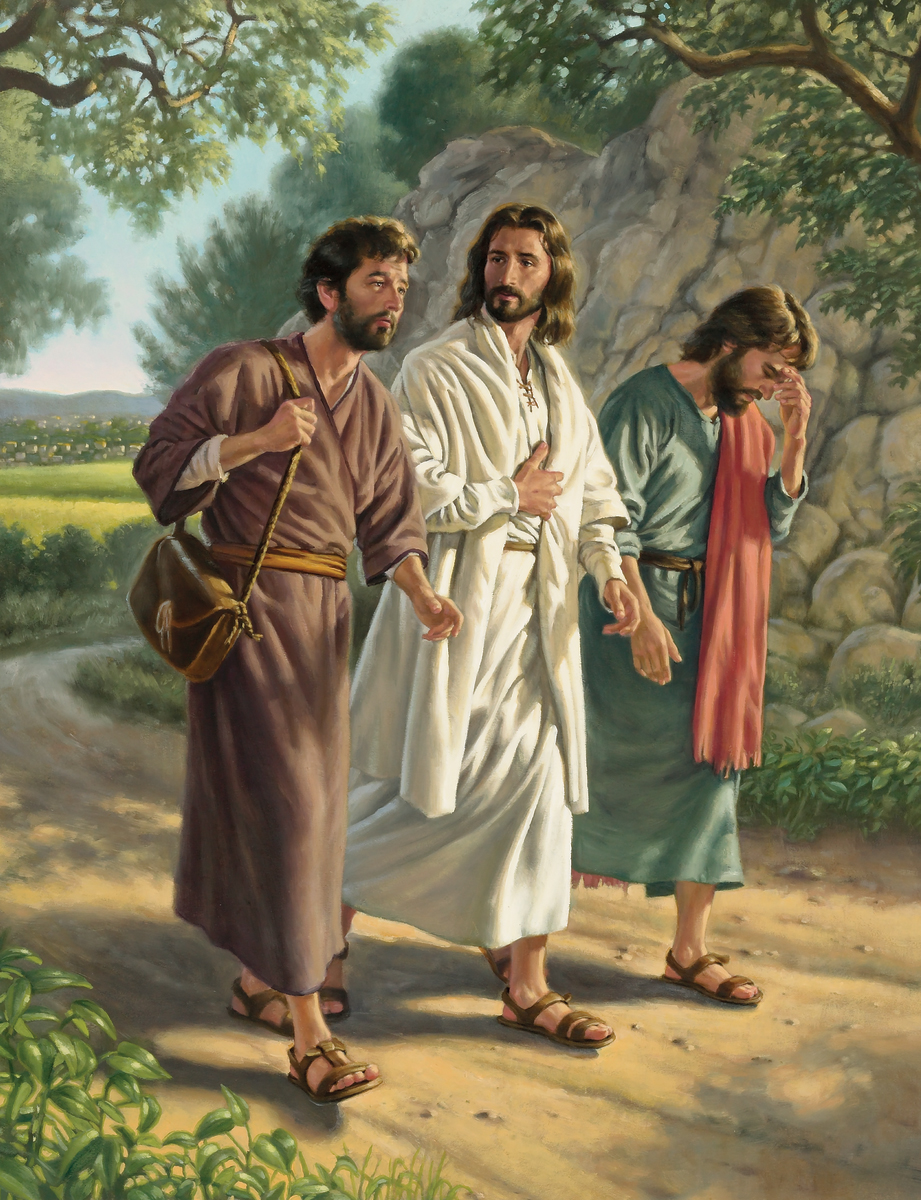
I Spy Salvation's Story, Lesson 12: Road to Emmaus - Seeds of ...
Welcome to our third Easter meditation. Today we draw inspiration from the encounter of the two disciples with the Resurrected Jesus as they walked towards Emmaus. The appearance of Jesus was quite dramatic. The two disciples were walking down in near confusion, discussing among themselves the things that happened concerning Jesus and the report the women brought about His resurrection. The evidence of the empty tomb and the testimony of the women were wrapped in a cloud of doubt since they had no personal encounter with Jesus. The appearance of Jesus in their midst was to save them from doubt, to open their eyes, and give them the sight of faith in the Resurrection.

 This encounter has given us a deeper insight into the personality of the Risen Saviour. He is omnipresent. He is the unseen listener to our conversation. And He is ready to step into the confusion of our lives. He is our light in darkness, accompanying us along the way. Yes, Jesus will go the mile with you. But we have to give Him the chance to walk with us along the way. In this evening walk of Jesus and the two disciples, we see how we can walk with Him even in the busyness of our minds and the confusion of our lives. It begins with interest.

Imagine that the disciples were walking down and discussing among themselves other matters of interest apart from these things concerning Jesus of Nazareth! But that they were concerned, worried, reflecting and discussing all about Jesus, was enough invitation for Jesus to come in. This is the beginning of meditation and contemplation in the life of a Christian. Some usually ask me how they can meditate, which method to use or the environment they can adopt to enter into deep meditation. It all begins with interest! When our interest dwells on Christ Jesus, in any aspect of His life, we have opened up our inner self for Jesus to step in to enlighten and enliven our hearts (CCC 2705-2719). “Then, starting with Moses and going through all the prophets, He explained to them the passages throughout the scriptures that were about Himself” (Lk 24:27).

Think about the silence of the two disciples as Jesus opened their eyes to the Scriptures. Their hearts were on fire, but they were wrapped in the cloud of unknowing, such as Peter’s experience during the transfiguration. Cleopas and the other disciple were passive but active in attentiveness. This is always a contemplative disposition. Jesus steps in along the way and takes the lead. He led them to a new horizon of understanding. That is why Lectio Divina and other forms of meditation and contemplation approved by the Church give divine illumination to the heart. “Did not our hearts burn within us as He talked to us on the road and explained the scriptures to us?” (Lk 24:32). This warmth of heart is the sweetness and energy of silent prayer. The saints call it ‘divine consolation.’ 
 
Walking with Jesus often leads us to a decision junction. This is where we decide to invite the Lord in, to shelter Him and apply the illumination we received in our daily lives, or we part ways with Him. “When they reached the village to which they were going, He made as if to go on; but they pressed Him to stay with them” (Lk 24:28-29). Actually, His desire to stay with them was more, but by their invitation, their desire is now aligned with His. Their words of invitation had been used by monks as contemplative mantra over the centuries: “Mane nobiscum Domine, quoniam advesperascit” (Stay with us Lord, for evening falls). “Behold, I am standing at the door, knocking. If one of you hears me calling and opens the door, I will come in to share a meal at that person’s side” (Rev 3:20). Prayer of silence disposes our hearts to hear that knock, and inspires us with the courage to open the doors of our hearts to Jesus.

Contemplative prayer has a Eucharistic dimension (CCC 2711). “Now while He was with them at table, He took the bread and said the blessing; then He broke it and handed it to them” (Lk 24:30). Again He who was invited takes the position of a host at the meal. They watch in silence as He handed back to them what they served Him in appreciation. They offered Him bread—fruit of their labour—He gave back to them Himself. He continued to draw them to greater heights of encounter. Like the Eucharistic Liturgy, they moved from breaking the word to the breaking of bread. In each case, their hearts burned; their eyes were opened. And they recognized Him! But no more with physical sight for He vanished immediately. It is not by sight but by faith.

Jesus is risen; He is alive! He wants to go the mile with us. No more shall we be faint-hearted as we journey along the way at this moment in our lives. There are so many other interests and considerations that tend to blind us, but we open the door for Jesus to come in by considering these things about Jesus of Nazareth.

 Fr Jude Nwachukwu, C.Ss.R
Saints Peter & Paul Catholic Church,
Tedi-Muwo, Lagos.
Sunday April 25th, 2020.

SPIRITUAL COMMUNION

My Jesus, I believe that you are really here in the Blessed Sacrament. I love you more than anything in the world, and I hunger to feed on your flesh. But since I cannot receive Communion at this moment, feed my soul at least spiritually. I unite myself to you now as I do when I actually receive you. Never let me drift away from you. Amen.
----St Alphonsus Liguori



Thursday, April 23, 2020

THE WITNESS OF PEACE


EASTER MEDITATION II
“On the evening of that day, the day of the week, the doors being shut where the disciples were, for fear of the Jews, Jesus came and stood among them and said to them, ‘Peace be with you’” (Jn 20:19).
Jesus' Body—Was It Flesh or Spirit After His Resurrection? | Bible ...
Previously we meditated on the first and immediate witness to the resurrection, which was the open grave. What if they saw the rolled away stone but no one saw Jesus? The Easter event would have ended as a myth. It was His appearances to His disciples that finally convinced them, and gave them such courage as to witness to Jesus in every situation. “Now we are those witnesses—we have eaten and drunk with Him after His resurrection from the dead” (Acts 10:41). By showing Himself to them, Jesus thus witnessed to His resurrection before the disciples and imprinted in their hearts this assurance that He is alive! “We cannot stop proclaiming what we have seen and heard” (Acts 4:20). Nevertheless, through Jesus’ appearances to the disciples we come to gaze into the spirituality of life in the Resurrection.

In His foremost appearance to Mary of Magdala, Jesus sent her to announce the good news of the resurrection to the disciples (Jn 20: 17-18). “Jesus said to them, ‘Do not be afraid; go and tell my brothers that they must leave for Galilee; there they will see me’” (Mt 28:10). This victory over fear is an underlying message that Jesus continued to pass across as He appeared to the disciples. By His victory over the grave, He emptied fear of its content! And His very presence is the only guarantee that they should not allow fear to rule their lives, despite the uncertainties and threatening situations around.
The most striking appearance was the one He appeared to the disciples in the room, where they lock themselves up for fear of the Jews. The mystery and power of the resurrected body is here shown to them as Jesus appeared to them though doors were locked. The life of the resurrection cannot be stopped by materiality. Human life is here taken up in divine life! And all who share in the life of the resurrection has their life taken up in hope through faith in Jesus Christ. They cannot locate the value of their lives, nor reduce the meaning of their lives, to anything material. Somehow, their lives pass through every obstacle. If we can begin to connect to this grace of the Resurrection then we are ready to accommodate the vital gifts that Jesus brought.

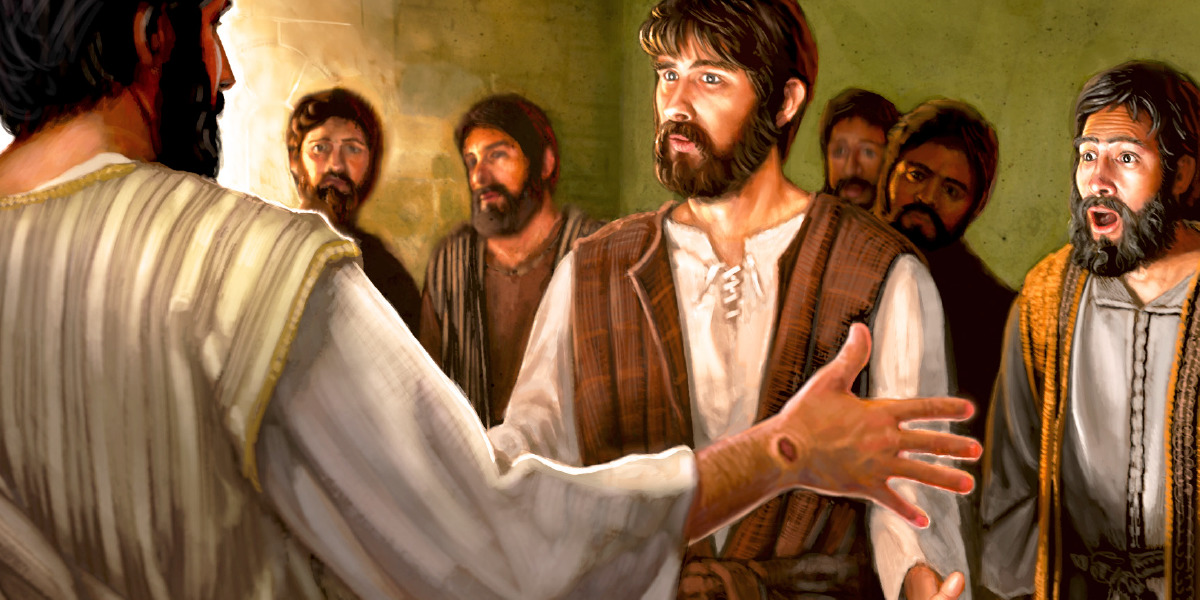
“Peace be with you” (Jn 20:19). Then He breathed on them and said, “Receive the Holy Spirit” (Jn 20:22). And He gave them power to forgive sins. While the apostles were amazed at His awesome presence, He showed them His hands and feet, and ate before them to prove to them that He has human body and not a ghost (Lk 24:39-42). Human life has found a new abode! He who took our nature at His incarnation, now has our nature taken up in His divinity. It is within this new abode of the resurrection in Christ Jesus can we have peace in the midst of fear, freedom in bondage, power in powerless, health in sickness, life in death...Yes, the peace Jesus bestows surpasses the material order; closed doors cannot stop it! If we do not have the Holy Spirit and forgiveness of sins, the doors and walls of the world will wedge off our peace. Once we have forgiveness as a virtue, and receive it as a sacrament, our peace cannot be stopped by any material gain or lack.

We feel life is meaningful when it locates certain values we associate with it. The resurrected Jesus stands before us as the only value that can give meaning to our lives. He has opened a new horizon of life, with its gift of peace. In Christ Jesus is our peace (Eph 2:14-19). Thus, Peace becomes our all time testimony that He is alive. We cannot claim to be Easter people if we do not have peace and promote it. Presently, more people are easily given to anger, family feud is rampant, impulsive behaviour is in the increase,  addiction, etc. The things we acquire in search of peace end up leaving us restless and unsatisfied. There is no alternative to the Easter peace Jesus offers. He Himself testifies to His own resurrection by the open grave and His appearances to the apostles, and the Holy Spirit given to us. The imprint of this testimony is the peace He left in our hearts. We may not all travel to Jerusalem to see the empty tomb, but we can feel this divine peace in the hearts of believers. This is the courage and serenity with which the disciples overcame the Jewish hostilities. Here too is our victory; no virus can mutilate the peace Christ Jesus has given. This is our Easter joy; Peace is our Easter song! Alleluia is our chorus. Amen.

Fr Jude Chinwenwa Nwachukwu, C.Ss.R
Saints Peter & Paul Catholic Church,
Tedi-Muwo, Lagos.
Thursday April 23th, 2020.


Sunday, April 19, 2020

THE WITNESS OF THE EMPTY TOMB


(EASTER MEDITATION)
 “It was very early on the first day of the week and still dark, when Mary of Magdalene came to the tomb. She saw that the stone had been moved away from the tomb and came running to Simon Peter and the other disciple, the one whom Jesus loved” (Jn 20:1-2).

We begin our Easter meditation series by looking at the empty tomb. The Easter event is surrounded with awe—love and wonder! It is quite obvious that the immediate followers of Jesus were not convincingly expecting the resurrection. It took them by surprise. Mary Magdalene thought the body was taken away; Peter and the other disciple did not believe until the entered the empty tomb and saw the linen cloths lying on the ground. The rest had to wait for His appearing before they could believe! And Jesus' appearances to the disciples gave them the assurance of faith with which they stood firm in their proclamation. Nevertheless, the Chief priests and Pharisees were expectant; they kept in mind the words of Jesus that He would rise from the dead. “So they went and made the sepulchre secure, putting seal on the stone and mounting a guard” (Mt 27:66). However, for those who believed in Jesus, the empty tomb rolled away their doubts, but for those who would not accept Him, it opened up their evil thoughts and emptiness.

But was it necessary for the stone to be rolled away for Jesus to come out? Definitely no! He could pass through the stone just as he appeared to the apostles in the room though the doors were locked (Jn 20:19). What if he came out without rolling away the stone? It was not the open grave that effected the resurrection. He opened the grave as evidence—a landmark and concrete witness to His resurrection, which could be accessed by both believers and unbelievers. Without the open grave, the disciples could have believed through His appearances, but the universality of the resurrection would be difficult to comprehend. The empty sepulchre was a witness to the resurrection, which Jesus Himself left for all to see and come to believe in Him.

Earlier, Jesus accused the Pharisees of being a white-washed sepulchre—cleaning the outside of the tomb while inside is dead bones, dirt and bad odour (Mt 23:27-28). But at this Easter, He goes into the tomb to clean it up! The darkness of the tomb is dispelled by His light; the scary, dirt and death in the grave is no more. The grave has become a cave; the tomb is now like a tub. The tomb was the journey-end where sin lures us to. The open grave has exposed the nothingness at the end of the journey of sin. Thus from this Easter mystery, we can begin to feel the vanity within every lure of sin. The witness of the empty tomb becomes our attraction to the new life of the resurrection in Christ Jesus.

Our participation in the new life in Christ Jesus, our overcoming of dead actions of sin, is the witness we bear to the resurrection. This ‘witness’, expressed in our Easter liturgy, is equally our celebration of the witness to Himself, which Jesus left behind. Therefore, our participation in His new life becomes our sharing in bearing witness; He Himself has given the first and ultimate witness to Himself. In other words, the witness to the resurrection is not left at the mercy of human agency. That is why, as we are going to see in readings of this Easter tide, that all efforts to silence the proclamation by the Sanhedrin and Saul proved abortive. And that is why we must remain steadfast in bearing witness to the new life we have received. No matter the situation we find ourselves, the changing times and present difficulties, cannot lure us away from witnessing to the resurrected Jesus by the life of holiness we bear.

Fr Jude Nwachukwu, C.Ss.R
Saints Peter & Paul Catholic Church,
Tedi-Muwo, Ojo, Lagos.
Sunday April 19th, 2020.
Feast of Divine Mercy.  


Friday, April 10, 2020

THE CLOUD OF SILENCE


Meditation on Good Friday
(Jn 18:1-40, 19-42)
“Re-entering the Praetorium, he said to Jesus, ‘Where do you come from?’ But Jesus made no answer” 


The Good Friday liturgy is unique and beautiful. The priest, vested in red, solemnly processes to the altar in silence, no song, no acclamation! The altar is laid bare, striped of decorations and light. The priest lowers himself and gently lay down in front of the altar. The whole church is wrapped in silence! Within this cloud of silence, the Church narrates the Passion of Jesus and offers her prayers.

We are drawn to this cloud of silence, which surrounded Jesus throughout His passion. Imagine the serenity in the garden as Jesus communed with the Father in prayer before the noise of Judas and the soldiers interrupted...Jesus was calm and spoke with confidence, and with authority! Looking at the length of the trials, and at different ends of the city with different rulers, we wonder why only few words of Jesus was recorded all through. The answer is simple: He was silent most of the time.

His silence was because, according to Fulton Sheen, Jesus accepted in freedom what was done to Him with malice. In other words, He freely gave Himself up into their treachery. So He remained free, while His executioners were restless and noisy. Thus the venom of their malice had no influence over Him; His mood and disposition remained intact...His love remained unshaken! But the Chief priest, Pilate and the Jews continued to judge each other and lose temper. Fear and tension continued to arise among them, while Jesus remained silent. Pilate was practically forcing words out of Jesus. His capacity as Governor was being questioned. This is one case history cannot forget.

Jesus offered no resistance. The full weight of the betrayal, denial, insults, beating and crucifixion landed on Him, and He did not return any. His silence was provocative as they struggled the more to satisfy their bitterness. In silence Jesus turned His attention to the Father—He looked up to Him who was able to save Him from death (Heb 5:7). His was not a snobbish silence; it was not a self-centred silence to prove His superiority. He entered into the cloud of silence, passive to His executioners, that He might actively offer up to the Father, in freedom, all the suffering He received for our salvation. Having offered all, “He said, ‘It is finished’; and bowing His head he gave up His spirit. Only the Sound of His Silence remained...

And that remains the echo of meditation and contemplation; the highest form of prayer is born. With this cloud of silence is the energy to imitate Jesus, especially at our moment of Cross. How can we carry our cross as Jesus did if we know no silence, and our hearts are noisy? When we have to confront family tussles, abuses, cheating, gossip, betrayals, setbacks, etc we too must enter the cloud of silence by actively connecting with the cross of Jesus, and locating our situation in Jesus’ passion. This is also how our disposition and love will remain intact, and inaccessible to our executioners!

As the altar is stripped bare, silence is the ornament that adorns this sacred space. Within this serenity we renew our love for the Cross, on which lay the Saviour of the world. After the Communion, the priest says the prayer and blessing over the people. Suddenly, without any formal dismissal, he processes out of the altar in silence, no hymns or acclamation...Like at Calvary, They all went sorrowfully away. But our silence will be broken by the crack sound of the opened tomb; the joy of the Resurrection.

Fr Jude Chinwenwa Nwachukwu, C.Ss.R
Saints Peter & Paul Catholic Church,
Tedi-Muwo, Lagos.
Friday April 10th,2020.
Good Friday.


Thursday, April 9, 2020

"FOR I HAVE GIVEN YOU AN EXAMPLE"


Reflection for Holy Thursday
Mass of the Lord’s Supper
(Ex 12:1-8, 11-14; 1Cor 11:23-26; Jn 13:1-15)
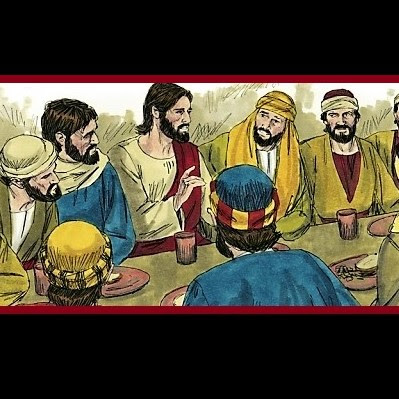
Today we begin the Easter Triduum in which we celebrate the Institution of the Eucharist and the ministerial priesthood, the Crucifixion and the Resurrection of our Lord Jesus Christ. It can be described as one elongated celebration with specific pulses. In this evening celebration, the first reading reminds us of the Passover meal, prepared with an unblemished lamb, with which God delivered Israel from Egypt. The Second reading talks about the new Passover meal in the Body and Blood our Lord Jesus Christ, which is given to us until the Lord comes again. The Gospel narrates the scene at the Last Supper where Jesus washed the feet of His disciples.
The Advent of Easter Part XX 2019. Events Leading to the Last Supper. 
The washing of feet was known in the tradition of Israel. It was used to welcome guests or when one returns from a journey. And this was done before one settled down to eat (cf. Gen 18:4, 19:2, 24:32). It was in the position of slaves to wash the feet of their masters when the return or when a guest comes (1 Sam 25:41). Based on this tradition, Jesus repudiated Simon the Pharisee saying, “I came into your house, and you poured no water over my feet...” St Paul used washing of feet to demonstrate the kind of service to be rendered to God’s people. It was quite dramatic and amazing as Jesus suddenly began to wash the feet of His disciples. This act He performed that evening points to His person and mission.

He laid aside His garments, and tied a towel round Himself. This was how He put aside His glory and assumed our lowly state. “Who, being in the form of God, did not count equality with God something to be grasped. But He emptied Himself, taking the form of a slave...” (Phil 2:6-7). He tied the towel, ready for work, like a servant ready to serve his master (cf. Lk 12:35-36). At the heavenly banquet, those servants who washed the feet of their master shall receive the kind of service Jesus gave to the disciples. “In truth I tell you, he will do up his belt, sit them down at table and wait on them” (Lk 12:37).

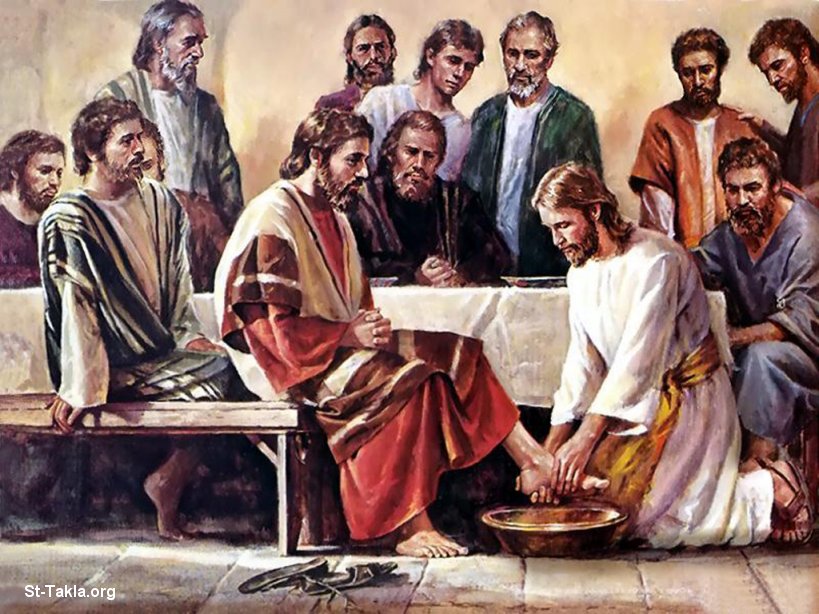
 “Then He poured water into a basin, and began to wash the disciples’ feet, and to wipe them with the towel that was tied around him.” Imagine the surprise on their faces, and the reluctance with which the stretched forth their legs! This is one of those occasions where Jesus challenged the tradition of the Jews. Washing of feet was done by servants before one enters inside the house, and before he eats. Thus, the disciples needed to be washed before they could enter into the new life of the Resurrection. This washing will draw its effectiveness from the washing flowing from the side of Jesus on the Cross. Therefore, this washing has a Eucharistic dimension, and is an integral expression of Jesus’ total self-offering on the Cross for our cleansing. He took the position of a servant, and was humbler yet, even to accepting death, death on a cross (Phil 2:8).  

Jesus has to assume the position of a servant so that His servants can become masters! But Peter echoed the voice of common humanity who had not been schooled in this humility, “Lord, do you wash my feet?...You shall never wash my feet.” His objection exposed our struggle to pull from grace and be human. Here Peter’s humility rejected Jesus’ humility. But how can we learn to be humble if we are not docile at the Master’s humility, even unto the cross? So Jesus said, “If I do not wash you, you have no part in me.” We must allow Jesus to save us so that through us others can be saved.

“If I then, your Lord and Teacher, have washed your feet, you also ought to wash one another’s feet.”  He gave the instruction that the disciples should imitate Him. Thus, Christ’s faithful must acquire this habit of humility before others. This entails rendering service to them and attending to their needs. But most importantly, it involves washing their feet that they may be able to enter and dine with Jesus. We must help people live a Eucharistic life, a life pleasing to God.  This will make us appear like servants at the Eucharistic gate to wash the feet others that they might have a part in Jesus. As the living example Jesus gave today anticipates His Cross, and draws its effectiveness from there, so also shall our actualization of this example in the lives of others be a moment of cross, and our sharing in the Cross of Christ Jesus.

There are so many feet to wash! Our hearts have traveled far from home; some people can no more trace their way back. Psychological and emotional crisis are in the increase. There are lots of socio-economic and health conditions today that demand urgent intervention. Washing these feet is not to wipe out these problems, but for us to have a part in Christ Jesus, and help others to experience the example Jesus gave us.

Fr Jude Chinwenwa Nwachukwu, C.Ss.R
Saints Peter & Paul Catholic Church,
Tedi-Muwo, Lagos.
Thursday April 9th, 2020.
Holy Thursday.


Wednesday, April 8, 2020

“My Time is at Hand”


Reflection for Wednesday of Holy Week
(Is 49:1-6; Jn 13:21-33, 36-38)
McKees Mills Baptist Church » Judas Iscariot

30 Pieces of Silver
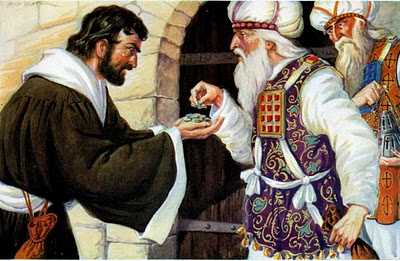
“So they weighed out my wages: thirty shekels of silver. Yahweh said to me, ‘Throw it to the smelter, this princely sum at which they have valued me!’ Taking the thirty shekels of silver, I threw them into the Temple of Yahweh, for the smelter” (Zech 11:12-13). This passage was fulfilled today as Judas approached the chief priests to bargain the amount they would pay him in exchange for Jesus. “What will you give me if I deliver him to you?” At this point the value of the money excited him more than the value of his friendship with Jesus. And he can go to any extent to achieve it, including entering into bargain with his own enemies! This can happen to anyone consumed by power, lust, wealth, etc.

Judas was entrusted with the wealth of the apostolic college, but he turned what ought to be service for others to personal gain. The pull of his hidden bad behaviour took him away from the one who trusted him and exalted him, and landed him face to face with those who never trusted him nor valued him! That is why we should be careful in using our natural talents, never to manipulate or cheat anyone...And the malicious chief priests were quick to respond, “And they paid him thirty pieces of silver.” What a price for the Son of God! Actually, it was not the price for Jesus, but the cost for Judas’ greed. Imagine how little he got excited for over his integrity, faithfulness and friendship with Jesus. Whenever we exchange Jesus for other interests, we equally devalue ourselves. Thirty pieces of silver was all Judas was rated.

The Opportunity
 “And from that moment he sought an opportunity to betray him.” Sure, he could no more concentrate on his apostolic responsibilities. What a restless life! The privilege given to Judas by his vocation to witness to Jesus now became an opportunity for him betray Jesus. Meanwhile, Jesus continued to create opportunity to commune with His disciples and celebrate Passover together. “Go into the city to such a one, and say to him, ‘The Teacher says, My time is at hand; I will keep the Passover at your house with my disciples.’” Yes, our choices define what we do with the opportunities that come our way.

It was indeed a solemn and heartbreaking moment for Jesus as they sat at table, sharing meal. He did not want to put Judas to shame before others. He freely accepted the betrayal to fulfill what Isaiah said in the first reading, “The Lord God has opened my ear, and I was not rebellious, I turned not backward. I gave my back to those who struck me, and my cheeks to those who pulled at the beard; I hid not my face from shame and spitting. For the Lord God helps me.” By discretely communicating to Judas that He knew his treachery, Jesus gave him opportunity to repent.

The communion meal was a viable opportunity for him to retrace his steps, but he was adamant. So Jesus warned, “The Son of man goes as it is written of him, but woe to that man by whom the Son of man is betrayed! It would have been better for that man if he had not been born.”  Evil builds its on defense. “Sin speaks to the wicked in the depths of his heart; there is no fear of God before his eyes” (Ps 36:1). Thus Judas too asked him, “Is it I, Master?” Jesus answered him, “You have said so.”

This Holy Week, we have a new opportunity to witness to our faith in Christ Jesus, especially with the present challenges, and changes in our Church gathering. The Hour of Jesus is at hand, and is richly available for us to connect to. Let us use this opportunity to renew our friendship with Jesus.

Fr Jude Chinwenwa Nwachukwu, C.Ss.R
Saints Peter & Paul Catholic Church,
Tedi-Muwo, Lagos.
Wednesday April 8th, 2020.


Tuesday, April 7, 2020

“NOW IS THE SON OF MAN GLORIFIED”


Reflection for Tuesday of Holy Week
(Is 49:1-6; Jn 13:21-13, 36-38)
The Doxology Desk: John 13:21-38, "One of You Will Betray Me"
Today we meditate on Jesus as His Hour approaches the more. For a long time He had a lot of arguments with the Chief priests, the Pharisee and the Scribes. There was a lot of external plot against Him. In the Gospel of today, Jesus’ faces a different kind of opposition, which deeply troubled him in spirit. While at table with His apostles, enjoying communion and sharing meal, Jesus declared, “Truly, truly, I say to you, one of you will betray me.” This sounded like a bombshell, and silence exploded among them. Suspicion and tension began to arise...Who among them could be harboring such unthinkable plot? So the Beloved Disciple asked, “Lord, who is it?” Jesus answered, “It is he to whom I shall give this morsel when I have dipped it.”

The words of the Psalmist came to mind:
“Even my best friend, the one I trusted most, the one who shared my food, has turned against me” (Ps 41:9). “If it were an enemy making fun of me, I could endure it; if it were an opponent boasting over me, I could hide myself from him. But it was you, my companion, my colleague and close friend. We had intimate talks with each other and worshiped together in the Temple” (Ps 55:12-14).
“So when He dipped the morsel, He gave it to Judas, the son of Simon Iscariot...” The Communion meal that supposed to bind them together became sieved out treacherous heart of Judas. Long before now, Judas held on to his ideology gain-making and taking advantage of others. He had opportunity of re-aligning his heart to Jesus over the years. He had been succeeding in his secret affairs until the Communion meal exposed him. Judas went out! The Eucharistic meal still does this miracle. That is why we must prepare ourselves through good life, prayer and confession so as to remain with Jesus.

“When he had gone out, Jesus said, ‘Now is the Son of man glorified, and in Him God is glorified; if God is glorified in Him, God will glorify Him in Himself, and glorify Him at once.” The heart of Jesus bears it all. He never stopped loving Judas but Judas was busy loving something else: money! It is impossible not to betray our communion with Jesus if the energies of our hearts are directed to something less, including turning attention to oneself.

This is where Peter broke the heart of Jesus when he said, “Lord, why can I not follow you now? I will lay down my life for you.” He was so conscious of himself and his capacity to be faithful to Jesus. But faithfulness is the work of grace! How far can the self take him? Seeing through his heart, imagine how hurtful it was for Jesus that Peter was going to deny Him. “Will you lay down your life for me? Truly, truly, I say to you, the cock will not crow, till you have denied me three times.” By denial, Peter was going to withdraw himself from the one he pledge to commit his life.

Jesus is greatly troubled. His heart of love is wounded. His most intimate friends are set to betray and deny him. Human relationships are still bearing these marks. Jesus continues to love; He freely accepted the betrayal and denial, and offered them to the Father, who is ever faithful. Therefore, in Jesus we too will continue to love and remain faithful, even when those closest to us betray or deny us. Now is the Son of man glorified in those who share communion with Him, for their broken hearts shall be healed.

 Fr Jude Chinwenwa Nwachukwu, C.Ss.R
Saints Peter & Paul Catholic Church,
Tedi-Muwo, Lagos.
Tuesday April 7th, 2020.


SPIRITUAL COMMUNION


My Jesus, I believe that you are really here in the Blessed Sacrament. I love you more than anything in the world, and I hunger to feed on your flesh. But since I cannot receive Communion at this moment, feed my soul at least spiritually. I unite myself to you now as I do when I actually receive you. Never let me drift away from you. Amen.
----St Alphonsus Liguori