Saturday, March 28, 2020

CONFUSION IN THE CAMP OF EVIL PLOTTERS


Reflection for Saturday of the 4th Week of Lent
(Jer 11:18-20; Jn 7:40-53)

Prophet Jeremiah, the suffering servant of God, narrates his ordeal in the hands of his adversaries. Though God revealed to him their evil intent, but he was like a gentle lamb that was led to the slaughter. They planned to wipe him out of the face of the earth. “Let us destroy the tree with its fruit, let us cut him off from the land of the living, that his name be remembered no more.” Evil intent, like the virus that attacks human body, will continue to spread to total destruction unless checkmated. So the Prophet quickly committed his cause to the Lord, who alone judges righteously and can take vengeance upon those who plan evil.

How does the camp of the evil plotters look like? It is not easy to work against the good. “Whoever does attack you, for your sake will fall” (Is 54:15). As the gang up against Jesus thickens, the confusion among their camp became more obvious. Initially, the Jewish authorities brainwashed the people against Jesus. But after His teaching in the Synagogue, there was division among the people. “This is really the Prophet. Others said, ‘This is the Christ.’ But some said, ‘Is the Christ to come from Galilee?’” “I have come to cast fire on the earth, and how I wish it were already kindled” (Lk 12:49).
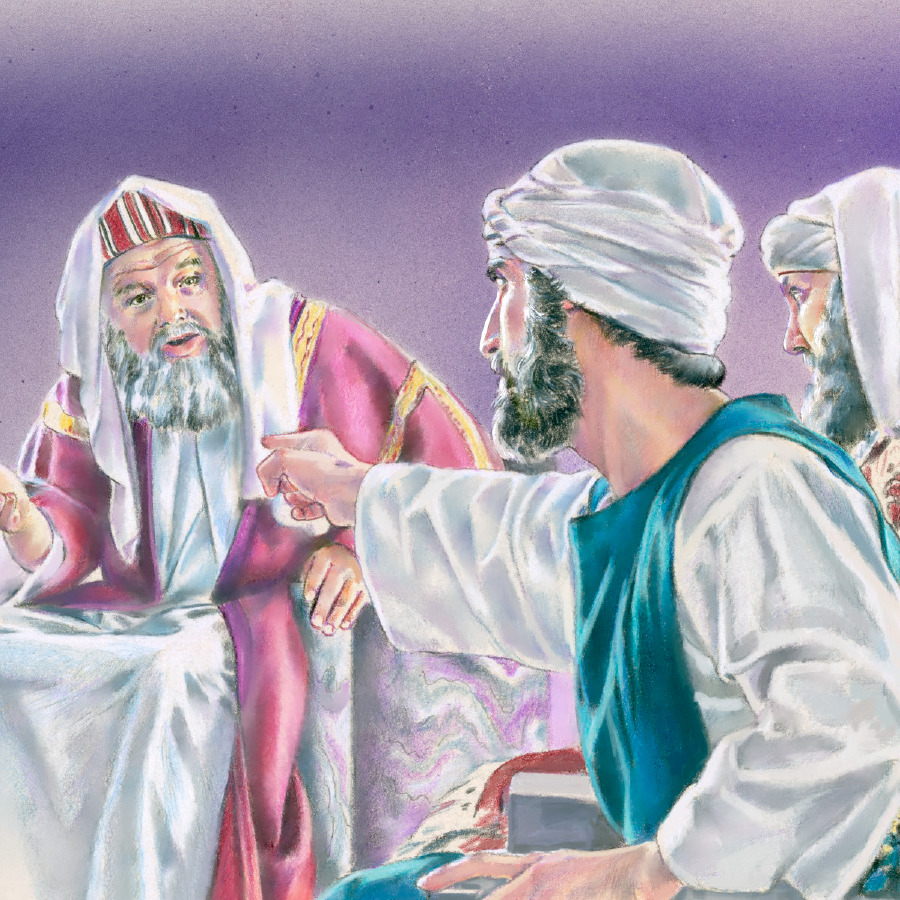
No Other Man Ever Spoke Like This | Life of JesusThe police officers who came to arrest Jesus had their authority neutralized by Jesus’ teaching. There was confusion between them and the Pharisees, who felt so disappointed that the police could not arrest Jesus. “The officers answered, ‘No man ever spoke like this man!’” They were silently arrested by Jesus, whom they came to arrest! There was confusion also among the Pharisees themselves too. Nicodemus who had contact with Jesus, carefully raised a dissenting voice. The truth became an arrow that pierced their hearts and scattered them. “They replied him, ‘Are you from Galilee too? Search and you will see that no prophet is to rise from Galilee.”

The attempt to threaten and silence Nicodemus and other witnesses is the general characteristics of evil intent. Since truth speaks in silence, the noisy shutdown and threats indicate the confusion within the hearts that plot evil and within their camp. The conspiracy of silence that promotes evil is a hypocritical silence that denies the truth. The voice of Jesus was not heard in the reading of today, still He won the day! Let no evil intent weaken our resolve to always stand for the truth and live a righteous life.

Fr Jude Chinwenwa Nwachukwu, C.Ss.R
Saints Peter & Paul Catholic Church,
Tedi-Muwo, Lagos.
Saturday March 28th, 2020.


SPIRITUAL COMMUNION
My Jesus, I believe that you are really here in the Blessed Sacrament. I love you more than anything in the world, and I hunger to feed on your flesh. But since I cannot receive Communion at this moment, feed my soul at least spiritually. I unite myself to you now as I do when I actually receive you. Never let me drift away from you. Amen.
----St Alphonsus Liguori
 

Friday, March 27, 2020

THE TRIUMPH OF THE RIGHTEOUS


                  REFLECTION FOR FRIDAY OF THE 4TH WEEK OF LENT YEAR A
                                         (Wis 2:1, 12-22; Jn 7:1-2, 10, 25-30)

Like the virus that tries to destroy human body, so does evil feed on the good. The first reading from the Book of Wisdom explains this. “Let us lie in wait for the righteous man because he is inconvenient to us and opposes our actions...” light and darkness cannot go together. Evil intent manifests itself on the good, i.e. it is when confronted by the good that evil exhibits its characteristics. In today’s reading, we see the unique way in which righteousness confronts evil: Silence! ‘Silence’ is the vital power with which the good moves and evil is shaken! While evil gangs up and attacks, the righteous silently focuses on his good ways. The mere existence of the good is the death of evil. “He became to us a reproof of our thoughts; the very sight of him is a burden to us, because his manner of life is unlike that of others.  
Synagogues and temples in Jesus' life 
“And light shines in darkness, and darkness could not overpower it” (Jn 1:5). Evil intoxicates and blindfolds. With its noisy uproar, it cannot hear the sound of silence in which the good speaks. Evil intent is always short-sighted. It cannot perceive the eternal hope for the wages of holiness, nor discern the prize of blameless life.

Thus, Jesus continued to move about freely though the Jewish authorities had ganged up against him and concluded He must die. “Is not this the man whom they seek to kill? And here he is, speaking openly, and they say nothing to him!” The strength of the Good is in the freedom it enjoys. Its mere presence is the absence of evil. So Jesus continues to teach in the synagogues... Such freedom exposes the futility and self-defeat of evil intent. Thus the evil planners must increase their efforts in order to avoid self-destruction and shame. “The wicked man sees and is angry, grinds his teeth and fades away. The desires of the wicked will lead to doom” (Ps 112:10-11).

“So they sought to arrest Him; but no one laid hands on him, because His hour had not yet come.” Till then, the freedom of the good will continue to aggravate the plot of the evil of ones, just as the presence of Jesus angered the Jewish authorities. They tried to take Him at their own time, thereby subjecting Him to their evil intent. But Jesus’ triumph—and the victory of the good—is already evident since all will happen at His hour. Then, what is done with malice will be received with freedom; love will triumph over hatred, good will overcome evil.

At this trying moment, and in this season of lent, let us stand at the Hour of Jesus, where we increase our capacity for good and the freedom that dispels evil.

Fr Jude Nwachukwu, C.Ss.R
Saints Peter & Paul Catholic Church,
Tedi-Muwo, Ojo, Lagos.
Friday, March 27, 2020.

Saturday, March 14, 2020

THE ROCK OF SALVATION


Image result for Moses hit horeb water
Reflection of the 3rd Sunday of Lent Year A
(Ex 17:3-7; Rm 5:1-2, 5-8; Jn 4:5-42)
The Israelites became extremely thirsty along the way. They lost patience and lost faith. Their journey to life now appeared like a death-trap; they preferred the food of slavery to the journey of freedom. So they turned against Moses saying, “Why did you bring us up out of Egypt, to kill us and our children and our cattle with thirst? Suddenly, the one who saved them was accused of working against them! This is what happens when man is consumed by insatiable human desires or thirsty for the water that increases his thirst. However, Moses mediated before God for the people.

The Lord told Moses to take with him the rod with which he struck the Nile and go to the rock at Horeb. “Behold, I will stand before you there on the rock at Horeb; and you shall strike the rock, and water shall come out of it that the people may drink.” The Sound of Silence perceives the impact of the rod of Moses on the Rock! Imagine Moses lifting and landing the rod on the rock. It was not mere dry rock that gushed forth water. The Lord declared Himself on the rock. Therefore, the impact of the rod, which carried with it all their stubbornness and rebellious acts, landed on the One who overshadowed Horeb, and who made the water gush forth. The Lord received and transformed the impact of the rod to spring of water for the people. “Hail the Rock who saves us” (Ps 95:1).

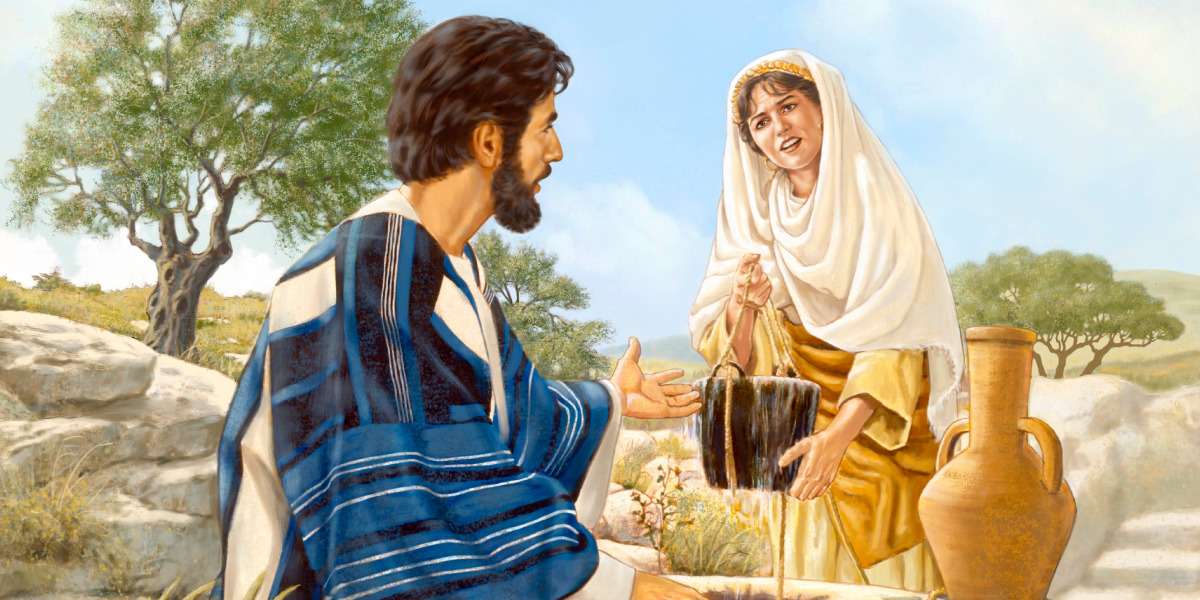
This impact resounds loudly and consistently in Jesus Christ as we behold Him dialoguing with the Samaritan woman. “And all drank from the same spiritual drink, since they drank from the spiritual rock which followed them, and that rock was Christ” (1Cor 10:4). In Jesus, God is no more hiding behind a rock...Jesus is the Cornerstone, the Living Water, and the Mediator. The impact of the rod of Moses is fulfilled as the soldiers struck Jesus, spat on him, drove the nails into His arms and feet, and pierced His side. Then from His side flowed Blood and Water, the fountain of life. The real thirst and drink is now revealed in Him to the amazement of His disciples and the Samaritan woman.
Image result for Jesus and the samaritan woman
The weariness of the Israelites on their journey to freedom met its end in Jesus who was worn out from His journey and sat at Jacob’s well in Samaria. And Jesus was thirsty! In His thirst God’s people can no more lose faith because of any thirst. Instead, human desire can now lead to the glory of God. The Samaritan woman became a symbol of the rebellious people of God, as Jesus fulfilled the role of Moses as Mediator. She begane by being obstinate; she refused Jesus the water from the well. As Jesus began to introduce Himself to her, unveiling gradually to her the mystery of His identity, the Samaritan woman began to have a change of heart. "...Whoever drinks of the water that I shall give will ever be thirsty again..." At this point her interest in Jesus and thirst for living water was activated, though clouded by her human understanding. She said, "Sir, give me some of that water, so that I may never be thirsty or come here again to draw water."

At this point, Jesus moved the dialogue to her inner Self, where the real thirst lies. Of course, we cannot worship God in spirit and in truth if our inner life is not laid bare before God. He said to her, "Go and call your husband." At this point, the woman's secret choices were exposed--choices which reflect her thirst for a saviour, but grossly misplaced on the altar of bodily pleasure! Untill now, she had lived an unhappy and unstable life, replacing one man with another in her quest for satisfaction. Seeing that her secret life is not hidden from Jesus, she recognized Him as a prophet. 

The idea of a "prophet" summons her to religion. But she had her excuses for exempting herself from religion. Jesus then redeems her idea of religion and satisfies her thirst for worship. "But the hour is coming--indeed is here already--when true worshippers will worship the Father in spirit and in truth..." True worship does not depend on space or location. But to worship God in truth will lead to the acceptance of the Messiah. So the woman expressed her thirst for the Messiah who was to come. But Jesus answered her emphatically,  "I who speak to you, am He." 

What else could she long for! Hail the Rock who saves us. She had received her salvation. Her request for living water was granted. Having received Jesus the Living Water, she was filled with joy, and the woman abandoned her natural water, moved into town like a disciple, and brought 
others for Jesus.

This is an unmerrited grace. He quenches our thirst even while we are rebellious. We must stand on Jesus with strong faith. He is our Rock of Salvation. Jesus has won peace for us, and access to divine grace. Like the Samaritan woman, we must allow Jesus to redeem our inner self, that seat of making choices, such that we choose Him who had choosen us, Jesus Christ; and worship God in Spirit and in the truth.

Fr Jude Chinwenwa Nwachukwu, C.SsR
Ss Peter and Paul Catholic, 
Tedi-Muwo, Ojo, Lagos.
Sunday 15th March, 2020


Sunday, March 8, 2020

THE GLORY OF THE CROSS

Reflection for the Second Sunday of Lent Year A
(Gen 12:1-4; 2Tim 1:8-10; Mt 17:1-9)

1.0.  Abraham’s Blessings
God called Abraham to leave his father’s house to the land He would show him. Abraham was relatively comfortable and successful in his father’s house. God was calling Abraham to go to a new land to start a new generation of humanity that would be people of faith in God. However, to uproot him from ‘his domain’ to an unknown destination would not be an easy task. So God attached great promises to Abraham if he embarked on the journey. “And I will make you a great nation, and I will bless you, and make your name great, so that you will be a blessing...and by you families of the earth shall bless themselves.” Believing in God and His promises, Abraham went as the Lord had told him. This ‘promised land’ would become for him ‘the land of promises’, since by going there, God’s promises would be fulfilled in Abraham.

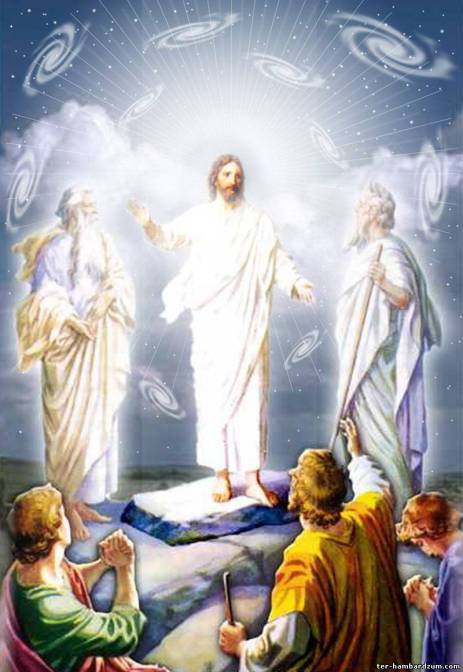
transfiguration
2.0.         The Transfiguration
The Gospel today tells us the story of the Transfiguration. “And He was transfigured before them, and his face shone life the sun, and his garments became white as light.” The glory of Jesus was manifested on the Mountain (cf. 2 Pet 1:16-18). This shining glory was a manifestation—a foretaste—of what is kept for the Children of God through Christ. We are called to share in the glory of our Lord Jesus Christ (2 Th 2:14). Thus the voice of the Father declares, “This is my beloved Son, with whom I am will pleased; listen to him.” This implies that through Jesus Christ, the hidden glory of God will be revealed to all who share in the life of Christ Jesus (1 Cor 2:7).

Therefore, Jesus is the fulfillment and living manifestation of the ‘Land of promises’ where we enter in faith and unlock great divine blessings. Like Abraham, we are called to move from our ‘domain’ in human nature to the new land of divine revelation. This is the new life in Christ, where grace is stronger than family ties. The promises we have in Christ Jesus are now unveiled through the transfiguration, such that we are drawn to this new life, not by the imagination of our minds, but by the reality of His presence.  The life of Christ overwhelms, as the cloud of glory dazzles and summons the apostles of awe and adoration. “They fell on their faces, and were filled with awe.” The attraction is irresistible; the memory is unforgettable! 

3.0.         Coming Down from the Mountain
“As they were coming down the mountain, Jesus commanded them, ‘Tell no one the vision, until the Son of Man is raised from the dead.’” The vision was a revelation of the glory of the Cross. The hidden glory behind the gory face of the Cross of Christ is now unveiled in anticipation, such that we can behold the ‘beauty’ of the Cross from within the cloud of glory of the transfiguration. Thus, the Cross becomes beautiful and attractive since its hidden glory is already here with us. God’s glory—and every glory—will be given in vain if it is not a product of the Cross. The perceived glory becomes a transfiguration of the agony of the Cross into the sparkling brightness of the divine essence.

Image result for the glory of the crossNow the difficult journey of Abraham has become our ‘stations of the cross’ by which we step into God’s unfailing promises in Christ Jesus. “Then we are heirs, heirs of God and joint-heirs with Christ, provided that we share his suffering, so as to share his glory” (Rm 8:17).  That is why St Paul tells us in the second reading to take up our share of suffering for the Gospel. We step forward to fulfill our daily responsibilities and embrace the sufferings of each day, but in virtue of the purpose and grace of Jesus Christ. This is already manifested and made available for us.

Hence, our Lenten observances draw inspiration from Abraham’s sacrificial journey to the Promised Land. This season of fasting, prayer and alms-giving trains us to move from our natural human domain to the realm of grace, where we encounter the overshadowing glory of our Lord Jesus Christ.

Fr Jude Nwachukwu, C.Ss.R
Saints Peter & Paul Catholic Church,
Tedi-Muwo, Lagos.
Sunday March 8th, 2020.

Sunday, February 9, 2020

THE TASTE AND THE VISION

Reflection for 5th Sunday of Ordinary Time Year A
(Is 58:7-10; 1 Cor 2:1-5; Mt 5:13-16)

Image result for you re the light of the world

Salt and Light
Salt performs two major roles in our home: it bring out the taste of food and for preservation. Light dispels darkness, and gives illumination to our sight. Saltiness—the taste it gives—is contained within the salt as its original property. With light we see our way and behold the beauty around. Salt with its own taste brings out the real taste of other ingredients, and blends them. These two agents are used analogically to describe the life of Christians.

The Light of the World
“Then shall your light break forth like the dawn...” The Prophet Isaiah compares righteous acts to the light unveils a new day and brings healing. As light illumines the room, so acts of charity to the hungry, the homeless, etc shines forth, and illumines both the giver and receiver. As light shines for the vision of others, so the righteous man pours himself out for the hungry, the needy, and satisfy the desire of the afflicted. “Then you shall call, and the Lord will answer; you shall cry, and he will say, here I am.” The glory of God shall enlighten such a one, his darkness is dispelled, and his gloom shall melt away.

 Jesus is the true light of the World (Jn 8:12). Those who follow him will have the light of life. He is the source; he gives His light to all who accept Him in their lives. “The Word was the real light that gives light to everyone” (Jn 1:9). “In you is the source of life, by your light we see the light” (Ps 36:9).

The Taste and the Vision
“Jesus said to his disciples, ‘You are the salt of the earth.’” The earth thus takes this semblance of a pot of soup with many ingredients in it. The salt comes in silently, and humbly. It does not occupy space but it permeates the whole content and simply dissolves itself within. The salt sacrifices itself in order to bring out the delicious taste of the ingredients, and to form a sumptuous combination. Taste and see!

The salt has its saltiness within it. It does not depend on the ingredients in the pot to be salty. Its beauty and value is the taste it gives to the meal. This is how Jesus’ disciples are expected to be in the world. They must possess within them the righteousness of our Lord Jesus Christ. “But if salt has lost its taste, how shall its saltiness be restored? It is no longer good for anything...” It is a shameful thing to answer a follower of Jesus without having the qualities thereof. It is like a salt that has lost its saltiness and is reduced to a thing of derision and shame.

As a salt gives taste to food, so a lamp put on the lamp stand gives light to all in the house. Yes, a city on a hill cannot be hidden. If we have the light of Christ, it cannot be hidden. It will be known through our righteous deeds. The light shines by burning away its wick and oil, just as the salt dissolves in order to give taste to the food. In the same way, a Christian shines from the Cross of Jesus Christ; he is built on the hill of Calvary. From there he humbly gives taste and vision to his family, friends and society.

To Glory of God
“Let your light shine before men, that they may see your good works and give glory to your Father who is in Heaven.” The taste and the light must come from Christ Jesus, and the glory of our good works belongs to God. So to keep our saltiness and light shining, we must deepen our knowledge of Jesus Christ, and His Cross. “For I decided to know nothing among you except Jesus Christ and him Crucified.” St Paul advises us to put away the false self, which is shrouded in lofty words and resting on human wisdom. This will only lead to the disgrace of a tasteless salt...

Therefore, we must imbibe good and righteous ways of life. Through prayer and study, we can easily renew our inner qualities. For if we have no light and taste within us, how can we illumine the world and give sweetness to the earth, to the glory of God.

Fr Jude Chinwenwa Nwachukwu, C.Ss.R
Saints Peter & Paul Catholic Church,
Tedi-Muwo, Lagos.
Sunday February 9th, 2020.

Friday, January 31, 2020

THE SEED TO OVERCOME SIN

Reflection for Friday of the Third Week in Ordinary Time Year A
(2Sam 11:1-4, 5-10, 13-17; Mk 4:26-34)
THE FALL
Our beloved King David has fallen into a grievous sin. Like the little dialogue that grew into the great fall of Adam and Eve, David's evil act germinated almost unnoticed. The King who was chosen to lead his people at war made one easy wrong turn, and decided to stay at home! Idleness germinated loneliness. The emptiness of loneliness sought for fulfilment, but found nakedness! The eye is the gateway of lust. David fell in the trap of Eve: ‘it was beautiful to behold.’ Now the emptiness within is no more dormant; it has become an active desire. “And David sent and inquired of the woman…So David sent messages, and took her; and she came to him, and he lay with her.”

He thought it was ended. But he was summoned to take responsibility for his choices. Then the King realized he ignored his duty and indulged in irresponsibility. What he did to find rest kept him restless! He spent more energy to covered up, got more people involved, and the series of sin increased: lies, deceit, drunkenness and murder!

The BURDEN
Yes, Uriah the Hittite died! It is in him we behold the ugliness of David’s sin. The man who was fighting to defend the kingdom was killed by the one who suppose to protect him! He died because he was honest and committed. Like a little child he delivered his own death sentence; with zeal he carried his death like good news to Joab! Uriah died because he was obedient. Therefore, David killed all the virtues Uriah portrayed. Consumed by lust and guilt, he wished Uriah was the opposite. Sin is a parasite. It feeds on the good. And death is its ultimate consequence.  

FROM THE GROUND
From the very domain of death, Jesus raises us to life. So grace to overcome sin is enough; the life of heaven is scattered like seed among us that we might escape the trap of sin. So Jesus tells us the parable of  the scattered seed and the mustard seed. As sin rises gradually, so this grace of the Kingdom of heaven sprouts, rising from the ground, towering up above, producing full grain for an immediate harvest, and giving shelter in charity. 

Thus, if we are carried on the shelters of the Kingdom of heaven, we will rise above sin. It neutralizes the terror of idleness and loneliness, and engages us in dutiful and responsible living. 

Fr Jude Nwachukwu, C.Ss.R
Saints Peter and Paul Catholic Church.
Tedi-Muwo, Lagos.
Friday 31st January, 2020.

Thursday, January 30, 2020

PRAYING FROM THE SOURCE


Reflection for Thursday of the Third Week in Ordinary Time Year A
(2Sam 7:18-19, 24-29; Mk 4:21-25)
After prophet Nathan spoke to David, the King went in and prayed to God. “Who am I, O Lord God, and what is my house, that you have brought me thus far?” He humbled himself before the Lord and made a unique request: He asked God to give him what God promised!  “And now, O Lord God, confirm forever the word which you have spoken concerning your servant and concerning his house, and do as you have spoken.” This is when the man of prayer seeks but only God’s will. And this can only be so when the desire of the heart is prompted by God’s word. Thus, the desire of what God had promised is itself prayer—a prayer in which the answer goes ahead of the petition. The essence of such prayer is to prepare the man of prayer to readily embrace God’s response that is before him!

It becomes necessary, therefore, that the desires of our hearts should arise and rest in God’s word. When we begin to create prayer-points, multiply intentions, and accumulate divergent longings in our prayers, then our words begin to multiply, serenity and silence gradually evaporate. Now what ought to restore peace and security is stuffed with tension and fear.  How can such light of prayer shine? The humble prayer of David today is so powerful. It is like the Eucharistic sacrifice in which we return back to God what He had given us.

Thus, what God had given, we return in sacrifice; what God had promised, we ask in prayer. “For to him who has will more be given; and from him who has not, even what he has will be taken away.” Our lives will shine like the light of our prayers. The light of Christ is already burning in us. But unruly desires are like the bushel that tries to cover the light. “When you do prayer and do not receive, it is because you prayed wrongly, wanting to indulge your passions” (James 4:3).

This is why we need silence and meditation in order to examine and purify the inclinations of our hearts, aligning our desires with God’s will. Then, God’s promises will inspire and prompt our petitions, and there too we surrender the intentions.  


Fr Jude Chinwenwa Nwachukwu, C.Ss.R
Saints Peter & Paul Catholic Church,
Tedi-Muwo, Lagos.
Thursday 30th January, 2020.