Saturday, September 2, 2023

‘DIVINE INVESTIMENT’

Meditation for the 22nd Sunday in Ordinary Time, Year A
(Jer 20:7-9; Rm 12:1-2; Mt 16:21-27)

Let us meditate on the divine transaction that saves. The readings of today underline a certain divine investment, which is expected to bear eternal profit. From the human perspective, this investment appears to be a loss. This is what the prophet Jeremiah complained in the first reading. As he committed himself to the will of God, all he could hear was violence and destruction! But the word of God has an overpowering influence on him like a burning fire in his heart, rooted in his bones, which he could not resist. This deep rooted irresistible divine touch kept Jeremiah going despite the hardships he faced because of the word of God.

In the second reading, St says, “I appeal to you, brethren, by the mercies of God, to present your bodies as a living sacrifice, holy and acceptable to God, which is your spiritual worship.” This is the divine transaction, that we offer our mortal bodies for Him who offered His Body for us on the Cross. The guiding principle is to ensure that we are no conformed to the world, but we should be transformed by the renewal of our minds by the will of God. The will of God determines for us what is good and acceptable and perfect.

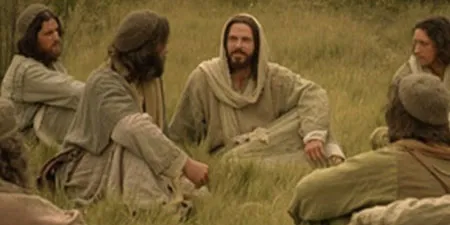
In the gospel, Jesus began to explain to the disciples that He was ready to fulfill the will of God by going up to Jerusalem to suffer and be killed, and on the third day be raised. Surprisingly, Peter, who was very close to Jesus, and who received the revelation Jesus is the Messiah, tried to discourage Him. Peter was viewing what Jesus said from the human angle, which sees suffering as loss. Jesus makes us understand that when one offers his body to the divine will, it may appear as suffering but that is the most beneficial transaction! “For whoever would save his life will lose it, and whoever loses his life for my sake will find it. For what will it profit a man, if he gains the whole world and forfeits his life?”

“For if you sow to your flesh, you will reap corruption from the flesh. But if you sow to the Spirit, you will reap eternal life from the Spirit.” (Gal 6:7-8). What is sown is perishable, but what is reaped is imperishable (1 Cor 15:42). The ‘divine transaction’ offers us more benefit than we can ever put in; what we reap far outweighs what we invest! Jesus has opened for us the pathway of ‘divine investment’, such that whoever denies himself, takes up his cross and follow Him will surely be saved and will never be at loss. In Jesus, the violence and destruction Jeremiah talked about have been conquered. The overpowering word of God dwells with us, empowering us from within with the consuming fire of the Holy Spirit. The strength of this divine touch is so strong that even when sin tries to separate us, his irresistible hand brings us back. Amen.

Fr Jude Chinwenwa Nwachukwu, C.Ss.R

Saints Peter and Paul Catholic Church,

Tedi-Muwo, Ojo, Lagos.

Sunday September 3rd, 2023.

www.nwachinwe.blogpspot.com

Saturday, August 26, 2023

“WHO DO YOU SAY THAT I AM?”

 Meditation for the Twenty-First Sunday in Ordinary Time, Year A
(Is 22:19-23; Rm 11:33-36; Mt 16:13-20)

When Jesus came to the district of Caesarea Philippi, He asked His disciples, “Who do men say that the Son of man is?” Jesus did not ask this question for personal validation. It was for the good of the disciples, for their personal reflection, and for them to sieve off the popular ideas about Jesus that sounded great but not true. Popular and trending notions are quite attractive, such that the disciples seemed to have settled for some of them. They answered Jesus, “Some say John the Baptist, others say Elijah, and others Jeremiah or one of the prophets.” Often times, popular opinions do not attract the kind of personal commitment that faith requires. A faith that is based only on the opinions of others about Jesus or based on our human contingent needs may not preserve to eternity.


Then, Jesus asked them in a more personal and intimate way, “But who do you say that I am?” God does not deal with at a shallow level. The second reading talks about the depth of the riches and wisdom and knowledge of God. His judgments are unsearchable and His ways are inscrutable. If God touches us at such depth that reaches the soul, He must have an overwhelming influence on us and our response in faith cannot be shallow or based on mere popular opinion. Our response of faith must be rooted in personal experience of Him, which comes from divine revelation. Yes, it is only an experience of God that can define God and give us such conviction and strength that can endure till eternity.


Hence, Simon Peter replied, “You are the Christ, the Son of the living god.” Jesus answered him, “Blessed are you Simon Bar-Jona! For flesh and blood has not revealed this to you, but my Father who is in heaven.” Peter’s openness to the divine revelation about Jesus Christ gives him such experience of faith that sets him apart from the crowd and popular opinion. There is a height of faith we cannot climb unless we have such experience that is rich in wisdom and knowledge and is unsearchable. As Jesus declared Peter the rock on which the Church is built, we see how the human agency can prevail against evil if it is open to divine revelation. Standing secure on the authority of Peter the Rock, the Church exercises the power of the “Keys of the kingdom of heaven” for the salvation of all.


The prophecy of Isaiah in the first reading is here fulfilled. Through the Church standing on the rock, we have been confirmed and sealed in divine grace. Evil cannot defeat those standing on the authority of the keys. Thus, the Church is constantly alive and anew to all generations because she is fed by divine revelation. Through the Church, the riches of God’s wisdom and knowledge is constantly made available to us. This is how we remain firm in faith, at the same time we are enriched and renewed in faith and knowledge of Jesus Christ. And as we grow in knowledge of Jesus, we deepen our self-awareness and understanding of one another. Therefore, the answer to the question of Jesus: “Who do you say that I am?” leads to grow in understanding ourselves and our neighbor, and to draw us to that depth of faith is authentically personal and at the same time witness to divine revelation. Amen.


Fr Jude Chinwenwa Nwachukwu, C.Ss.R

Saints Peter and Paul Catholic Church,

Tedi-Muwo, Ojo, Lagos.

Sunday August 27, 2023.

www.nwachinwe.blogspot.com


Saturday, August 19, 2023

THE TEST OF FAITH

 THE TEST OF FAITH
Meditation for the Twentieth Sunday in Ordinary Time, Year A
(Is 56:1-7; Rm 11:13-15, 29-32; Mt 15:21-28)

Let us meditate on the unique and beautiful faith of the Canaanite woman, who cried out to Jesus, saying, “Have mercy on me, O Lord, Son of David; my daughter is severely possessed by a demon.” It is obvious that her urgent need to save her daughter inspired her to run to Jesus for solution. This natural instinct is understandable even in an unbeliever who is in serious problem. Being a foreigner, she must possess a faith that is over and above her problems for her to receive the answers. This kind of faith that is not problem centered is what is already expected of all believers. The door of faith is open to all peoples. The prophet Isaiah announced in the first reading that foreigners who joined themselves to the Lord, who uphold the covenant, will be made joyful and their sacrifices will be accepted.


In the second reading, we see how the Gentiles accepted Jesus and believed in Him, but the Jews, through whom Jesus came, rejected him. While ministering to the Gentiles, St Paul reaches out to the Jews too. The mercy and love of God know no borders, His salvation is available to all. St. Paul said he would use the example of the converted Gentiles to inspire some of the Jews to accept Jesus. This is how the faith of the Canaanite woman is an example for us today.


Jesus was silent as the woman kept asking for His intervention. This period of silence was transformational though it was also a period of testing for her. She had to decide either to continue calling on Jesus or walk away. If she had remained at the level of the energy generated by the problem, she would have given up when she received no answer. But she had come to believe in Jesus, and she was drawn by the authority of Jesus over and above her immediate need at that time. That was why she would not stop calling on Jesus and following Him along the way. Her faith was purified of her ego and attachment to her problem, such that she had to humble herself and exalt Jesus.


That was why as Jesus said, “It is not fair to take the children’s bread and throw it to the dogs”, she responded, “Yes, Lord, yet even the dogs eat the crumbs that fall from their master’s table.” This is the response of one who had died to herself in faith and alive in Christ Jesus through faith. This is the kind of faith that is alive when a believer is not afraid of ‘God’s silence’ but through faith has come to recognize and maintain her standing in Jesus, no matter the situation she finds herself. Then, Jesus answered her, saying, “O woman, great is your faith! Let it be done for you as you desire.”


The door of faith is open to all peoples, but the journey through it will test our patience and maturity in faith. If we have stepped in, we will not give up when we experience the cold hand of ‘divine silence’, which gives us opportunity to be purified and grow in faith. As we persevere in faith, God is drawing us to His Holy Mountain, where His mercy awaits us. Amen.


Fr Jude Chinwenwa Nwachukwu, C.Ss.R

Saints Peter and Paul Catholic Church,

Tedi-Muwo, Ojo, Lagos.

Sunday August 20th, 2023.

www.nwachinwe.blogspot.com


Saturday, August 12, 2023

SAVED FROM THE TURBULENT WATERS

 Meditation for the Nineteenth Sunday in Ordinary Time, Year A
(1 Kg 19:9, 11-13, Rm 9:1-5, Mt 14:22-33)

Self-preservation is the greatest instinct in the human person. Unfortunately, it is equally the greatest source of temptation in man. It was the foundational principle with which the serpent lured Eve to attempt the forbidden fruit (cf. Gen 3:4-5). The question of self-preservation became part of the passion of Christ when the leaders mocked Him, saying, “He saved others, let him save himself if he is the Christ of God, the Chosen One” (Lk 23:35). The soldiers added to the injury, saying to him, “If you are the king of the Jews, save yourself” (Lk 23:36). Humanly speaking, ‘saving oneself’ and ‘securing one’s wellbeing’ appear to be our predominant preoccupations. However, the grace of the resurrection assures us that our ultimate self-preservation is in Christ Jesus. He says, “If any man would come after me, let him deny himself and take up his cross and follow me. For whoever would save his life will lose it, and whoever loses his life for my sake will find it” (Mt 16:24-25).

Let us meditate how Jesus stepped forward, walking on the water, to save the disciples, who were on the sea battling with the waves. Think about the silent, gentle and steady steps of Jesus in the midst of the aggressive, violent and noisy storm! His calm and courage outweighed the fear and tension roused by the turbulent waves. As the apostles gazed upon Him in this situation, we immediately recall how Elijah encountered God in a still small voice after enduring great wind, earthquake and fire. Jesus is always present in our life-journey. Sometimes, we do not realize it or seek Him until there is a storm.


The disciples were terrified once more when they saw Jesus walking freely and confidently on the turbulent waters, which was their greatest threat at that time. “But immediately He spoke to them, saying, “Take heart, it is I; have no fear.” His words were consoling enough, but Peter needed proof of faith. He said to Jesus, “Lord, if it is you, bid me come to you on the water.” Jesus replied immediately, “Come.” Peter knew He could not walk on the water, passing through the storm unless Jesus gave him the authority to do so. Most importantly, he believed that in the name of Jesus He too could walk on the turbulent waters, for with God all things are possible.


Peter walked on the water towards Jesus. With the authority of Jesus, in His name and towards Him, we too shall step forward and pass through any storm in our lives. But the temptation of self-preservation is always around the corner! When Peter shifted his attention from Jesus and began to feel the strength of the waves and the storm, fear of losing his life beclouded him. At this point, he felt helpless at the opposing storm and began to sink. At once he cried out, “Lord, save me.” And immediately Jesus stretched out His saving arm and caught him, saying, “O you of little faith, why did you doubt?”


From the Cross, Jesus continues to stretch out His mystical saving arm that we may not sink in the waters of life. Man cannot save himself; Jesus saves! No matter what the storm that is trying to engulf us, we only need to believe that with His authority and in His name, we can pass through, and stretch out our arms of prayer and call upon Him. Like Peter, we call upon him by the words of our prayers, even when they are silently uttered in the secrets of the heart. And by stretching forth our hands we take the proper action and behavior that corresponds with our faith and prayer life. At the end, everything will lead to the glory of God, for, “When they got into the boat, the wind ceased. And those in the boat worshipped Him, saying, ‘Truly you are the Son of God.’” Amen.


Fr Jude Chinwenwa Nwachukwu, C.Ss.R

Saints Peter and Paul Catholic Church,

Tedi-Muwo, Ojo, Lagos.

Sunday, August 13th, 2023.

www.nwachinwe.blogspot.com


Saturday, July 29, 2023

THE HIDDEN WISDOM

Meditation for the 17th Sunday in Ordinary Time, Year A
(1 kg 3:5, 7-12; Rm 8:28-30; Mt 13:44-52)

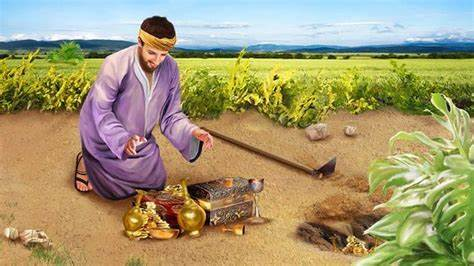
Wisdom and knowledge do not come cheap. The hidden wisdom of God is revealed only to those who humbly desire it as King Solomon did in the first reading. He priced wisdom above wealth and health, denied himself of all others to ask for divine wisdom. This action of Solomon is demonstrated in the parable of the hidden treasure. The man who found the hidden treasure, which is of the highest value, had to let go of other treasures of lesser value in order to acquire it. It is one thing to have KNOWLEDGE of what is of highest value, but it is WISDOM to act in the right way in order to possess it.


Let us meditate on how God, the source of wisdom, hid the ultimate treasure of the kingdom of heaven. He did not leave it in the open for causal eyes to see, but He hid it, such that it can only be found by those who are looking for it, and acquired by those who value it above all else. This wisdom of God indicates that everything that has value cannot be on the SURFACE, but must be sought for before it can be found. Think about how love, truth, beauty, goodness, etc, are not causally placed on the surface but hidden in the depths of the heart. They can only be found and possessed by those who know their value, who are ready to make sacrifices. Yes, in his joy, the man goes and sells all that he had and buys the field.


Human wisdom is foolishness in God’s eyes (1 Cor 3:19). The human mind would have considered Solomon foolish for not requesting for his personal wellbeing and safety first. Man considers amassing wealth as a means of dominance and control. But Solomon asked for divine wisdom in favor of his people. It would have been foolishness in the eyes of the world for a merchant to sell all he had in order to purchase one pearl of great value. The fear of loss; fear of losing relevant, dignity, pleasure, health, or life itself discourages us. This is because we calculate from a selfish safe angel! But the second reading urges us to calculate from a ‘divine angle’, where we are truly safe, and whatever ‘investment’ we make from there will not fail us, but must surely end to our favor. “We know that in everything God works for good with those who love Him, who are called according to His purpose.”


Therefore, being conformed to the image of Jesus, we stand on the authority our shared life with Him, “So that, knowing the love of Christ, which is beyond knowledge, you may be filled with the utter fullness of God” (Eph 3:19). Jesus becomes the highest Treasure, the one Pearl that is of the greatest value. Though He came to dwell among us, He is still hidden from the eyes of the worldly minded, but is found by those who are sincerely searching for truth, and by those inspired by the Holy Spirit. The hidden wisdom of God is made available to us in Christ Jesus. Thus, we are truly wise when we come to know Jesus, and He becomes the reason for our lives and actions. “Because of the supreme advantage of knowing Christ Jesus my Lord, I count everything else as loss. For Him I have accepted the loss of all other things, and look on them all as filth if only I can gain Christ” (Phil 3:8). In this way, God will turn every situation to our advantage since we have been predestined and called to share in the life of Jesus; “And those whom He called he also justified; and those whom He justified He also glorified.” Amen.


Fr Jude Chinwenwa Nwachukwu, C.Ss.R

Saints Peter and Paul Catholic Church,

Tedi-Muwo, Ojo, Lagos.

Sunday July 30th, 2023.

www.nwachinwe.blogspot.com


Saturday, July 22, 2023

SEPARATING THE WEED FROM THE WHEAT

Meditation for the Sixteenth Sunday in Ordinary Time, Year A
(Wisdom 12:13, 16-19; Rm 8:26-27; Mt 13:24-43)

Let us meditate on the parable of the weeds sown among wheat. The parable reveals the surprising mercy and patience of God, who allowed the good crops and bad seeds to grow together until the harvest time. The evil seed sneaks in later at the ‘dark hour’ and spreads across, trying to dominate. Think about the pressure that will be on the good seeds as the evil ones grow beside them! Seeing this, we would have loved a quick and immediate solution by the Master to uproot the weeds at once. But the Master says, “No; lest in gathering the weeds you root up the wheat along with them.” The depth of the mercy and patience of the Master for the good seed is such that He does not want to lose any one of them.


Meditate on how the harvest time is the ultimate moment of separation between the wheat and the weeds. At this moment, their fruits become what will distinguish each from the others, and the standard of separation. A good seed planted will be saved only if it bears the fruit for which it was intended. No matter how long it takes, evil must be exposed, for it bears forth nothingness. “By their fruits we shall know them” (Mt 7:16). This uncommon wisdom, according to the first reading, shows that God, who is sovereign in strength, judge with mildness and with great forbearance. “Through such works you have taught your people that the righteous man must be kind, and you have filled your sons with good hope because you give repentance for sins.”


How can the good bear fruit when they are competing and rubbing shoulders with evil? The recklessness and disorderliness of evil can influence and corrupt some good seeds. Thus, the good seed can only bear fruit by perseverance. However, the good seeds are not helplessly abandoned to the mercy of the evil seeds. God sends the Holy Spirit as the first of those who believe (Rm 8:23). “The Spirit helps us in our weakness…” And He preserves us from the corruption of evil. “The Spirit Himself intercedes for us with sighs too deep for words.” Therefore, while the wheat and the weed look alike on the surface, going through similar struggles, God’s chosen ones have an inner life of the Holy Spirit that makes the difference. No matter the spread of evil, and how weak we have become, we are always in the presence of God through the Holy Spirit who dwells in us. Let us open up our hearts and keep alive the presence of the Holy Spirit within us. Amen.


Fr Jude Chinwenwa Nwachukwu, C.Ss.R

Saints Peter and Paul Catholic Church,

Tedi-Muwo, Ojo, Lagos.

Sunday July 23, 2023.

www.nwachinwe.blogspot.com


Saturday, July 8, 2023

FINDING STRENGTH AND REST IN LABOUR

Meditation for the 14th Sunday in Ordinary Time, Year A
(Zech 9:9-10; Rm 8:9, 11-13; Mt 11:25-30)

Against the backdrop that the rulers and influential people are the outspoken and powerful in society, the prophet Zechariah declares to Zion, saying, “Behold, your king comes to you; triumphant and victorious is he, humble and riding on a donkey.” The prophet explains that this King, who would ride on a young donkey would destroy the chariots from Ephraim and the war horse from Jerusalem; “He shall command peace to the nations”, and His dominion shall reach the ends of the earth. Ordinarily, the more aggressive and violent leaders overthrow the gentle and weak ones.


This principle of exercising power and control has filtered into our everyday life. Often times, the gentle and humble are perceived as boring and dull. The aggressive and violent presume they have the right to get whatever they want. People we commonly project to lead are often those who are forward and outspoken. Those who are calm and recollective, humble and gentle, do not gather much clout and friends. In a world that is laden with a competitive attitude, aggressive and violent people seem to be having a field day. One of the turbulent storms that is trying to wreck marriages today is power tussle. The fear of being under authority has become an epidemic among the younger generation.   


The prophecy of Zechariah is fulfilled in Jesus Christ, which was clearly manifested during his triumphant entry into Jerusalem (Mt 21:1-5). Jesus is the meek and humble King, who came to save us from the bondage of evil and grant us peace and eternal life. As He humbled Himself, taking our human form, in Him God has revealed Himself the ‘infants’, i.e. the humble and lowly in heart. This is the new way God reveals His life and power, which escapes the wisdom and understanding of wordily minded. Since Jesus is the Incarnate Wisdom, and the only way to the divine life, He says, “No one knows the Son except the Father, and no one knows the Father except the Son and any one to whom the Son chooses to reveal Him.”


Therefore, Jesus invites us to come to Him with our labors and heavy laden and find rest. He says, “Take my yoke upon you, and learn from me, for I am gentle and lowly in heart, and you will find rest for your souls. For my yoke is easy, and my burden is light.” Thus, we must model our hearts after Jesus, bearing His joke of humility. That is the only way we can find peace in our hearts, homes and society. Aggression and violence will keep us restless and powerless.


Our response to the divine invitation Jesus offers is made possible by the working of the Holy Spirit, who dwells in us. From within, the Holy Spirit makes available and applies to us the life of Jesus. So, the strength to bear the joke, and the rest Jesus gives, are animated within us by the Holy Spirit. St. Paul says in the second reading, “If the Spirit of Him who raised Jesus from the dead dwells in you, He who raised Christ Jesus from the dead will give life to your mortal bodies also through the Spirit who dwells in you.” Hence, we are debtors, not to the flesh but to the Holy Spirit. We respond to the invitation of Jesus by opening up our hearts to the promptings of the Spirit through meditation, prayer and virtuous life. And we must avoid sin, which tends to cover the light of the Spirit from shining out in us. In this way, we shall accomplish all our labors, and there shall be no burden too heavy for us to bear, for, “I can do all things in Him who strengthens me” (Phil 4:13). Amen.


Fr Jude Chinwenwa Nwachukwu, C.Ss.R

Saints Peter and Paul Catholic Church,

Tedi-Muwo, Ojo, Lagos.

Sunday July 9th, 2023.

www.nwachinwe.blogspot.com

12th Anniversary of my Ordination