Saturday, May 14, 2022

LOVE ONE ANOTHER

               LOVE ONE ANOTHER

Meditation for Fifth Sunday of Easter, Year C

(Acts 14:21-27; Rev 21:1-5; Jn 13:31-33, 34-35)

Is it realistic to love everyone? We know that no one can be loved in return by everybody, including those that you showed love and care. Naturally, love diminishes when planted in the dry soil of hate and unappreciation. Human love is selective. But it can cross borders and reach even unfriendly grounds only by divine help. Without this help from above, human love will definitely shrink to selfishness and self-destruction. That is why it is necessary for human love to be open to divine intervention.


Meditating on the readings of today, we see that the divine intervention that uplifts human love comes as an injunction: “A new commandment I give you, that you love one another even as I have loved you, that you also love one another.” So, the love of God comes, not nullify human love, but to draw it out of itself to a greater outreach, to reach everyone. The love of God as a commandment becomes the guide and motivation of human love; it is the ‘reason’ and energy that powers the love of believers. To love even as Jesus loved means He had laid down the example to follow, and the principle of love.


Jesus’ love for us defined His words and actions, and ministry on earth. Love conquers the self; it overwhelms and consumes the lover. It becomes part of the person, an inseparable identity. Hence, Jesus said to the disciples, “By this all men will know that you are my disciples, if you love one another.” Since love becomes the ‘life’ of the lover, whenever love is reciprocated, a bond is formed. Thus, the divine love that goes ahead of the lover establishes this bond between the believer and God.


“The love of God urges us on” (2Cor 5:14). Therefore, the Christian, who goes forth to love his neighbor and to love everyone, comes as one who is already in love (with Jesus), and not as one who comes to discover love in his neighbor! He goes forth as one already trained and empowered by the love of Jesus. This is how believers can love one another and at all times. And this is how they bear witness that they belong to Jesus, for the effects of their love and lives will always be greater than what human love can offer.


This bond with Jesus that encounters one another in love is exemplified in the life of Paul and Barnabas, as given in the first reading. These two disciples travelled through many cities and villages, especially in Gentile territories, establishing new churches, and strengthening believers, despite many tribulations and persecutions. Their love for the gospel conquered every obstacle on their way, as the Gentiles appreciated the love shown them.


This love that is anchored on the love of Jesus brings newness! Unredeemed human love, with its high boundaries, shortsightedness, and reclining to selfishness, easily gets bored, dissatisfying and warn out. The second reading makes us understand that the newness that the commandment of love brings is a foretaste of the new heaven and earth, and the new Jerusalem. It comes forth like a bride adorned for her husband. To love as Jesus loves mingles men with God; it creates room for the love of God and the kingdom of God to dwell among us. The vision of John becomes a living experience of those who obey Jesus’ commandment of love: their tears will be wiped away, they will overcome mourning and pain, and death will not be their end. The love of God will move them forward so that they will not dwell in the past, and all things shall be new for them.


This newness of life that love for one another in Jesus Christ brings is a foretaste of heavenly glory on earth. It is our sharing in the glory of Jesus, in whom the Father is gloried. The world is full of hatred and division; worldly love is myopic, selective and selfish. Jesus has planted His love among us that with Him we can conquer the world, and love everyone and love to eternity. Amen.  


Fr Jude Chinwenwa Nwachukwu, C.Ss.R

Saints Peter & Paul Catholic Church,

Tedi-Muwo, Lagos.

Sunday May 15th, 2022.

www.nwachinwe.blgospot.com

Monday, May 9, 2022

DISCERNING VOCATION

 DISCERNING VOCATION

Meditation for Monday of the 4th Week of Easter

(Acts 11: 1-18; Jn 10:1-10)

Discerning God’s call and discovering one’s vocation in life is not usually easy and straight forward. Being close to God or living a righteous life does not automatically imply one can be flawless in interpreting God’s call. If it is so for the righteous, what will become of the ungodly and the sinner? (Cf. 1 Pet 4:18). Some people have taken up ministries, marriages, etc, only to discover along the way that they did not interpret the ‘signals’ properly. This issue is far from being solved since there is no one perfect method to unlock all vocations. Nevertheless, though each call has its unique identity and approach, considering the person and the circumstances involved, the readings of today lay down some principles that can guide one to discern God’s call properly.


The first reading tells us how God called Peter to minister to the Gentiles and dine with them. While at Joppa, he saw a vision where a voice asked him to eat animals, reptiles, etc that Jews ordinarily would not eat. Peter tried to resist but the voice said to him, “What God has cleansed you must not call common.” Coincidentally, three men appeared at that very moment from Caesarea. This was a PHYSICAL manifestation that God was calling Peter to preach to the Gentiles in that town. Deep within him, he perceived at once that the spirit was URGING him to follow those men.


Having a dream or vision is strictly a private experience; it is not enough for one to conclude and act on the message therein as God’s will. Apart from the physical manifestation and the strong urge, Peter had another signal: Cornelius’ vision was in line with that of Peter. This helped the apostle to discern in favor of the vision since the experience is now more than a private issue. He discovered that God was calling him out of his myopic understanding of salvation. God’s call always takes us out of ourselves; it is never selfish. Having discerned in favor of God’s will, Peter began to preach to the Gentiles. However, he continued to discern even in process of his ministry.


Peter saw the hand of God at work as he carried out his vocation. He said, “As I began to speak, the Holy Spirit fell on them just as on us at the beginning.” This was the final signal that convinced him that he was on the right path. Peter described his work as cooperating with God, and allowing God’s grace to flow through him. So, in discerning our vocation, we think in favor of God’s will, His glory and Kingdom. And the will of God comes alive in Jesus Christ.


Therefore, our vocation becomes our way of following Jesus, the Good Shepherd. Jesus said, “I am the door of the sheep…if any one enters by me, he will be saved, and will go in and out and find pasture…I came that they may have life, and have it abundantly.” The choices we make to fulfil our destiny in life should be weighed through the righteousness of Christ, and be carried out in favor of His glory. Then, we shall find fulfillment and be fed in greener pastures. Amen.


Fr Jude Chinwenwa Nwachukwu, C.Ss.R

Saints Peter & Paul Catholic Church,

Tedi-Muwo, Lagos.

Monday May 9th, 2022.

www.nwachinwe.blogspot.com

Saturday, May 7, 2022

“My Sheep hear my Voice”

 “My Sheep hear my Voice”

Meditation for Fourth Sunday of Easter, Year C

(Acts 13:14, 43-52; Rev 7:9, 14-17; Jn 10:27-30)

Today, we celebrate the mystery of Christ as the Good Shepherd. The first reading exemplifies how Jesus, the Good Shepherd, silently leads His flock through the ministry of the Church. Paul and Barnabas met strict persecution in Antioch among the Jews, who became jealous of the Gentiles that gathered to hear the good news. But the two would not give up the mission Christ had called them to; no opposition would discourage them. As Jesus said in the Gospel of today, “My Sheep hear my voice, and I know them, and they follow me.” Paul and Barnabas held firm to the word of God, and to the mission that was entrusted to them. Paul described this mandate as to bring the good news to the Gentiles, and to bring salvation to the uttermost parts of the earth. By being obedient to the word of God, and following Jesus as their Good Shepherd through their commitment to the gospel, the opposition against Paul and Barnabas even helped them to achieve their mission since they travelled down to Iconium, filled with joy and the Holy Spirit.


The revelation of John in the second reading gives us the vision of the great multitude who listened and followed Jesus as their Good Shepherd. This vision indicates the direction to which the Good Shepherd is leading us to. Thus, to follow Him requires that we align our steps towards that heavenly destination. The great multitude is described as coming from every nation, language and people. They all gathered before the throne and the Lamb, who is their only focus. United under the Lamb, they all wore white robes and held palm branches. Their radiant beauty speaks of their victory over tribulations; “They have washed their robes white in the blood of the Lamb.”


Unlike Paul and Barnabas, who suffered persecution, those who have reached the heavenly destination around the throne shall bear no more suffering and pain. At this time, the fullness of the Lamb as the Good Shepherd shall be revealed upon them. “He will guide them to springs of living water; and God will wipe away every tear from their eyes.”


That is why it is important for us today to listen to His voice. He promised to lead us on the pathway of life, and to fullness of life. Jesus indicated that the sheep might face threat to life; an attempt to snatch them away and be destroyed. However, those who listen to His voice, and follow Him cannot be misled; they are secure in the Father’s hand. Therefore, through the words of Jesus, the strong arm of God leads us forward over and above every difficulty and life challenges.


Jesus says, “My sheep hear my voice.” Like Paul and Barnabas, and the Saints in Heaven, we contemplate the face of Jesus through the Gospel. In this way, our minds are fed with His word, and our will is strengthened to follow where He leads. This is how we persevere in our vocation and in good works despite opposition and tribulations along the way. This, too, is how we reach our eternal destination. Amen.


Fr Jude Chinwenwa Nwachukwu, C.Ss.R

Saints Peter & Paul Catholic Church,

Tedi-Muwo, Lagos.

Sunday May 8th, 2022.

Good Shepherd Sunday

www.nwachinwe.blgospot.com

Sunday, May 1, 2022

"Come and have Breakfast"

 “Come and have Breakfast”

Meditation for Third Sunday of Easter

(Acts 5:27-32, 40-41; Rev 5:11-14; Jn 21:1-19)

At the beginning of Jesus’ ministry, the call of Peter and his companions came after a miraculous catch of fish. They abandoned everything and followed (Lk 5:1-11). All was going well until Judas betrayed Jesus and Peter denied Him three times. The death of Jesus brought so much uncertainties that even after His resurrection, the apostles did not know how to carry on with the works of their master. Though Jesus appeared to them a few times as proof that He is alive and present in their midst, they lacked the courage and direction needed for the mission. This situation would last till Pentecost. Before then, Peter and his friends must have been bored, and they tried going back to their old trade of fishing.


In the gospel of today, Peter and six other apostles went to the sea of Tiberias for fishing, but they caught nothing all night long. This was a similar experience at the call of Peter earlier. It appears they tried to abandon their call to be ‘fishers of men’ and returned to the old life they left behind to follow Jesus. But it was a wasted effort. Abandoning one’s vocation even at the moment of crisis is usually a fruitless venture. Imagine their frustration and weakness after such wasted effort. Then Jesus came to their rescue!


His presence had an overpowering influence on them; they could not describe it in words nor differentiate exactly the man standing at the beach. But with their childlike heart, they responded to him. Then, Jesus said to them, “Cast the net on the right side of the boat, and you will find some.” They obeyed and caught a great quantity of fish. Their attention was drawn up to Him. They recognized Him, and went up to Him. This was like the second call of Peter and His companions, a re-directing of their hearts back to their vocation. Jesus made a charcoal fire and asked them to bring some of the fish. He said to them, “Come and have breakfast.” He fed them to overcome their weariness and prepare them for the journey ahead.


At the end of the breakfast, Jesus asked Peter three times, “Do you love me?” As Peter answered ‘Yes’, He said to Him, “Feed my lambs.” Thus, the mission belongs to Christ. Peter’s love for the mission is his love for Jesus. That means he would carry out his mission in the Church as a response to his love for Jesus and in obedience to Him. That is why, in the first reading, Peter answered the high priest, “We must obey God rather than men.” And this is the principle that moves us forward in our different vocations. The human influences that do not surrender to the love of Jesus will always try to stop us, and demand our obedience. The survival of the gospel and any Christian vocation must pass through this battle.


Those who persevere in God’s call in Christ Jesus through the gospel shall be counted among the great multitude in the second reading. For all eternity they proclaim the glory of Jesus saying, “Worthy is the Lamb that was slain, to receive power and wealth and wisdom and might and honour and glory and blessing!” As we gather at the invitation and command of Jesus, who said to the apostles, ‘come and have breakfast’, we offer up our love, weariness, fears, confusion, backwardness, etc. We renew our love and commitment to our vocation. And in thanksgiving for the nourishment we have received, we echo the angelic voices in adoration and worship. Our lives sing to the glory of Jesus. Amen.


Fr Jude Chinwenwa Nwachukwu, C.Ss.R

Saints Peter & Paul Catholic Church,

Tedi-Muwo, Lagos.

Sunday May 1st, 2022.

www.nwachinwe.blgospot.com


Wednesday, April 27, 2022

The 'Escape Route'

 The ‘Escape Route’

Meditation for Wednesday of the Second Week of Easter

(Acts 5:17-26; Jn 3:16-21)

The new life of the resurrection is bound to face opposition; ‘to be born anew’ will have to battle with the old life. The first reading tells us how the party of the Sadducees, that is, those who do not believe in the resurrection, led the opposition against the apostles. They were locked up in prison. But the word of God cannot be imprisoned; the power of the resurrection breaks through every barrier, and dispels every darkness. The open hearts of the apostles to the resurrection were stronger than the iron bars of the prison. The angel of the Lord led them out of the prison and sent them to the temple to preach.

In the face of the opposition, the apostles realized convincingly that they were not alone! The resurrected Jesus was deeply involved in their affairs just as they were committed to the preaching of the gospel. So, they went about their activities with inner joy and peace despite the persecution.

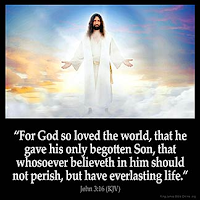
Faith in the resurrection of Jesus assures us of this victory over every opposition and persecution. Jesus said to Nicodemus, “God so loved the world that He gave His only-begotten Son, that whoever believes in Him should not perish but have eternal life.” God did not send His son to condemn the world. Thus, the Angel did not come to destroy the Sadducees nor pull down the prison. Unjust human structures may still be there; the opposition and persecution against believers may not go away. Even the believer himself might struggle with doubt and tend to surrender to present day Sadducees.

However, faith in Jesus is the ‘escape route.’ Our commitment to the gospel, and to the new life of the resurrection make us available to be rescued by divine grace, and to pass through any ‘prison bar’ that tries to hinder us. We are not alone; the presence of the resurrected Jesus abides with us. Whoever believes in Him cannot be locked in the dark, but shines out as light. Jesus said to Nicodemus, “But he who does what is true comes to the light, that it may be clearly seen that his deeds have been wrought in God.” Amen.

Fr Jude Chinwenwa Nwachukwu, C.Ss.R

Saints Peter & Paul Catholic Church,

Tedi-Muwo, Lagos.

Wednesday April 27th, 2022.

www.nwachinwe.blogspot.com

Monday, April 25, 2022

"You must be born anew"

 “You must be Born anew”

Meditation for Tuesday of the Second Week of Easter

(Acts 4:32-37; Jn 3:7-15)

What is the implication of the Resurrection for those who believe? This is demonstrated in the life of the early Church as given in the first reading of today, and the discussion of Jesus and Nicodemus. In the resurrection, human life is glorified and endowed with divine qualities. The resurrected Jesus passed through closed doors as divine, and ate food as human. A new experience of life dawned at Easter. And those who believed in the Resurrection of Jesus are expected to live out this new life.


The first reading tells us how the early believers were united in one heart and soul, and owned everything in common. With this, they conquered poverty and hunger. Interestingly, not everyone brought in something, but they owned and shared all they had equally. Think about the depth of human selfishness, greed and envy! These natural forces hold us bound like the tombstone that covers the grave. But faith in the resurrection was able to transplant the believers into a principle of life that was uncommon, uneconomical, and unimaginable to the human mind. Still, it solved the age-long problem that the greatest economies of the world have not been able to solve, that is, poverty and hunger. So, we must consider the principle of life of the resurrection as we plan to build up wealth and status. This principle is that whatever I own must not be mine alone to consume, but it is equally ‘owned’ by others!


This kind of mindset is like going against the current, for the human mind is selfish by default. Hence, Jesus said to Nicodemus, “You must be born anew.” This means to be born of the Holy Spirit. It is allowing ourselves to be drawn up to Jesus in faith. It is like ascending to heaven while still on earth! To be ‘born anew’ can be described as allowing our faith and hope in Jesus to become our REASON for living, and to express this life with love and charity. Baptism guarantees us access to this new life in Christ Jesus.


This new life in the resurrection derives its ultimate joy and relevance in Christ alone. “Indeed, I count everything as loss because of the surpassing worth of knowing Christ Jesus my Lord” (Phil 3:8). This is the new reasoning of Easter people; a new way of life that brings unity, and conquers poverty and hunger. Amen.


Fr Jude C. Nwachukwu, C.Ss.R

Saints Peter & Paul Catholic Church,

Tedi-Muwo, Ojo, Lagos.

Tuesday April 26, 2022.

www.nwachinwe.blogspot.com


Sunday, April 24, 2022

THE MANDATE FOR FORGIVENESS

 The Mandate for Forgiveness

Meditation for Second Sunday of Easter

(Feast of Divine Mercy)

(Acts 5:12-16; Rev 1:9-11, 12-13, 17-19; Jn 20:19-31)

On this second Sunday of Easter, the Church celebrates the mercy of God. In our meditation, we gaze upon the disciples as they gathered behind closed doors. A thick wall of fear held them enclosed in the room, and a cloud of uncertainty and confusion hovered over them. It appears they found a place of refuge for themselves, a comfort measure against the malice and hatred of the Jews. At this point, fear exalted the enemies of Jesus, while His friends were silenced and enclosed behind bolted doors.


While under the grip of fear, the disciples did not set their will, mind and heart on the terror of the malice of the Jews and the elders, but on the events surrounding Jesus. The contemplation of their hearts was on their Master, and about the news of His resurrection, its meaning and implication for them. “For where your heart is, there will your heart be also” (Mt 6:21).


Suddenly, Jesus appeared in their midst! His presence stripped the enclosing walls and doors of their relevance, and fear lost its grip. The disciples were drawn to silence and wonder. Their hovering minds and confusion of heart now had a focal point. The thick cloud of confusion melted away as they gazed upon Jesus, in whom is the answer to all their questionings and doubts. His presence spoke in silence what His voice was about to declare: “Peace be with you.”


Peace is the most important ingredient man needs for a wholesome and fulfilled life. ‘Peace’ is not a just a product of human efforts and deliberations. It is, majorly, a gift of resurrection.


Then Jesus gave them the mandate to go and preach the good news. He breathed on them, and said, “Receive the Holy Spirit. If you forgive the sins of any, they are forgiven; if you retain the sins of any, they are retained.” Meditate on this mandate to forgive sins and see its immediate and living link with the Eucharistic mandate, “Do this in memory of me.” The forgiveness poured out in the Eucharist is now instituted and given its own mandate! Hence, the Sacrament of Reconciliation has a special connection with the Sacrament of the Eucharist.


Mercy as a sacrament becomes a necessary means of salvation, and an object of faith. Thus, in the creed we the Church professes, “I believe in the forgiveness of sins.” And the preaching of the gospel includes an invitation to participate in God’s forgiveness and the Eucharistic nourishment.


So, the ocean of Divine Mercy gushed forth from the pierced side of Jesus as water and blood flowed down. As Jesus appeared to the disciples behind closed doors, so does the mercy of God pierce through the walls of sin and hate to set us free for God and for our neighbor. We see this in the example of Peter when he denied Jesus, but the merciful gaze of Jesus broke through the walls of his fear and ego. The parable of the prodigal son demonstrates it too. It is still this mercy that passed through the walls of Thomas’ doubts and brought him to faith and homage.


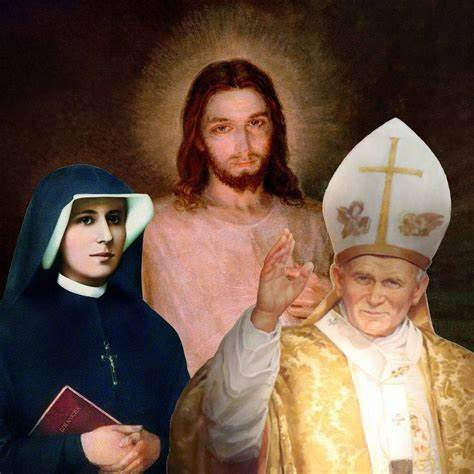
This mercy that Jesus instituted as a Sacrament was later revealed to Sr Faustina on Feb 22 1931 as a devotion. And John Paul II on May 5th, 2000 declared the second Sunday of Easter as Divine Mercy Sunday in accordance with the request of our Lord through Sr Faustina. Divine Mercy as a devotion draws us to contemplation, envelops our hearts, mind and will. It becomes an exercise of faith in which we re-echo the homage of St Thomas, “My Lord and my God!” The Lord wants the ocean of His mercy, the unfathomable divine mercy, to envelop the whole world and gush forth for us. As mercy is the greatest attribute of God, so it has become our identity and should manifest in every aspect of our lives. We who have been found out by God’s mercy, saved by His mercy, set free and nourished by His mercy, will go forth to show mercy and preach the gospel of God’s mercy. Amem.


Fr Jude Chinwenwa Nwachukwu, C.Ss.R

Saints Peter & Paul Catholic Church,

Tedi-Muwo, Lagos.

Sunday April 24th, 2022.

www.nwachinwe.blogspot.com