Thursday, July 18, 2019

My Neighbor, My Eternal life

REFLECTION FOR 15TH SUNDAY IN ORDIANRY TINE YEAR C
(Deut 30:10-14, Col 1:15-20, Lk 10:25-37)

1.0. “The Word is very near you”
Moses encouraged the people to keep the commandments of God. “And turn to the Lord God with all your heart and with all your soul.” He reminded them that these commandments are within their reach. What God commanded is within human will and intellect to observe. The divine laws are neither inhuman nor antihuman. Instead they bring order to humanity, and enhance our lives while drawing us close to God.

2.0. The Pre-eminent
“Christ is the image of the invisible God.” If God who gave the law to Moses now dwells among us in Jesus Christ, then the nearness of the divine law has its locus in Christ Jesus. Thus, Jesus becomes the fulfilment of the law, and the One through whom we draw near to God and offer Him our whole heart and soul. The commandments of the Lord are no more external words written on tablets of stone, but the condition of a heart that has accepted Christ Jesus. “He is the beginning, the First-born from the dead, that in everything He might be pre-eminent.”

3.0. “What shall I do to inherit eternal Life?”
This is the question that formed Jesus’ teaching in the Gospel reading today. Only Jesus who came near us from His Heavenly Kingdom can lead us to Heaven. As He directed the lawyer back to the law, in the same way the love of Jesus impales us to observe the commandments, i.e. we approach God’s commandments with the love of Jesus.

To love God with all one’s heart, soul, strength, and mind is nothing else than to love God with the whole of one’s self. God demands our total all time response without any reservations. If all of oneself is given to God, what is left for the neighbor? The law commands that we love God totally with every aspect of ourselves, and practice that in our neighbor. This is what must be done to inherit eternal life. Thus the means of eternal life is as close as our neighbor.

4.0.  “Love your neighbor as yourself”
Our ungraced nature is brutally selfish and predatory. A heart that is not touched by divine love can hardly love genuinely and sacrificially. Thus God demands all our heart, soul, mind and strength that He might create within us the capacity to accommodate our neighbor. Only God can create! When the whole self is dedicated to God, the individual is blessed with the internal capacity to equally dedicate himself to others. This is how we can love without segregation; neighbors without fences, and still remain safe.

People often experience heartbreak in relationships because they give their hearts to people without first giving it to God. The neighbor ought to receive our emotions, strength and care as sanctified by grace. In this way no one can break your heart!

5.0. The Samaritan Comes to Town
The story of the Good Samaritan reminds us that we do not know who is our neighbor until we are in need of help. At such difficult moment, the priest and Levite whom the Jew considered neighbors disappointed him. A good neighbor; a good friend, partner, etc comes as a gift. The meeting of the wounded Jew and the good Samaritan was an act of divine Providence. That is why in giving God all our heart, soul, mind and strength we will never lack good friends…

The Samaritan shows us how we are to regard our neighbor in order to earn eternal life. He took care of the injured man as if that was the destination of his journey. He gave him his time and attention, poured oil and wine. Having revived the man a bit, he exchanged positions with him by setting him on his horse and took him to an inn. Now this Samaritan sacrificed his own journey and diverted to the inn as if that was his destination. The money he paid in the inn was the least cost of all he spent on the man. The time, attention and gift of his presence he showered on the Jew was priceless.

The love and care of a good neighbor is endless. The caring man deposited two denarii to the innkeeper on trust to cover any extra expenses he might incur. We see here that a good neighbor not only offers his help but equally attracts further graciousness from others. Thus the Samaritan involved the innkeeper in caring for the beaten Jew.

After disrupting his journey for a whole day, he now set out on his trip, but promised to come back to pay any extra charges. That means while he was away on his journey, he would continue to 'contemplate' on the welfare of the beaten man. Thus, out of sight is never out of mind for the one who loves genuinely. Being a good neighbor is not reduced to physical proximity. Through prayer and contemplation we can become good neighbors to people, even in far away places.

6.0.   “Go and do likewise”
The authentic model of a Good Samaritan shines out in Christ Jesus. He branched off His Heavenly Kingdom to attain to us who were wounded by sin. He poured out His Blood and exchanged positions with us on the Cross. Jesus paid our debt of sin, left a deposit of grace in the sacraments entrusted to the Church, which is symbolized by the inn. And promised to come back...

Thus Jesus answered the Lawyer, “Go and do likewise.” What we must do to earn eternal life is to love our neighbor as the good Samaritan did to the beaten Jew. The work of salvation is as near as the other person nearby who is in need. As Moses said earlier, the commandments of God are within reach. Now my neighbor has become my means of salvation.

Fr Jude Nwachukwu, C.Ss.R
St Martin of Tours Catholic Church,
Mabushi, Abuja.
Sunday July 14, 2019.

Sunday, June 23, 2019

THE BREAD AND WINE GIVEN FOR YOU


Most Holy Body & Blood of Christ (Corpus Christi)
(Gen 14:18-20, 1 Cor 11:23-26, Lk 9:11-17)

1.0.         Prelude
Today we celebrate Corpus Christi, the Most Holy Body and Blood of Christ (The Eucharist). We gather in thanksgiving to celebrate Jesus’ offering of Himself in the form of Bread and Wine for our salvation. From the onset, the Eucharist has always been subject of controversy (Jn 6:58-62). Still, it has never failed to be a source of strength, joy and love for those who believe and receive worthily. Briefly, we shall draw some Eucharistic inspirations from the readings today.
Image result for the eucharist Nigeria


2.0. The Priestly Offering
“Melchizedek king of Salem brought out bread and wine; he was priest of God Most High” (Gen 14:18). Unlike what was obtainable in the Old Testament where priests offered animals, Melchizedek surprisingly offered bread and wine. It was a thanksgiving offering for Abram, who in turn committed himself to the sacrifice by presenting a tenth of everything he got.

Notice that when the Levites made their offering, the person for whom they performed the sacrifice presented the animal that was slaughtered (Lev 1:2-5). But it was the Priest of Salem who brought out the bread and wine that was offered to God for Abram. This priestly offering prefigures the Eucharistic offering of Jesus for us. Corpus Christi is now and always a thanksgiving offering, no matter the intention of the faithful, and must be offered by a priest in the order of Melchizedek (Heb 7:1-28).

3.0.         Bread and Wine Sacrificed
Yes, it is a sacrifice! St Paul in the Second reading talks about the sacrificial dimension of the Eucharist. “For as often as you eat this bread and drink the chalice, you proclaim the Lord’s death until He comes” (1Cor 11:26). Jesus is the Victim, i.e. He is the object of the sacrifice as well as the Priest who offered Himself for our salvation. Like Melchizedek of old, Jesus brought bread and wine and, offered Himself through them. The ‘offering’ of the bread and wine becomes the same ‘offering’ of Himself at Calvary. “This is my body which is given for you. Do this in remembrance of me.” And he did the same with the Chalice.

Thus the merits of the Cross of Christ are ever re-enacted—conferred anew—in the Eucharist. Like Mary and the beloved disciple at the foot of the Cross, we gather before the Altar, wrapped in resigned silence as our hearts are lifted up with the Bread and the Chalice... “When I am lifted up from the earth, I shall draw all people to myself” (Jn 12:32 ). The silence of self-abandonment floods the Church as the serene and sacrificial words of Jesus pierce through the sacred space! The Body and Blood of Christ—the Bread and Wine—is sacrificed.

4.0.         “And all ate and were satisfied.”
The Gospel of today narrates how Jesus fed the five thousand men with five loaves and two fish. The people were hungry. It was such a lonely and deserted place. Surely, the soul feels lonely, abandoned and wearied if its deepest yearnings are elusive.

Through the collaboration of His disciples, Jesus provided food for the multitude. “And taking the five loaves and the two fish he looked up to heaven, and blessed and broke them, and gave them to the disciples to set before the crowd” (Lk 9:16). Thus through the priests—successors of the apostolic college—Jesus continues to nourish the faithful with the His Body and Blood in the form of Bread and Wine, in the order of Melchizedek (Heb 7:15-19) “And all ate and were satisfied” (Lk 9:17). The grace that flows from the Eucharist is supra-abundance! Here we encounter the purifying Blood of Jesus, which pleads more insistently than Abel’s (Heb 12:18-24).

Related imageAs they ate and were satisfied, the collected what was leftover. God’s gift cannot be wasted. The grace of God cannot be received in vain (2 Cor 6:1). We must apply this nourishment to its proper use: a life of holiness.

    5.0.         Bread and Wine given for You
At the Eucharist, as we kneel in silent adoration, our hunger meets God’s yearning for us. He satisfies our every desire with the power of His love, which transcends all our needs and hunger. Thus, we approach this altar, loaded with human problems, but offering the sacrifice in thanksgiving. The Eucharist announces that satisfaction which does not await all our problems to be solved.

Unfortunately, there is high level of dissatisfaction in our society today. Some people soak themselves in all sorts of addiction just to ‘create’ certain sense of satisfaction. The joy and peace that the Eucharist gives, nourishes and strengthens us in body and soul, and heals our wounded emotions. Restlessness must surrender to the Eucharist, where silence speaks. The Bread and Wine is given for us; let us eat and be satisfied.


Fr Jude Nwahcukwu, C.Ss.R
Immaculate Conception Catholic Church,
Abule-Oshun, Lagos.
Sunday 23rd June, 2019.
Corpus Christi


Sunday, June 16, 2019

God is One and Trinity

God is One and Trinity
Almighty, all perfection for eternity
Three Persons in perfect Unity
The Father, Son and Holy Spirit

To us this Mystery is due
The wondering mind gets no clue
But faith to this mystery glue
God is One and Trinity.

The Three Persons in perfect community bound
In this Unity is our freedom found
That love and freedom may bond
God is One and Trinity.

Selfishness is here displaced
Man to his brother can love and ‘ve peace
An oblation of love is our price
For God is One and Trinity


Written by:
Jude Chinwenwa Nwachukwu, C.Ss.R
Solemnity of Holy Trinity
June 16, 2019

Saturday, June 15, 2019

IN PRAISE OF THE MYSTERY OF THE TRINITY


Image result for Trinity
(Reflection for Trinity Sunday)
   “The Trinity is One. We do not confess three Gods, but one God in three persons, the ‘Consubstantial Trinity’” (CCC 253). God the Father, Son and Holy Spirit is one God but in the three persons. In the Old Testament God addressed Himself in plural (Gen 1:26; Gen 11:7, Is 9:5-6). Jesus Himself based His teachings on the Three Persons in one God (Mat 28:19; Lk 3:22; Jn 1:1,14; Jn 10:30), and the writings of the apostles throw more light to this Mystery (Col 1:16-17, Col 2:9,  1 Pet 1:1-2, Eph 4:3-6). But here we are today, not explain or argue about it, but to celebrate the Trinity.

God, in His Trinity of Persons, is all round perfection in Himself. So He alone exists of Himself. He is perfect love; perfect unity...Our love and worship adds nothing to His greatness! However, He freely wills to communicate His life and glory with us. He made us in His own image and likeness. Such is the plan of His loving kindness, conceived by the Father before the foundation of the world, in His beloved Son: He destined us in love to be His sons and daughters, and to be conformed to the image of His Son, through the Spirit of sonship (Eph 1:5; Rm 8:15,29).    

Therefore, the mystery of the Holy Trinity is the highest of all mysteries; the source and end of all mysteries! It is like a closed and open door... “closed” since God is complete in Himself and cannot be penetrated upon by human mind. “Open”, since God has come to dwell among us in Jesus Christ, we can know Him through His self-communication. Thus this mystery draws us to contemplation...

But as the heart and mind climb the height of contemplation in deep silence, there seems to be a tick cloud of unknowing on the way. The Trinity is also the end of contemplation. Before the Trinity, words are not enough; powers surrender. Before the Trinity, silence finds words but speaks no more! Still, only faith has the final word, and supplies that which the mind cannot understand.

God is Trinity of Persons. If not, we would have a God that is dependent on his creatures, and who ends up being a burden on his worshipers! So we celebrate today that God is Father, Son and Holy Spirit. The Eternal Godhead is perfect relationship; perfect love, unity and peace. This is what He shares with us. And this is our inherent makeup. What the Trinity communicates to us we return to Him in worship, and we equally share with one another in companionship.

Fr Jude Nwachukw, C.Ss.R
Sts Peter & Paul Catholic Church,
Tedi-Muwo, Lagos.
Sunday 16th June,  2019.
Solemnity of the Most Holy Trinity.


Sunday, June 9, 2019

The Broken Silence

  Reflection for Pentecost 2019
(Acts 2:1-11)
 “When the day of Pentecost has come, they were all together in one place” (Acts 2:1). After the ascension of Jesus, the Apostles were filled with fear of the Jews. Uncertainty rained as they locked themselves up in the upper room (Acts 1:13). There was silence—cold silence—which came from lack of courage and tension. One could read the confusion on their faces. But on Pentecost day all that changed...

The Sound
“And suddenly a sound came from heaven like the rush of a mighty wind, and it filled the house where they were sitting” (Acts 2:2). The heavenly sound shattered the earthly silence of fear! In that instant, courage displaced fear; assurance melted away uncertainty, and he who was locked behind by doubt and faint-heartedness, stood firm in confidence and passed through open doors...The Church is born!

Heaven broke its silence, that its voice might be heard even in silence! Who can escape this thunderous sound? Even the deaf hear him; people of all languages understand in their tongue. He speaks even in our most difficult moments. God speaks of peace to His people (Ps 85:8). Jesus appeared before the apostles and said to them, “Peace be with you” (Jn 20:19). He introduces the Holy Spirit as the teacher and reveller of truth (Jn 14:26).

Tongues of Fire
 “And there appeared to them tongues as of fire, distributed and resting on each one of them” (Acts 2:3). Now the burning bush of Moses is given to us anew (Ex 3:2). This is the fire that does not destroy but purifies and preserves God’s creation. Before now, imagine the cold hearted apostles, cloistered in the dark silent upper room! Then the fire descended...Darkness disappeared; their cold hearts warmed up, and their silent tongues loosened.

The tongues of fire melted away the barrier that kept people from each other. “And how is it that we hear, each of us in his own native language?” (Act 2:8). With this anointing, one tongue spoke the one message in different tongues. “We hear them telling in our own tongues the mighty works of God” (Acts 2:11). It is possible for us to understand each other. But this is possible only if the message of Christ Jesus finds its home in each of us respectively.

The Broken Silence
  “My lips shall proclaim your saving justice, your saving power all day long” (Ps 71:15). But St Paul tells us that, “No one can say ‘Jesus is Lord’ except by the Holy Spirit” (1 Cor 12:3). Since we have been bathe by the Holy Spirit, we shall go forward and bear witness to Christ Jesus. The clearest and greatest sound has been uttered; the conspiracy of silence against truth has been shattered. The first fruit of this encounter is unity, which is borne out of a warm heart of love. The doors are open: let us go forward to showcase Christ to the world, even in silence and with our lives. The Holy Spirit is the Voice; His light is the power and courage. Veni Sante Spiritus!

Fr Jude Chinwenwa Nwachukwu, C.Ss.R
Ss Peter and Paul Catholic Church 
Tedi, Lagos. 
Sunday June 9, 2019.
The solemnity of Pentecost. 


Friday, May 31, 2019

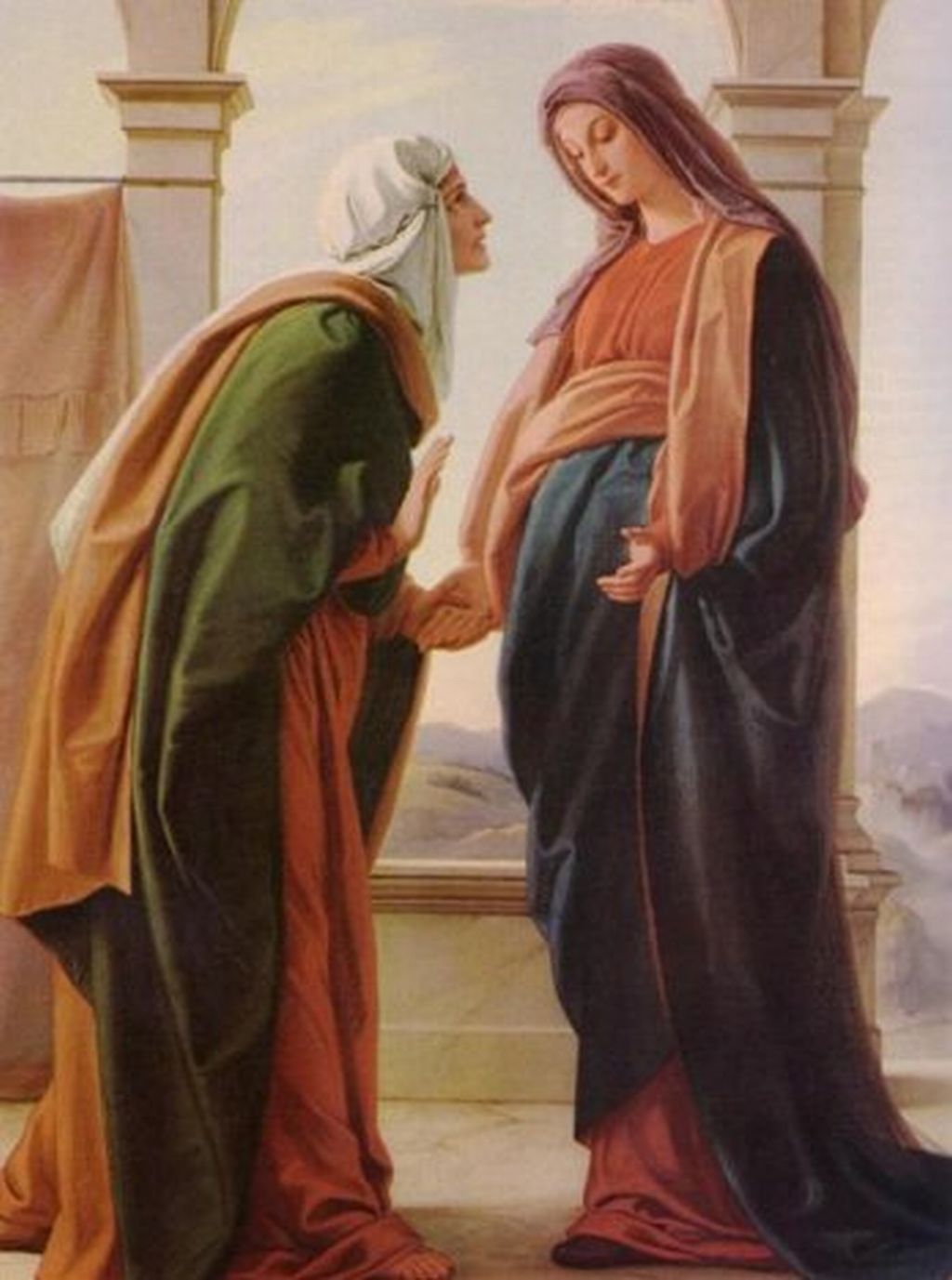
THE PROMPT VISIT


(Reflection on Mary Visitation)
Today we recall and celebrate Mary’s visitation to Elizabeth. This visit is more than a momentary historical encounter. It has become a sort of ‘showcasing’ of Mary’s maternal care; an exhibition of her character as the lowly handmaid, who, in total submission to God, responds promptly to the will of God. The beauty and joy of this encounter is ever alive every 31st of May as we recall her enduring prophecy: “All generations shall call me blessed” (Lk 1:48).
The Greeting
“In those days Mary arose and went with haste into the hill country, to a city of Judah, and she entered the house of Zechariah and greeted Elizabeth” (Lk 1:39). This was an energy-packed visit: running the distance, climbing the hills! We could imagine her gasping but not exhausted because her supply of strength cannot run dry! Her greetings broke the silence and loneliness of the elderly couple’s home. This was no common greeting! While Mary greeted as the lowly handmaid, Elizabeth heard the voice of the Mother of God; Baby John the Baptist leapt for joy! And the Holy Spirit took charge of Elizabeth as she prophesied: “Blessed are you among women, and blessed is the fruit of your womb! And why is this granted me, that the Mother of my Lord should come to me?”

Thus, Elizabeth joyfully welcomed Mary with sublime praises. The warmth of their embrace has never cooled...It is still being felt as Mary’s Motherly arm embraces us today.

Mary’s Response
“And Mary said, ‘My soul magnifies the Lord, and my spirit rejoices in God my Saviour...” In her humble nature, She did not claim the praises to herself. Instead, she transferred all praises to God. Self admiration is a trap only a few can escape. From the Magnificat, it is obvious that her heart was fully set on God, His mighty deeds, His Holiness and generous love. She meditated on God’s for the starving poor and the fulfilment of God’s covenant with Abraham and hid descendants forever.

Mary’s response was not centred on herself or Elizabeth, but on God and His mighty deeds. This joyful outburst shows indeed that Mary is Mother of God!

Mary Stayed with Her
“Mary stayed with her for about three months and then went home” (Lk 1:56). We recall that Angel told her that Elizabeth was in her 6th month (Lk 1:36). This implies that Mary stayed with her till she gave birth. The habitual visitation of Mary, the Mother of my Lord, is prompt but never brief! The grace of God cannot come late! So She who is full of grace intervenes promptly, and supplies the grace in full; she intercedes till success is assured. Mary will not leave until our salvation is achieved.
 
Fr Jude Chinwenwa Nwachukwu, C.Ss.R
Immaculate Conception Catholic Church,
Abule-Oshun, Lagos.
Friday May 31st, 2019.
Feast of Visitation of Mary.


Thursday, May 30, 2019

The Beauty of Ascension

(Meditation on the Ascension of the Lord)

“...As they were looking on, he was lifted up, and a cloud took him out of their sight” (Acts 1:9).

Before the full glare of the apostles, Jesus ascended...From their midst, and within a common interaction, He gradually climbed the heights; from one altitude to another, He soared through to Heaven...They watched in dismay and wonder as their Master gradually climbed above, with a smooth sail! The beauty of the movement, with power and majesty is equally awe-inspiring. But their admiration gave way to fear of abandonment...

They lost sight of Him as the tick clouds enveloped Him in silence! “And a cloud took Him out of their sight” (Acts 1:9). But they continued to gaze upwards...This reminds us of the moment when the soldiers whisked Him away at Gethsemane. Now, He has taken Himself away from them. Once more, we can imagine the tension within them. Heaven intervened; the Angel, like to Mary, delivered the good news: “This Jesus, who was taken up from you into heaven, will come in the same way as you saw Him go into heaven” (Acts 1:11). Now their hope has come alive. As Mary ran with joy to visit Elizabeth after receiving the Good News that the Baby Jesus would come through her, so the Apostles departed to Jerusalem with great joy as the Angels left them (Lk 24:52-53).

But, why did He ascend instead of vanishing from their midst? Jesus’ bodily movement into Heaven indicates that there is now a vital link between Heaven and Earth, which supports and necessitates such a movement. Jacobs ladder has been fulfilled (Gen 28:12), and the ascending and descending of the Angels over the Son of Man (Jn 1:51) is alive and available for us. His Ascension is our assurance that we too can climb the Heights...Jesus Himself remains that living pathway to glory.

As He ascended into the thick cloud—the realm of the divinity—silence rained! Earlier he assured them, “It is for your good that I go away” (Jn 16:7). So His presence is beyond location; His voice echoes in silence. Because He ascended, human eyes can no more see Him, but the eyes of faith behold Him. How beautiful are the clouds that covered Him but did not hide Him from us! Since He did not vanish, His ascension is not absence. He is right here, and we celebrate Him today.

Fr Jude Nwachukwu, C.Ss.R
Ss Peter & Paul Catholic Church,
Tedi, Lagos.
Thursday May 30th, 2019.
Solemnity of Ascension of the Lord.