Sunday, April 7, 2019

The Saving Silence


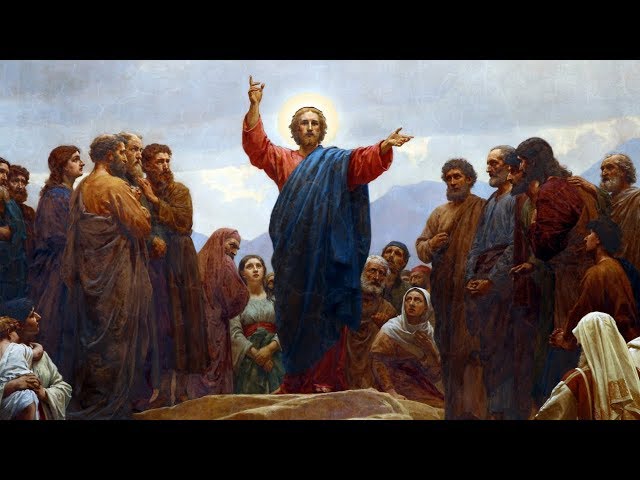
Image result for the adulterous woman in the bible
Reflection for 5th Sunday of Lent
(Is 43:16-21; Phil 3:8-14; Jn 8:1-11)
“Behold, I am doing a new thing; now it springs forth, do you not perceive it?” The action of God to recreate and bring forth a new order is emphasized in the first reading from the prophet Isaiah. Jesus fulfilled this prophecy today in the life of a woman caught in adultery.

“Teacher, this woman has been caught in the act of adultery. Now in the law Moses commanded us to stone such. What do you say about her?” Jesus’ immediate response was surprising: Silence! It was such a great silence that its imprint was left on the ground. “Jesus bent down and wrote with his finger on the ground.” It takes a lot of courage and power to be silent when surrounded by such bloodthirsty and treacherous people.

The sound of His silence roared; the dilemma of the accusers deepened. “And they continued to ask Him...” They needed words from Him to satisfy their treachery, but His silence became an arrow that pierced their hearts. By his silence, Jesus equally put Himself at a life-threatening risk since any of the stones could have landed on him. From the depth of His silence, He took upon Himself the death sentence of the woman and spoke on her behalf: “Let him who is without sin among you be the first to throw a stone at her.”

Now He has spoken, but ‘words of silence!’ The impatient and noisy accusers are drawn to silence, for their guilty consciences are exhumed. There was serene calmness hovering over all. The rhythmic sound of dropping stones filtered through the air. “They went away, one by one, beginning with the eldest...” The mark on the ground—the silence of Jesus—has won the day!

Then Jesus said to the woman, “neither do I condemn you; go, and do not sin again.” Jesus is not an accuser but a Saviour. And He does it with gentleness and power (cf. Mt 12:18-21). The woman goes home with a new life, as if she was raised from the dead (cf. Heb 11:19). Now every other thing counts as loss, except the surpassing faith in Christ Jesus, the righteousness of God that depends on faith and the power of His resurrection from the dead (cf. Phil 3:8-10).

Encountering the sound of silence of Jesus is power and victory!

Fr Jude Nwachukwu, C.Ss.R
Ss Peter & Paul Catholic Church,
Tedi, Lagos.
Sunday 7th April, 2019.

Thursday, April 4, 2019

MOTIVATION TO WITNESS


Reflection for Thursday of the 4th Week of Lent
(Ex 32:7-14; Jn 5:31-47)
Today we hear about the great betrayal, when the Israelites denied God and worshipped the golden calf. After all the signs and wonders God did to deliver them, they could not exercise patience till Moses returned. The most annoying thing is that they transferred the glory and praise due to God to an idol. The testimony of man is short-lived...!

Image result for Jesus argues with the JewsIn the Gospel, Jesus emphasized that the testimony that inspires His works does not emanate from man. The Pharisees thought human witness and acclamation was necessary to prove the ministry of Jesus. But He explained that He relied only on the Father’s testimony. The testimony of the Father for Jesus is sufficient and necessary. It is within the Father’s testimony that Jesus carried out miracles and exercised His ministry.

Secondly, Jesus emphasized within today’s discuss that the Scriptures testify for Him. Thus, those who can accept and witness to Christ Jesus are those who have the love of God in them, and accept the revelation of Scripture. Actually, the work of Christ Jesus is to testify for the Father who had already testified for Him, and to fulfill the Scripture that bore Him witness. So how can such a work, like the healing of the man at the Sheep Pool on the Sabbath, be an offence against God!

As we trace the unfolding journey towards the Cross, we must apply our Lenten observances to deepen our love for God and the Scriptures. It is there we find the enduring testimony in Christ Jesus in which we are called to participate. Love of God and the Scriptures motivate us aright for right action. Human testimony—praise and popular acclamation—even from our most intimate friends or relations, cannot stand the test of time, and is open to all sorts of idolatry.

Let our words and actions be rightly motivated that we might witness to Him who witness for us, even on the Cross.

Fr Jude Nwachukwu, C.Ss.R
Ss Peter & Paul Catholic Church,
Tedi-Muwo. Lagos.
4th April, 2019.
My Birthday

Sunday, March 31, 2019

The Journey back Home

Reflection for the 4th Sunday of Lent Year C
(Joshua 5:9, 10-12; 2Cor 5:17-21; Lk 15:1-3, 11-32)
Today's reflection is drawn from the beautiful and inspiring story of the Prodigal son. This story reveals God's infinite mercy and our wretchedness in the state of sin. Here, repentance and mercy embraced!

The journey begins
At what point did the Prodigal son begin to trace his steps back home? It was not his hunger that pull the string. In his hunger he looked for alternative ways to satisfy himself. But the realization of his Father's mercy summoned him to a deeper reflection, and the subsequent steps back home followed. Every genuine repentance is prompted by God's mercy.

The young man saw within the confines of his Father's generosity an end to the misery he brought upon himself. Thus realizing his Father's mercy and generosity deepened his awareness of his wasted and miserable life. This is the moment of truth. All the lies he used to fence himself crumbled. Now, all is set for the journey back home to begin.

The Confession
"I will say to him, 'Father, I have sinned against heaven and against you. I am not worthy to be called your son, treat me as one of your paid servants."' For repentance not remain as mere psychic imagination, or a sensational good wish, there is need for confession. By its very nature confession needs a witness and acceptance. In this way, repentance is no more a mere private affair. Confession of sins is a concrete expression of contrition and a source of assured forgiveness. It is a crucial step along the journey back home.

                                          The Father's Embrace
Image result for the prodigal sonWhile the Prodigal son was still a long way off, the father ran to meet him, embraced and kissed him. This implies that even before the boy began his journey home, the father's mercy awaited him. That means the father had already embraced him in his heart before running down to meet him. At this meeting point of mercy and contrition, the father first 'confessed' his love for his son through the concrete gesture of hug and kiss, even before the boy confessed his sins and contrition.

After his confession, the voice of the Prodigal son was heard no more! The Father's voice re-sounded over and over again as if the boy disappeared in his Father's embrace! The man continued to speak words of acceptance, celebration and beauty. Further, the father became a 'voice' for the Prodigal son and defended him against the elder brother's accusation. 

The Celebration
The love and mercy of God is at the beginning and end of our journey of repentance back the life of grace. There is joy in heaven over one sinner who repents (Lk 15:7). The 'fattened cow' is slaughtered; the party is on...Now, the repentant son receives more--more grace--than he had before he embarked that futile adventure. The generosity and mercy of the father exposed the Prodigal son's selfishness, and equally conquered it. There is this overwhelming sense of embrace we often feel whenever we receive worthily the Sacrament of Reconciliation.

Fr Jude Nwachukwu, C.Ss.R
Ss. Peter & Paul Catholic, Church,
Tedi, Lagos                                                                                                                                             
Sunday March 31, 2019

Saturday, March 30, 2019

HUMILITY EXALTS


Reflection for Saturday of the Third Week of Lent
(Hosea 6:1-6; Lk 18:9-14)
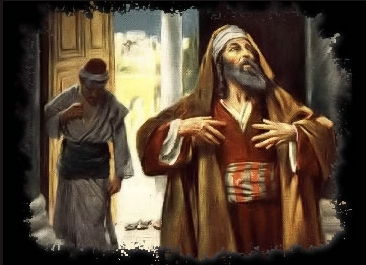
Jesus tells us the story of the Pharisee and the Tax Collector who went to the temple to pray. The Pharisee boasted about his ‘righteous’ deeds, while the Tax Collector stood afar off and pleaded for mercy.

The self-righteous man stood before God’s presence and was comparing himself with others. There was no place for God in his prayer; he made God a mere spectator of the competition between him and others. But the Tax Collector ‘compared’ himself with God. He recognized God’s holiness in relation to his sinfulness. God Himself was the centre and focus of his prayer. “God, be merciful to me a sinner!” He went home justified.

Whenever we come closer to God, His holiness reveals our sinfulness—there is always something to repent of. So we approach Him with utmost humility. There is neither comparison nor competition when we come to God in prayer. He relates to each of us in our individual uniqueness. His package of blessings is unparalleled with no other.

Encounter with God summons us to humility, in which true relationship with God is established.

Fr Jude Nwachukwu, C.Ss.R
Ss Peter & Paul Catholic Church,
Tedi, Lagos.
Saturday, 30 March 2019.


Monday, March 25, 2019

Solemnity of the Annunciation of the Lord

Today we celebrate  the Solemnity of the Annunciation of the Lord. It is a unique point in human history when the Word took flesh!
The Angel Gabriel was apt in his delivery, and the Virgin Mary was overly receptive...Yes, any message or prompting from the Lord is alway good news. The message and the process of its actualization may not be convenient, but it ends up a good news!
This too is my disposition as I resume today at Ss Peter and Paul Catholic Church,  Tedi-Muwo, Lagos. This is my third missionary journey since ordination.
Thank you Jesus!
Fr Jude Chinwe Nwachukwu, C.Ss.R
As Peter and Paul Catholic Church
Tedi Lagos.
Monday March 25th, 2019

Sunday, March 10, 2019

The Victory over Temptation

Reflection for 1st Sunday of Lent Year C
(Deut 26:4-10;Rom 10:8-13; Lk 4:1-13)
Moses explained to the people how they would make an offering of first fruits to the Lord. He described how God led them from slavery in Egypt, and planted them in the land flowing with milk and honey. “And behold, now I bring you the first fruits of the ground, which you, oh Lord, had given me.” But St Paul explains in the second readings that now our salvation from slavery is given through faith in Christ Jesus. So God's mighty arm with which He delivered the Israelites from slavery is now given in the ‘double edged sword’ of the word of God. Hence, we carry the word on our lips and in our hearts, and confess that Jesus is Lord... “Everyone who calls upon the name of the Lord will be saved” (Rm 10:13).

The battle for our freedom could be seen in the battle of Jesus with Satan. Sin leads to slavery! “Whoever commits sin is a slave of sin” (Jn 8:34). Jesus’ victory over Satan announces our freedom and triumph in time of temptation. However, we must be ready to face temptation at all times. Jesus was tempted to change stone into bread and eat, to worship Satan in exchange for earthly power and glamour, and to tempt God by jumping from a cliff. These, and every temptation,  are all rooted in selfishness and the emancipation of the human will even over and above God’s will.

So human hunger or desire cannot redefine God's purpose for things. A stone is never meant for food! The temptation here is to put God's will aside and replace it with human hunger by changing the stone to bread. Secondly, God alone is unconditionally worshipped. This is  where we have to be careful about the modern day quest for miracles. The desire for authority and wealth often lead to different forms of idolatry. Thirdly, God's word is to be fulfilled, not in human terms but in God's. Presumption is like trying to unseat God, and attempting to institute oneself as master of the future. There is a growing temptation to know things beyond us. Thus many seek interpretations of dreams, some consult visionaries and sorcery. Do not put the Lord your God to the test.

“If the Son sets you free, you are free indeed” (Jn 8:36). That is why St Paul says that if you believe in your heart that God raised Him from the dead, you will be saved. Thus the death and Resurrection of Jesus Christ is our Passover from slavery to freedom. Therefore, we offer the Eucharist—The First Fruit—Jesus Christ, who is the first fruit from the dead (1Cor 15:20), the first born of all creation (Col 1:15). In Him temptation has lost its grip.

Fr Jude Chinwe Nwachukwu, C.Ss.R
National Shrine of Our Mother of Perpetual Help,
Ugwogo-Nike, Enugu.
Sunday March 10th, 2019.

Saturday, March 9, 2019

"Follow Me": The Call to Conversion

Reflection for Saturday After Ash Wednesday
(Is 58:9-14; Lk 5:27-32)
"If you take away from your midst, the yoke, the pointing of finger, and sneaking wickedness...then shall your light rise in the darkness." Repentance involves a practical action. The Prophet Isaiah gives some guidelines on the proper practical steps to be taken, and the blessing that will follow. He emphasized 'honouring the Sabbath' as an important step to show repentance. This might sound odd to the modern ear!

The Sabbath,  the 7th day, is the day God set aside for Himself, and He imposed a blessing upon it that creation and the rest of the days might be blessed through the Sabbath day. It is the day God 'drew attention to Himself'. Thus, honouring the Sabbath day becomes an external gesture of 'giving God attention.' And the attention we give God is worshipp. The repentant sinner who honours the Sabbath, therefore, worships the Lord. Of what use is repentance if it does not give God the attention that is His due?

However, God established for us a new place of 'rest.' Jesus is the New Sabbath where God's rest awaits us (cf. Heb 4:1-12). God drew all attention to Himself in Christ Jesus. "When I Am lifted up from the earth, I shall draw all people to myself." He invites us to come and enter into His new place of rest. This is the invitation to conversion--the invitation given to Levi in the Gospel of today. '"Follow me.' And He left everything, and rose and followed Him" (Lk 5:27-28).

Reflect on the action words, 'he left everything', 'he rose', and 'he followed.' Now place them side by side with what we do every Sunday! Is it not how we move to participate at the Mass? The feast at table with Jesus can be likened to our dinning with the Lord at the Eucharist--sinners, repentant sinners, who are now supposed to be 'in a state of grace' surrounding the communion rail.

Therefore, the culmination of our practical steps to repentance is the worship of God, giving God the attention that is His due. This is what Isaiah prophesied as honouring the day of the Lord. Repentance without worship is self-righteousness, which leads to the hypocrisy of pointing fingers. Our Lenten  journey to conversion cannot stop until we seat at table with Jesus.

Fr Jude Chinwe Nwachukwu, C.Ss.R
National Shrine of Our Mother of Perpetual Help,
Ugwogo-Nike, Enugu.
Saturday March 9th, 2019.