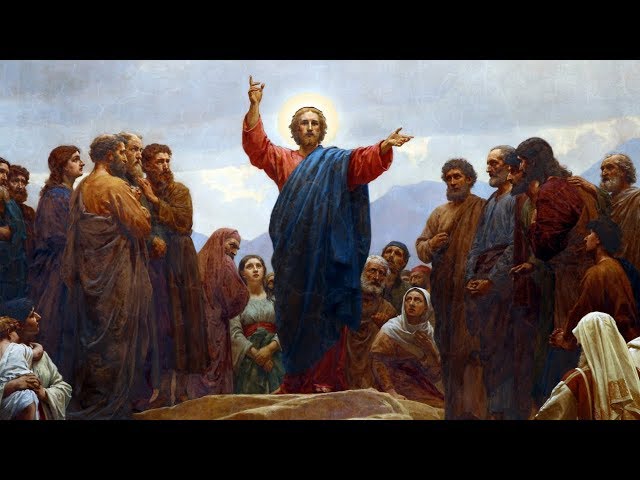
In the Gospel, Jesus emphasized
that the testimony that inspires His works does not emanate from man. The
Pharisees thought human witness and acclamation was necessary to prove the
ministry of Jesus. But He explained that He relied only on the Father’s
testimony. The testimony of the Father for Jesus is sufficient and necessary. It
is within the Father’s testimony that Jesus carried out miracles and exercised
His ministry. Silence comes alive! It bounces back as the clearest sound—the authentic message. Deep within, it constitutes an encounter both with God and with the self. Welcome to The Sound of Silence where I serve you with the fruits of my silence.
Thursday, April 4, 2019
MOTIVATION TO WITNESS
In the Gospel, Jesus emphasized
that the testimony that inspires His works does not emanate from man. The
Pharisees thought human witness and acclamation was necessary to prove the
ministry of Jesus. But He explained that He relied only on the Father’s
testimony. The testimony of the Father for Jesus is sufficient and necessary. It
is within the Father’s testimony that Jesus carried out miracles and exercised
His ministry. Sunday, March 31, 2019
The Journey back Home
At what point did the Prodigal son begin to trace his steps back home? It was not his hunger that pull the string. In his hunger he looked for alternative ways to satisfy himself. But the realization of his Father's mercy summoned him to a deeper reflection, and the subsequent steps back home followed. Every genuine repentance is prompted by God's mercy.
"I will say to him, 'Father, I have sinned against heaven and against you. I am not worthy to be called your son, treat me as one of your paid servants."' For repentance not remain as mere psychic imagination, or a sensational good wish, there is need for confession. By its very nature confession needs a witness and acceptance. In this way, repentance is no more a mere private affair. Confession of sins is a concrete expression of contrition and a source of assured forgiveness. It is a crucial step along the journey back home.
While the Prodigal son was still a long way off, the father ran to meet him, embraced and kissed him. This implies that even before the boy began his journey home, the father's mercy awaited him. That means the father had already embraced him in his heart before running down to meet him. At this meeting point of mercy and contrition, the father first 'confessed' his love for his son through the concrete gesture of hug and kiss, even before the boy confessed his sins and contrition. Saturday, March 30, 2019
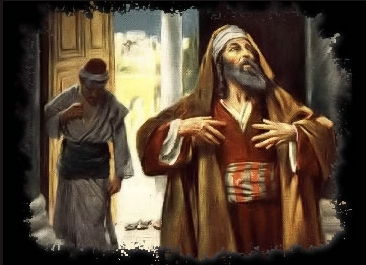
HUMILITY EXALTS

Monday, March 25, 2019
Solemnity of the Annunciation of the Lord
Thank you Jesus!
As Peter and Paul Catholic Church
Tedi Lagos.
Monday March 25th, 2019
Sunday, March 10, 2019
The Victory over Temptation
Reflection for 1st Sunday of Lent Year C
(Deut 26:4-10;Rom 10:8-13; Lk 4:1-13)
Moses explained to the people how they would make an offering of first fruits to the Lord. He described how God led them from slavery in Egypt, and planted them in the land flowing with milk and honey. “And behold, now I bring you the first fruits of the ground, which you, oh Lord, had given me.” But St Paul explains in the second readings that now our salvation from slavery is given through faith in Christ Jesus. So God's mighty arm with which He delivered the Israelites from slavery is now given in the ‘double edged sword’ of the word of God. Hence, we carry the word on our lips and in our hearts, and confess that Jesus is Lord... “Everyone who calls upon the name of the Lord will be saved” (Rm 10:13).
The battle for our freedom could be seen in the battle of Jesus with Satan. Sin leads to slavery! “Whoever commits sin is a slave of sin” (Jn 8:34). Jesus’ victory over Satan announces our freedom and triumph in time of temptation. However, we must be ready to face temptation at all times. Jesus was tempted to change stone into bread and eat, to worship Satan in exchange for earthly power and glamour, and to tempt God by jumping from a cliff. These, and every temptation, are all rooted in selfishness and the emancipation of the human will even over and above God’s will.
So human hunger or desire cannot redefine God's purpose for things. A stone is never meant for food! The temptation here is to put God's will aside and replace it with human hunger by changing the stone to bread. Secondly, God alone is unconditionally worshipped. This is where we have to be careful about the modern day quest for miracles. The desire for authority and wealth often lead to different forms of idolatry. Thirdly, God's word is to be fulfilled, not in human terms but in God's. Presumption is like trying to unseat God, and attempting to institute oneself as master of the future. There is a growing temptation to know things beyond us. Thus many seek interpretations of dreams, some consult visionaries and sorcery. Do not put the Lord your God to the test.
“If the Son sets you free, you are free indeed” (Jn 8:36). That is why St Paul says that if you believe in your heart that God raised Him from the dead, you will be saved. Thus the death and Resurrection of Jesus Christ is our Passover from slavery to freedom. Therefore, we offer the Eucharist—The First Fruit—Jesus Christ, who is the first fruit from the dead (1Cor 15:20), the first born of all creation (Col 1:15). In Him temptation has lost its grip.
Fr Jude Chinwe Nwachukwu, C.Ss.R
National Shrine of Our Mother of Perpetual Help,
Ugwogo-Nike, Enugu.
Sunday March 10th, 2019.
Saturday, March 9, 2019
"Follow Me": The Call to Conversion
Reflection for Saturday After Ash Wednesday
(Is 58:9-14; Lk 5:27-32)
"If you take away from your midst, the yoke, the pointing of finger, and sneaking wickedness...then shall your light rise in the darkness." Repentance involves a practical action. The Prophet Isaiah gives some guidelines on the proper practical steps to be taken, and the blessing that will follow. He emphasized 'honouring the Sabbath' as an important step to show repentance. This might sound odd to the modern ear!
The Sabbath, the 7th day, is the day God set aside for Himself, and He imposed a blessing upon it that creation and the rest of the days might be blessed through the Sabbath day. It is the day God 'drew attention to Himself'. Thus, honouring the Sabbath day becomes an external gesture of 'giving God attention.' And the attention we give God is worshipp. The repentant sinner who honours the Sabbath, therefore, worships the Lord. Of what use is repentance if it does not give God the attention that is His due?
However, God established for us a new place of 'rest.' Jesus is the New Sabbath where God's rest awaits us (cf. Heb 4:1-12). God drew all attention to Himself in Christ Jesus. "When I Am lifted up from the earth, I shall draw all people to myself." He invites us to come and enter into His new place of rest. This is the invitation to conversion--the invitation given to Levi in the Gospel of today. '"Follow me.' And He left everything, and rose and followed Him" (Lk 5:27-28).
Reflect on the action words, 'he left everything', 'he rose', and 'he followed.' Now place them side by side with what we do every Sunday! Is it not how we move to participate at the Mass? The feast at table with Jesus can be likened to our dinning with the Lord at the Eucharist--sinners, repentant sinners, who are now supposed to be 'in a state of grace' surrounding the communion rail.
Therefore, the culmination of our practical steps to repentance is the worship of God, giving God the attention that is His due. This is what Isaiah prophesied as honouring the day of the Lord. Repentance without worship is self-righteousness, which leads to the hypocrisy of pointing fingers. Our Lenten journey to conversion cannot stop until we seat at table with Jesus.
Fr Jude Chinwe Nwachukwu, C.Ss.R
National Shrine of Our Mother of Perpetual Help,
Ugwogo-Nike, Enugu.
Saturday March 9th, 2019.
Friday, March 8, 2019
WHY DO WE FAST?
Reflection for Friday after Ash Wednesday
(Is 58:1-9; Mt 9:14-15)
On this first Friday of Lent, the readings address the issue of fasting. There is a deeper understanding about fasting in the teachings of Jesus than in the Old law. The Prophet Isiah introduces fasting as a means of appeasing God for transgressions. He condemned mere external show, which does not reflect in righteous deeds. “Is not this the fast that I choose: to loose the bonds of the wickedness...to break every yoke? Is it not to share your bread with the hungry...”
Thus even in the Old Law fasting has a positive connotation. It is not mere ‘punishment’ for the body, but a ‘hunger’ for righteousness. God accepts such fasting that leads to a change of heart for goodness. It means, therefore, that in choosing the objects of our fast, we must choose to deny ourselves those things that pull us out of grace and make us selfish. “Then you shall call, and the Lord will answer, you shall cry, and He will say, Here I am.”
Furthermore, this question of fasting is brought to Jesus. As if wearied, burdened and trapped in their own fasting, the disciples of John the Baptist approached Jesus, “Why do we and the Pharisees fast, but your disciples do not fast?” This hypocritical attitude is common. When someone fasting begins to notice those who are not, distraction has set in. And it makes fasting burdensome and scary! Jesus’ explanation and introduction to the new order of fasting is liberating and enriching.
“Can the wedding guest mourn as long as the bridegroom is with them? The days will come, when the bridegroom is taken away from them, and then they will fast.” Thus, fasting is ‘timed’, and for the exaltation of the ‘Bridegroom’, whose “taken away” announces the time of fasting. In other words, the ‘wedding guests’, Christ’ faithful, in full communion with Him, have achieved the ultimate purpose of fasting, for Christ Jesus is their Righteousness. But the ‘time’ of fasting awakens when we long for this fullness of grace and communion with Jesus. Thus, we fast because we long for Jesus; our fasting is our expression for our hunger for Jesus. Whatever that is the object of our fasting is such that must increase our desire for Jesus.
It is joyfully and fulfilling to thirst for Him who thirsts for us!
Fr Jude Chinwe Nwachukwu, C.Ss.R
National Shrine of Our Mother of Perpetual Help,
Ugwogo-Nike, Enugu.
Friday March 8th, 2019.